1991
The Word and the Coup

August 1991. The ’State Committee on the State of Emergency’. The GKChP. A coup, a putsch, a farce.
It was meant to save the Soviet Union through violently halting Gorbachev’s liberal reforms. Instead, the GKCHP destroyed the Union. And while two GKChP leaders killed themselves (or not…) immediately following its failure, all the other leaders were never punished.
What kind of coup was this? Were they even trying to save the Soviet Union?
And why did the KGB, the institution whose leader was in charge of the GKChP, fail so spectacularly at exercising its massive power?
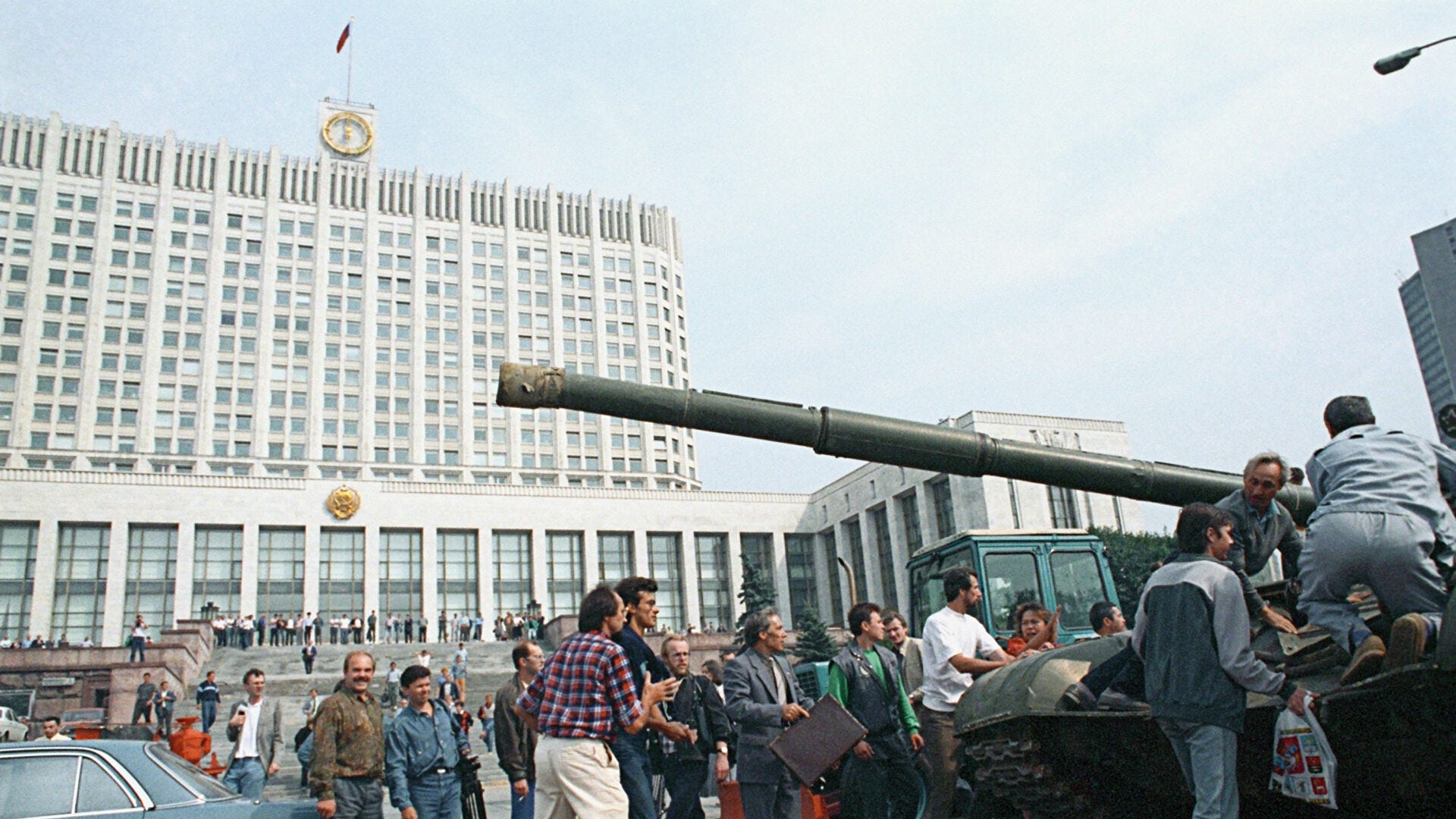
First, a quick recap of this forgotten, yet pivotal moment.
The State Committee on the State of Emergency included the most powerful men in the country. These were vice president of the USSR Gennady Yanayev, prime minister Valentin Pavlov, head of the KGB Vladimir Kryuchkov, minister of defense Dmitry Yazov, minister of internal affairs Boris Pugo, first deputy chairman of the Defense Council Oleg Baklanov, chairman of the Peasants’ Union Vasily Starobudtsev, and president of the Association of State Enterprises Alexander Tizyakov. All were members of the Central Committee of the CPSU.
Kryuchkov, head of the KGB from 1988 to 1991, is generally considered to have been the architect of the GKChP.
On August 18, Gorbachev, then convalescing in Foros, Crimea, was offered by the GKChP to sign martial law into being. He refused, and he was put under a loose form of house arrest (note the word ‘loose’).
On August 19, the GKChP declared power. Swan Lake played on the television. A famous press conference occurred. Yanayev was declared acting president, though he also declared that Gorbachev had to be replaced merely due to ill health. When asked where Gorbachev asked, Yanayev gave a famous answer:
I hope that my friend President Gorbachev will be in good health, and that we will work together
The central event of the press conference, or at least what everyone remembers from it, were Yanayev’s shaking hands. Honestly, they didn’t seem particularly shaky to me. The problem was more what was coming out of his mouth.
Anyway, that day troops were sent into Moscow impose martial law. This they didn’t do, nor did they succeed in the task of preventing Boris Yeltsin from entering Moscow. He did so quite easily, despite the fact that the elite KGB ‘Alpha’ unit was surrounding his country home.
Yeltsin enters the White House (parliament building), and his supporters mingle with tanks in the area around it. He mounts a tank, condemns the ‘rightwing reactionary anti-constitutional coup’ and calls for democracy.
In 2 years time, president Yeltsin would shell that very same White House, killing hundreds of protesters. But this time, the ‘totalitarian’ GKChP did nothing of the sort. There was never even an attempt to storm the White House. On the night of the 20th, three students were killed by warning shots ricocheting into them. This was made into a great crime by the liberal press.
By August 21, the GKChP dissolved. Gorbachev returned, but now entirely powerless — Yeltsin was now in charge. GKChP leader Pugo shot himself, along with his wife. Suicide was also chosen by GKChP supporter Marshal Sergey Akhomeyev.
On August 23, Yeltsin banned the activities of the Communist Party in Russia. Other ‘Soviet’ republics followed. Ukraine declared independence on August 24, along with the rest of the Union.
Indeed, It was as a result of the turmoil in Moscow that republican Soviet leadership in Russia, Ukraine and Belarus decided it was time to jump ships, or rather, to take the helm of their own respective vessels. On December 8, in the Belovezha forest, Belarus, the three national leaders officially declared that the Soviet Union was defunct.
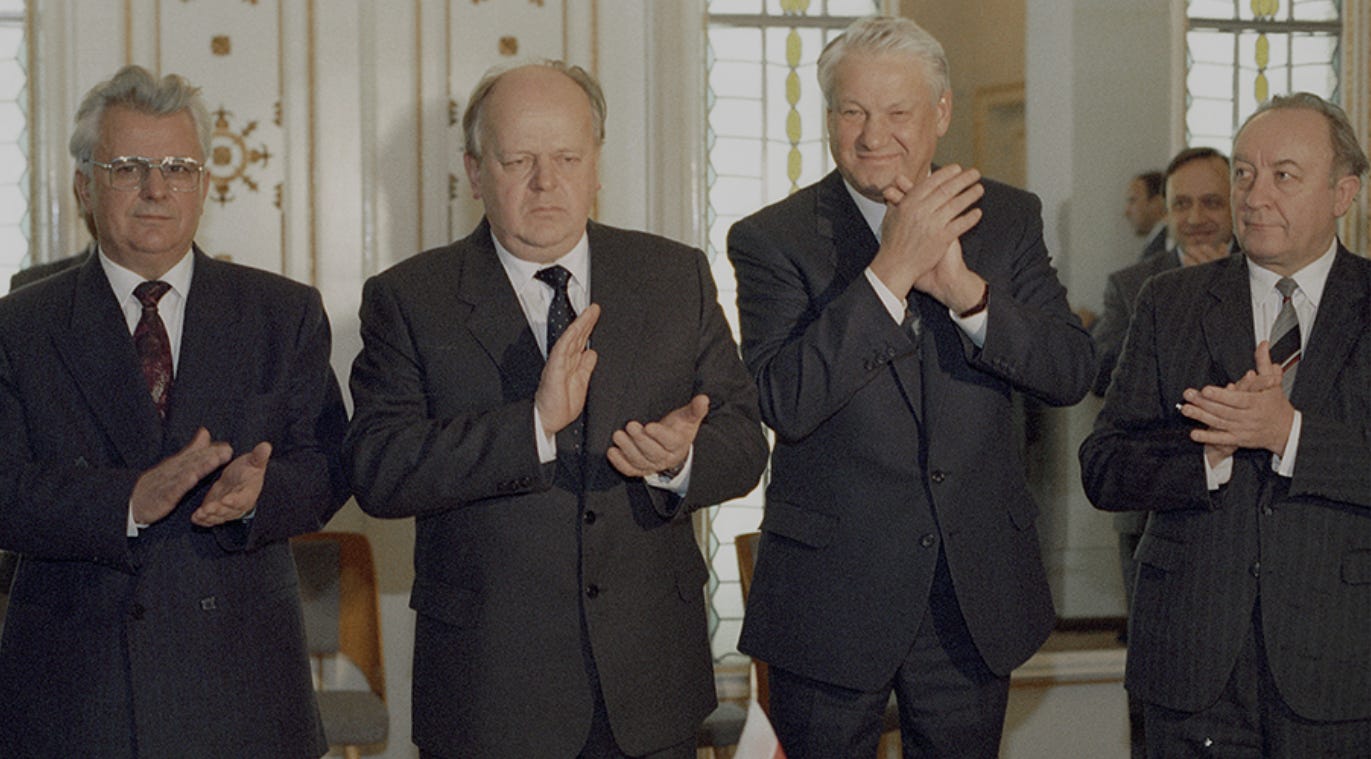
Stanislav Shushkevich, first head of state of post-soviet Belarus and one of the signatories of the Belovezha Accords, said ‘the union had already been broken up by the putschists’ in August 1991. In his undoubtedly self-serving narrative, the ‘putschists’ had tried to prevent Gorbachev from transforming the Union into something like a ‘confederation’. In the attempt to avoid a repeat of the Yugoslav wars, Shushkevich, Yeltsin and Ukraine’s Kravchuk chose a ‘divorce’. This claim that the USSR was destroyed by the hands of the pro-Soviet GKChP is also popular among American diplomats and historians.
And by December 25, Gorbachev resigned. The Red Flag was lowered from the Kremlin.
The GKChP is a very obscure event. In the whirlwinds and storms of recent Russian history, some sort of helmsman is helpful.
Today, we’ll take a look at the events of August 19-21 through just one of its participants — the novelist Alexander Prokhanov. In fact, he isn’t just a participant — he wrote the GKChP into being. It was he was the author of ‘a Word to the People’, the anti-perestroika July 1991 public address signed by top cultural figures. It was both the manifesto and the request for what would be the GKChP.
A highly ambiguous figure, one whose absurdly prolific literary and journalistic output gives possibly the most exhaustive accounts of all the dramatic events of the 1990s, from the eyes of its most ever-present agent. A sort of enthusiastically red-brown Forrest Gump. Though today we’ll limit ourselves to 1991, in future articles we’ll examine Prokhanov’s even more important role in two other failed coups against the post-soviet order — 1993 and 1998.
The 70s
First, we need to understand how Prokhanov built such an enviable network of connections. As usual in my articles on the novelist, I am relying in large part on the remarkable biography Man With An Egg: the Life and Opinions of Alexander Prokhanov, published in 2008 by Lev Danilkin.
In a recent article, we looked at Prokhanov’s family origins and youth, a story entangled in Tsarist and Soviet intelligence agencies, Baptist sects, and fascist underground cults. By 1979, Prokhanov was considered the most prominent Russian writer of his generation. Spurning the two prominent Soviet literary tendencies of the time — pro-western liberalism and soil-based Russian nationalism — he took it upon himself to create a new genre, that of ‘statist avant-gardism’.
Prokhanov, like any great Russian writer, was also a political technologist. As Stalin said, ‘writers are the engineers of the soul’. Prokhanov was even given the honors of composing the official speech for November 7 celebrations at the end of the decade. Nevertheless, he never joined the communist party. In his words, he was more valuable as a patriotic writer outside of party structures:
I could refuse them; I was not in the military, and they weren’t my commanders. Then — well, if I don’t join the party — will they forbid me to publish? I was more valuable to them than they were to me. Who else could describe the Soviet atomic triad? Who else could describe bombers flying to the pole, missile launches, or atomic bomb tests at the Semipalatinsk range like I did? No one. I was important to them. So, sensing this, they wanted to lock in my presence within their party environment. Party membership is like a male dog marking his territory with poisonous urine. It’s mutual accountability. I understood that perfectly, and I didn’t want to make such a deal with them. My agreement wasn’t commercial or political; it was, you could say, selfless service: that’s how I thought, and I found it interesting and had the skill. The pressure on me wasn’t hierarchical; it was more temptation than coercion. And I didn’t need it. I saw no advantage in it. Those were anarchic moods of a solitary artist who preferred to do what he did.
I remember, during some cocktail party in Bulgaria, a high-ranking official came up to me and said, “How do you not understand? You’re not joining the party; they’re offering you a high level, maybe your last chance.” And just now, by chance, I met him; he looked pathetic, toppled, miserable compared to all his nomenklatura-party grandeur of those years. And my chance, perhaps, was precisely that I never joined the party. I felt absolutely free, uncommitted..
In the post-soviet world, it was precisely this status as an outsider to the staid communist world that made him such an appealing figure as a leader of the new ‘patriotic opposition’.
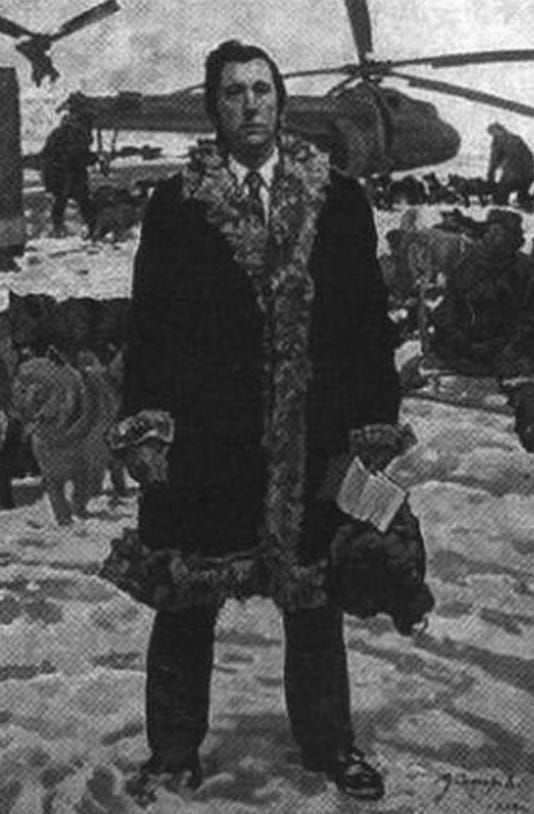
For his part, Prokhanov believes he gained the upper hand in his relationship with the state - ‘then I was commissioned; now you could say I commission others’. The New York Times would later call Prokhanov the ‘gray cardinal’ of the post-soviet CPRF.
Perestroika
Before perestroika officially began, Prokhanov was initially excited about the rise of perestroika’s secret initiator. Yuri Andropov, head of the KGB from 1967 to 1982, became general secretary in 1982. This was an event that Prokhanov, like many others, thought heralded positive changes after the tiring Brezhnev years. Over the next two decades, Prokhanov’s view of Andropov would radically change.
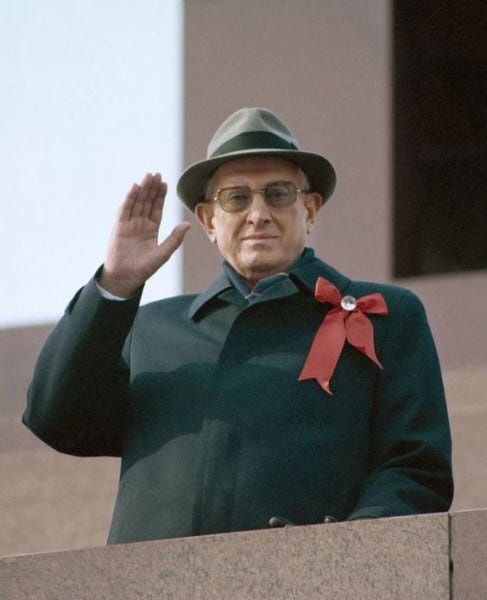
Prokhanov was even enthusiastic about perestroika itself, at least initially. After all, he’d spent the 70s writing and thinking about the renewal of the Soviet Union. Prokhanov’s romantic technocratism was also quite characteristic of the early motifs of perestroika. Hence, over the course of 80s, the novelist wrote a number of articles and books about how new technologies and organizational practices could be used to modernize Soviet society and the economy.
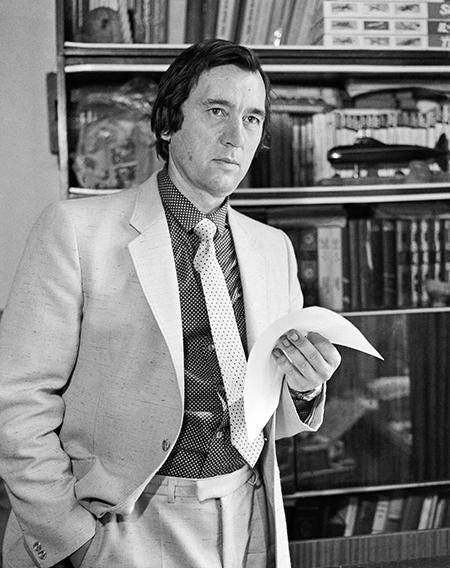
However, by the late 1980s Prokhanov became one of the few intelligentsia voices unapologetically opposed to perestroika. It was from this point onward that Prokhanov became intimately involved in a number of political conspiracies to reverse or overthrow what he viewed as the destruction of his beloved ‘Red Empire’ by traitorous forces.
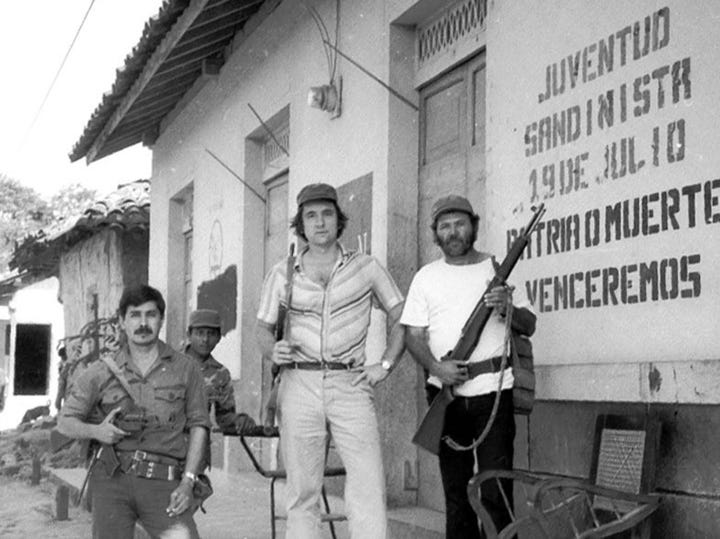
While highly preoccupied with domestic transformations, Prokhanov also spent the 80s visiting just about every cold war hot-spot on earth. His 1980s cold war novels essentially narrated Prokhanov’s own Soviet espionage activities in these same locations. His novel about the Nicaragua, for instance, recapitulated his own intelligence-gathering operations while there, investigating the possibility of the Sandinistas pulling the USSR into war with the United States. This same fear of a nuclear apocalypse initiated by radical third world allies, averted by the efforts of the Soviet artist-spy, was repeated in his novels about Cambodia and Angola.
Of all these conflicts, Prokhanov would spend by far the most time in Afghanistan. Though he gives various numbers on the matter, he claims to have visited the country 19 times. He also wrote at least 5 books on the conflict (it is difficult to count exactly, since he spent the 90s and 2000s releasing rewritten versions of his older novels).
The origins of his suspicion towards the KGB and sympathy towards the GRU can also be tracked to that war. In future, I look forward to writing a separate article about these 80s war novels.
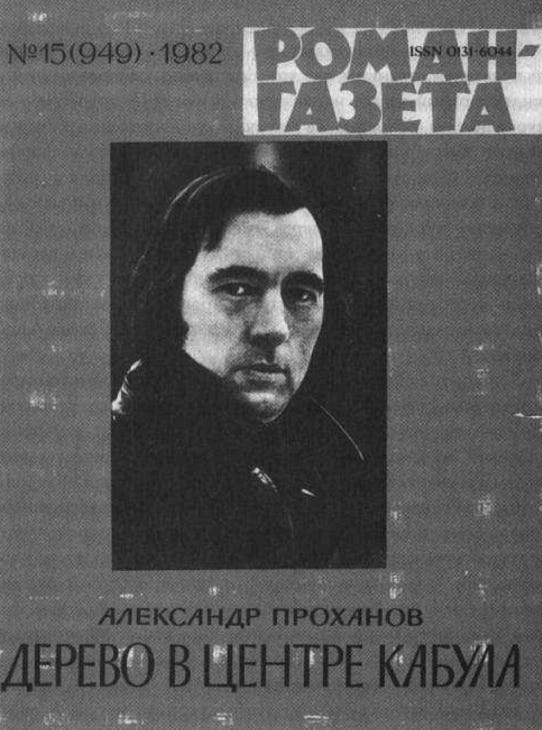
Back at home, the Soviet intelligentsia was increasingly united in explicit criticism of socialism and support for market reforms. The Afghan war was one factor, as well as the Chernobyl catastrophe – both events that Prokhanov was personally present at, scooping up radioactive waste by hand with a broom in the latter case, and getting repeatedly concussed during battles at the former.
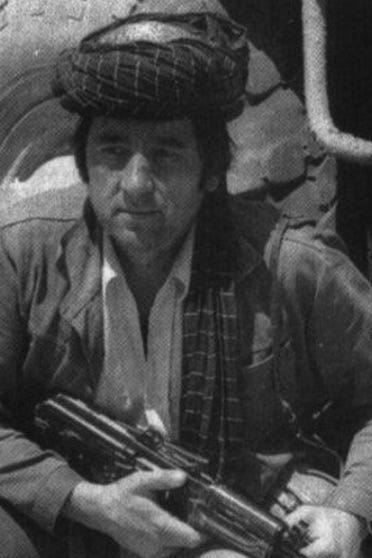
Prokhanov went against the current of the age. His last article, published in May 1989 for the prestigious Literaturnaya Gazeta, would be a reflection on his late 1988 tour of the USA as part of the Soviet Committee for the Protection of Peace.
Titled ‘Where Are You, Middle America’, it stubbornly declared that ‘I do not believe in the saccharine perfumed friendship of two giants spread across different halves of the Earth’. Opinions so counterbalanced to the zeigeist would leave him ridiculed and expelled from the literary establishment.
Despite all this, Prokhanov did have supporters in the USSR Writer’s Union. At its final Congress, June 1986, Prokhanov was meant to be inducted into the politburo of this highly influential institution. The writer was seated on stage, in the presidium, alongside Gorbachev. All the signs indicated he would be promoted.
Prokhanov’s main supporter was head of the Writer’s Union Georgy Markov. Markov began his speech:
High party demands, are the chief driving force of multinational Soviet literature. Happy is the wordsmith who... happy is the wordsmith who... who... happy is the wordsmith who...
At that point, Markov collapsed on stage and was rushed away by ambulance. Prokhanov called it ‘Chernobyl exploding at the congress’.
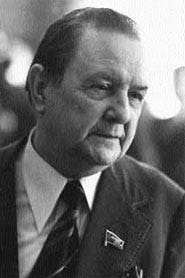
But as the congress continued, something changed. Another writer finished off Markov’s words, giving them a distinctly pro-perestroika flavour:
Happy is the wordsmith, who will be given the task of expressing our times, a critical, turning point in history.
During the 90 minutes of chaos, a Gorbachevite coup took place. The sly, aggressively anti-communist perestroika architect Alexander Yakovlev struck Prokhanov off the list for promotions, deriding him as a reactionary, anti-perestroika figure. Liberal writers received the honors.
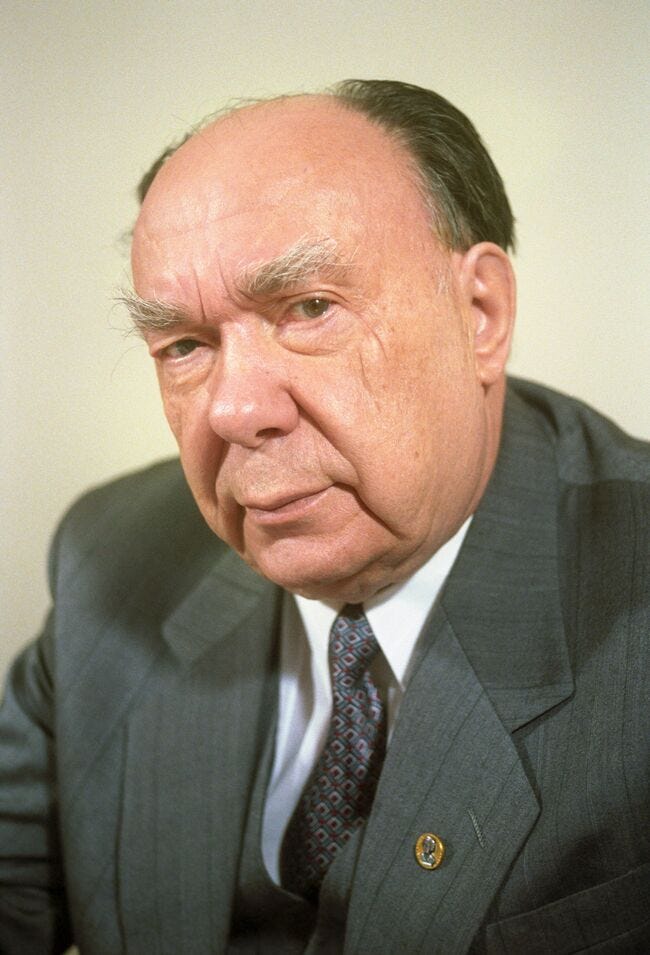
Prokhanov suspected that Yakovlev may have slipped some spices into Markov’s drink.
Prokhanov was being pushed out of the official literary scene, no longer able to write for the publications at which he had spent so much time. In response, he became chief editor of another journal in 1989, titled Soviet Literature, SoLi. This short-lived project (1989-91) set as its goal the search for a new unifying idea in conditions of destructive centrifugal forces.
However, paradoxically, Prokhanov’s new ally in this anti-liberal struggle, seemingly to save the soviet union, was a lifelong anti-communist. A man at the very least friendly with individuals that had spent a lifetime with western intelligence. Alexander Dugin.
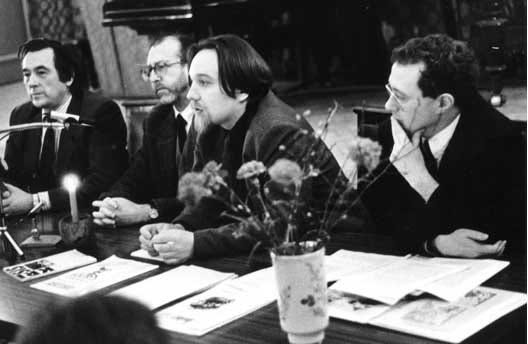
At first, Dugin was highly suspicious of Prokhanov, and told their mutual mentor, the obscurantist poet Yuri Mamleev, that he could not trust the ‘communist stooge’ Prokhanov, who should be strung up by a lamppost like the rest of them. But Mamleev knowingly told Dugin that in fact, Prokhanov was always ‘one of us’. Initial tensions during Dugin’s first meeting with Prokhanov were diffused when the former mentioned his friendship with Mamleev:
“I owe my acquaintance with Alexander Prokhanov to Yuri Mamleev… Returning from a foolish emigration during perestroika, crossing himself at lamp posts and practically licking his lips at beloved Russian Moscow faces as if they were Easter eggs, Mamleev, in his characteristic half-whisper, told me in the late ’80s: ‘Do you know, Sasha, that Prokhanov is “one of us”…?’ ‘What do you mean, “one of us”?’ I was surprised. It seemed to me that he was on the other side of the barricades — a career man, obediently and unquestioningly serving the decaying System. ‘But Prokhanov is a pro-Soviet writer, and those writers should be hanged from lamp posts — they ruined great Russia,’ — I was an anti-communist then. ‘No, no, you’re mistaken,’ Mamleev kept assuring me, ‘he is still “one of us,” “hidden,” “covert”… Prokhanov loves Russia, he’s a good man — let’s meet him.’ I trusted Yuri Vitalyevich and went to the magazine Soviet Literature to see Prokhanov. Alexander Andreevich was sitting there, and our introduction was rather strange, with a slight edge to it. He was a typical Soviet boss, and I was a young man who hadn’t published anything in the Russian press. He said: ‘I’m the editor-in-chief.’ ‘And I’m Dugin,’ I replied, thinking what else I could add. Then I said: ‘I’m a friend of Mamleev.’ Prokhanov paused for a moment and said: ‘I’m a friend of Mamleev too.’ And that made us equals: we are friends of Mamleev. He, being everything, and I, being nothing, quickly found ourselves on equal footing. I enjoyed it, and I think he did too.”
“I remember he had an Islamic, Sufi ring on his finger, which he had taken from some stabbed or hanged mujahid in Afghanistan. I noticed it and asked him: ‘But you fought on the side of the godless, atheistic Soviet state… fulfilling your international duty… why are you wearing, so to speak, the regalia of a completely different tradition — of a traditional society that was fighting against you?’
To that, he sort of whistled and said: ‘I like both.’
That struck me deeply — even then he was thinking not in terms of whites and reds, but beyond enemies and friends.”
“After our meeting, I had a vague feeling that Mamleev had been right.”
Was Prokhanov’s patriotic persona in the 1980s all just a ‘covert’ mask for his truly Mamleevite, anarcho-fascist, anti-communist sensibilities?
Though Prokhanov told Dugin that he combined ‘the soviet with the traditionalist’, Dugin himself was certainly anti-soviet at this time. His first article for Prokhanov’s journal was titled ‘the end of the proletarian era’. In the 1990s, his hero was Leon Degrelle, the Belgian SS officer that fought at the avant-garde of Operation Barbarossa and was a major node in anti-communist CIA networks of the cold war.
While Prokhanov renewed his old Mamleevite ways, he also grew closer to the most powerful communist hardliners in the country.
New friends
The 1990s would see Prokhanov become deeply involved with top officers and ex-leaders of the KGB and Party in the struggle against the new liberal order. But as these conspiratorial attempts met increasingly farcical failures, Prokhanov’s suspicions towards his collaborators — or curators — increased.
Oleg Baklanov was Secretary of the Central Committee of the CPSU and Deputy Chairman of the Defense Council. And, of course, future GKChP member.
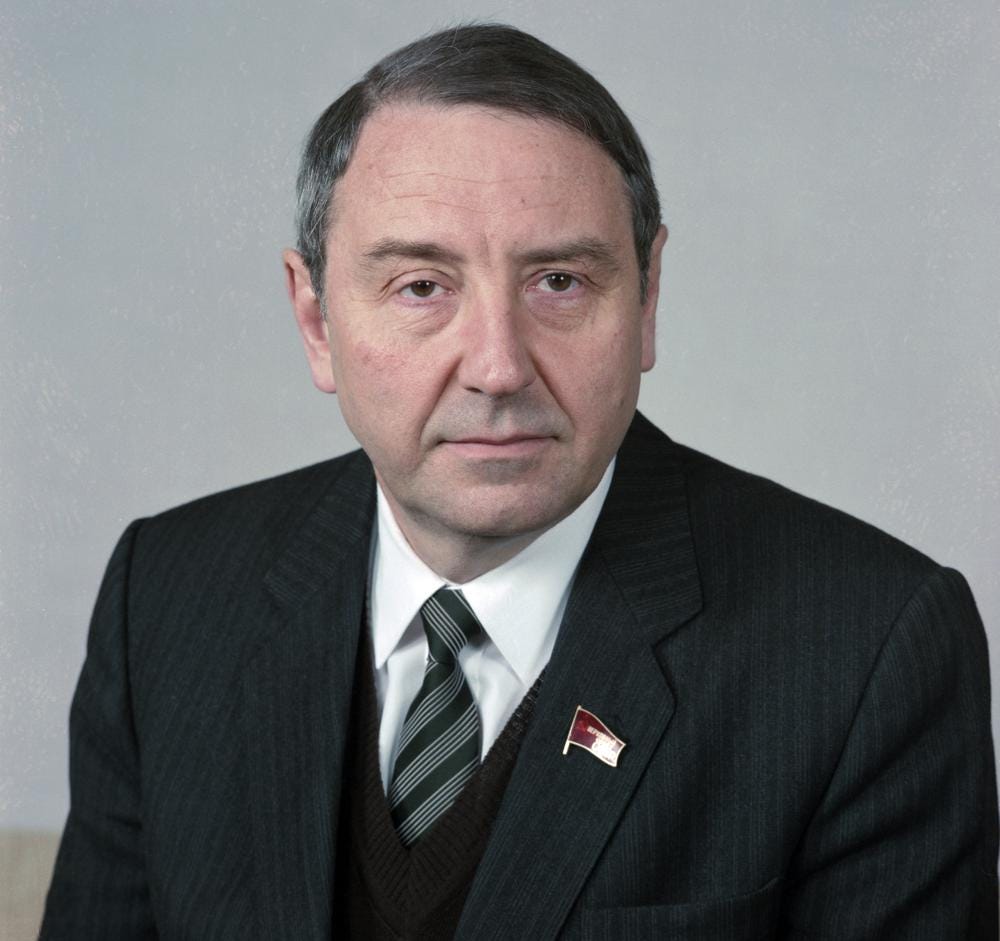
He was also the man in charge of the Soviet Union’s most powerful ICBM missile launches at the top-secret Baikanur launch base in Kazakhstan — a paradigmatically Prokhanovist location. Prokhanov remembers him as a ‘statist to the bone’ and a dedicated technocrat — precisely the novelist’s most valued characteristics.
Baklanov soon responded to Prokhanov’s repeated offers for help. Prokhanov recalls that the communist official apparently liked his ‘fiery humanitarian speeches’ and began taking Prokhanov along with him as a journalist on official delegations.
In 1989, the two made a tour of the dying Red Empire. Prokhanov and Baklanov paid a stop to withdrawing soviet troops in Berlin, desperately petitioned by loyal stasi agents under the Brandenburg Gates. They visited the Novaya Zemlya nuclear testing site in the arctic reaches of Siberia and a secret uranium enrichment facility in Tomsk. They came to see Mohammed Najibullah, the last communist leader of Afghanistan.
All those they met pleaded for help from patriots like Baklanov. The Afghans needed a renewal of fuel supplies, halted by Gorbachev. Tomsk nuclear scientists complained of funding shortages. Stasi officers were bewildered about their fate in the new Germany.
The help was not forthcoming. Najibullah would be castrated and tortured to death by the Taliban in 1996. Soviet industry went into free fall. Stasi agents were indeed slandered, some imprisoned.
However traumatic such experiences may have been for Prokhanov, friendship with Baklanov was highly politically productive. Baklanov introduced Prokhanov to the communist hardliners that would make up the core of the GKChP.
Returning to the airport back from Siberia, Baklanov introduced him to Boris Pugo, Soviet minister of internal affairs. He would kill himself in 1991 following the failure of the GKChP.
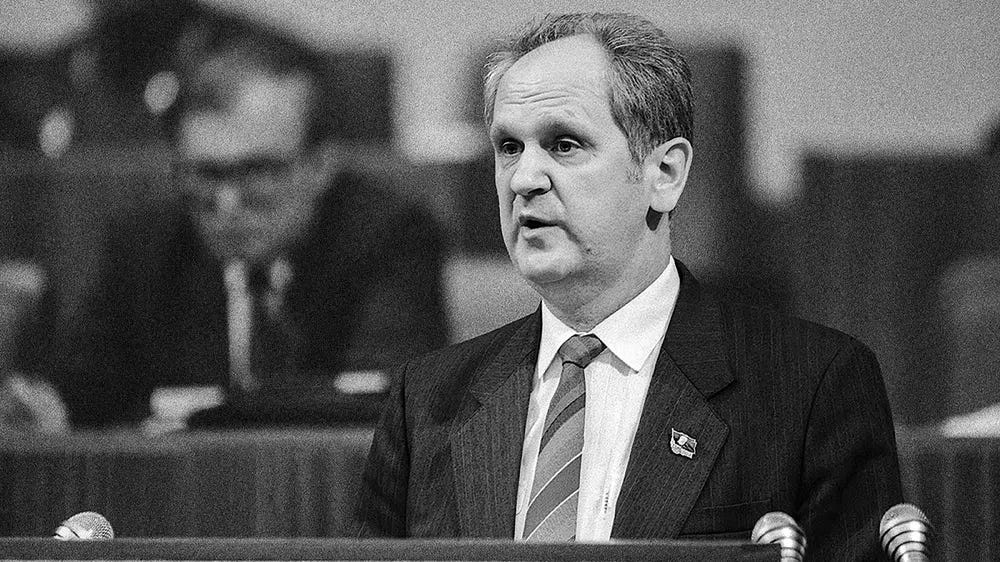
Baklanov also took Prokhanov along to meetings with KGB director (1988-91) Vladimir Kyuchkov, often considered the mastermind of the GKChP.
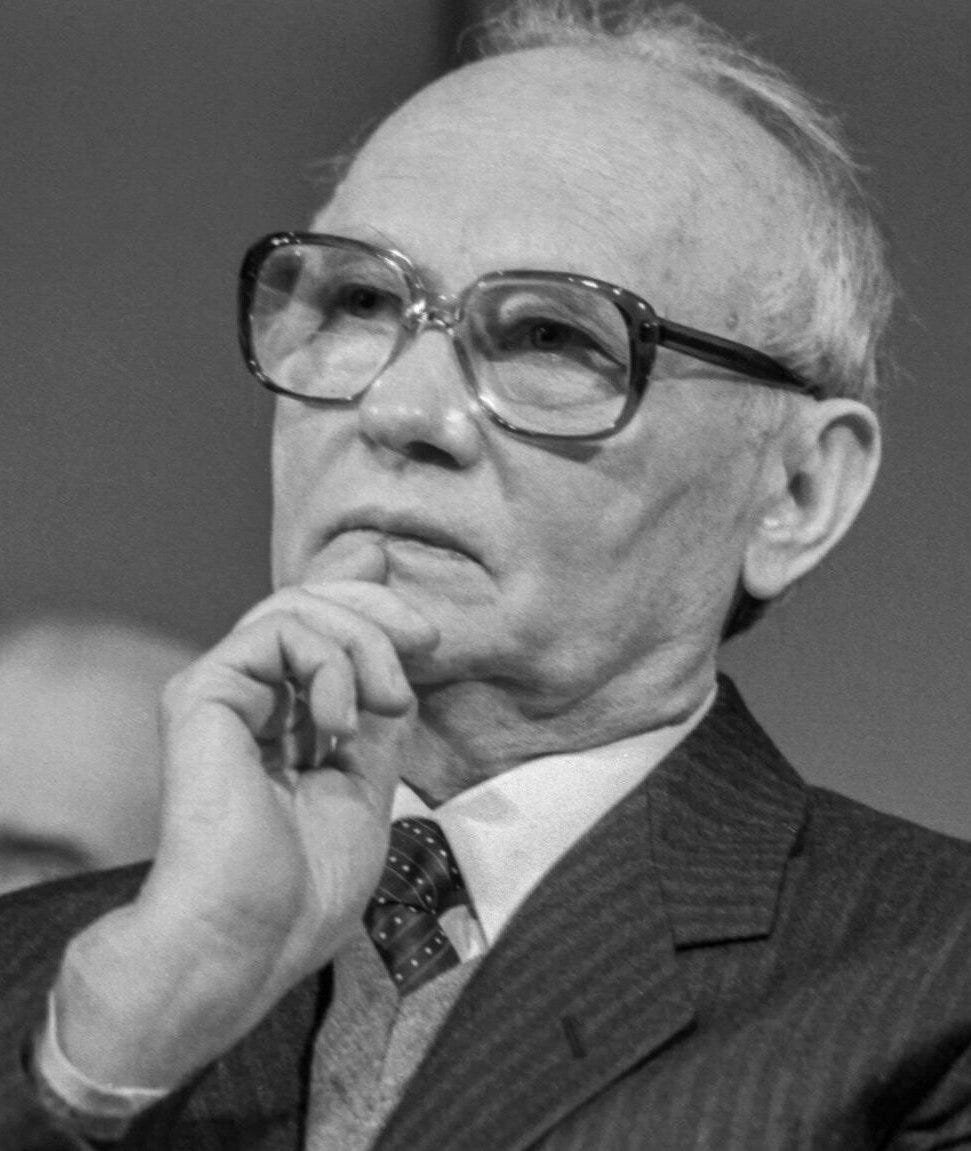
Kryuchkov had started out not in the KGB, but in the communist party — his journey began in 1955-57, third secretary of the Soviet embassy in Hungary. Already then, his boss was Yuri Andropov, at that point ambassador to Hungary. From 1959-63, Kryuchkov worked at the International Department under Andropov, responsible for curating relations with the ruling parties of Hungary and Romania. In 1965-7, he was Andropov’s aide at the Central Committee of the CPSU. And when Andropov moved to the KGB in 1967, Kryuchkov came with him, becoming one of the most important figures of the institution.
All this is quite interesting, given the fact that Andropov himself was a great supporter of liberal reforms, the original architect of perestroika. It was Andropov that wanted the socialist economy to be replaced with the free market, for single party rule to be abandoned. It was Andropov that brought Gorbachev to power. Andropov’s chosen aides in the International Department — Kryuchkov’s colleagues — would become Gorbachev’s chief aides in the late 80s.
So why, then, was Kryuchkov involved in the GKChP, which — supposedly — took aim at all of Andropov’s legacy? As we will see, in later years Prokhanov became quite suspicious about Kryuchkov’s role in the events.
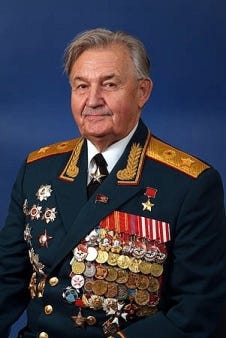
But back then, Kryuchkov and co seemed like committed patriots. In 1989, Prokhanov published interviews in his new magazine ‘SolLi’ with Valentin Varennikov, Commander-in-chief of the Soviet Ground Forces and Deputy Minister of Defence. Varennikov would also play a role in the GKChP.
Prokhanov’s writings in 1989-91 are filled with dark premonitions. And his new bureaucratic co-conspirators felt likewise:
Baklanov confided to me his worries, his premonitions of the end; on the plane he often shifted the conversation from politics to cosmogenesis; he was unexpected to me in that he sensed some mysticism of being, was burdened by the impossibility of understanding that something irrational exists in the world, and fell into a strange, uncharacteristic for a communist of that time mysticism.
By December 1990, Prokhanov was able, in his words, to ‘nag’ Baklanov into letting him write the ‘Letter of the Fifty Three’, an anti-perestroika text calling for Gorbachev to declare a state of emergency. It was signed by top economic managers, military figures, politicians, and defense factory directors. This would be the first of several highly-publicized political letters (semi-)secretly authored by Prokhanov.
Speaking in the 2000s, Prokhanov believes that the ‘Letter of the Fifty Three’ failed to have any impact because it meekly appealed to Gorbachev, instead of invoking a rebellious opposition. Prokhanov wouldn’t make the same mistake in his next Letter.
Liberalism exposed
All this talk of the struggle against perestroika and famous public addresses should have you thinking of a certain someone — Nina Andreeva’s 1988 letter ‘I Cannot Abandon My Principles’.
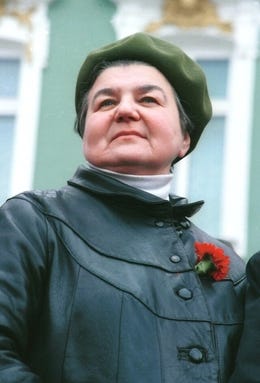
In fact, Andreeva wrote her letter in response to one of Prokhanov’s articles at the time. She agreed with Prokhanov’s claim that both ‘neoliberals’ and ‘neo-slavophile’ nationalists were equally dangerous, given their shared opposition to ‘the socialism we have built with struggle’. This is somewhat ironic, since Prokhanov would soon abandon this view and ally squarely with the neo-slavophile against the liberals. Although, it should be noted, that the late 90s and 2000s did see some quite fascinating liasons between Prokhanov and his seeming liberal oligarchic nemeses. But that’s not today’s topic.
In any case, Andreeva criticized Prokhanov even then for exaggerating the differences between the two anti-communist tendencies. And many years later, Andreeva would actually accuse Prokhanov of liberalism:
An article by Alexander Prokhanov appeared in Leningrad Worker about the repulsive situation that had developed in society. Its basic idea was as follows: the socialist pillar is being beaten from two directions—one democratic, the other “soil-based” (national-traditionalist). He proposed that, in order to reduce tensions in society, freedom of discussion and debate should be introduced, and a common marketplace of ideas created.
I consider this absurd. What was won in a brutal historical struggle cannot simply be handed over. Prokhanov put forward far-fetched ideas—such as creating a world government composed of leading intellectuals, which would issue recommendations that rulers would be obliged to follow. But that’s nonsense!
Class struggle drives history! And such an amorphous, classless approach indicates either political illiteracy or deep delusion.
Why did I pay attention to this article? Because at that time the question of my husband and me traveling to Afghanistan was being decided. And Prokhanov had just published an excellent novel, A Tree in the Center of Kabul. When I read it, the subject interested me.
After analyzing Prokhanov’s article, I decided to write a response to Leningrad Worker. A journalist came to see me. Only a small excerpt was published under the title “A Memory of the Future.” There were many responses to Prokhanov’s article, and he replied to them with a second article. But I didn’t like that one either, because of its lack of political substance. So I wrote a second response—but Leningrad Worker refused to publish it.
After continued tribulations, she eventually published it under the well-known name. So as you can see, though Prokhanov enjoys singing paeans to the Generalissimus, true fans of the Great Georgian consider him a pretender.
Blood in the mountains
And speaking of the Caucasus. Away from high-flung Moscow debates, Prokhanov witnessed firsthand the savagery of the events tearing apart the Soviet Union. In December 1988, he flies to Yerevan.
At the time, General Albert Makashov was military commandant of the Armenian capital. On Gorbachev’s orders, he’d already imprisoned seven of the eleven members of the Independent Karabakh Committee. Prokhanov enjoyed a close friendship with Makashov, and the general drove him to the emerging, but already quite deadly conflict zone — Stepanakert, the heartland of the Karabakh Armenian nationalist movement.
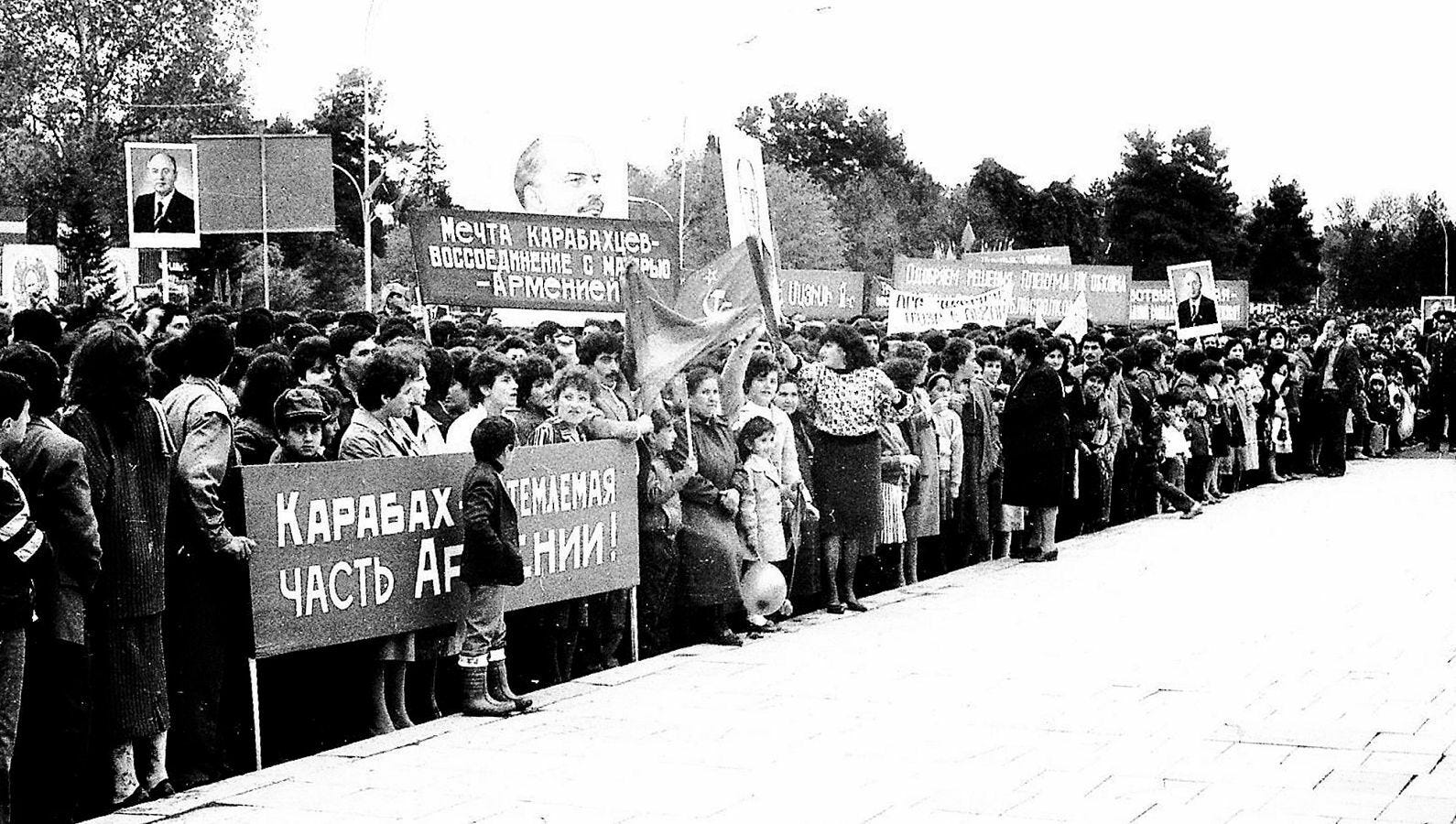
There, deep in the mountains, Prokhanov meets with Robert Kocharyan, leader of the Armenian nationalist resistance and future president of post-soviet Armenia. Prokhanov recollects that he met Kocharyan illegally, ‘through intelligence channels’. Makashov wanted little more than to throw him in the slammer.
On the run from Prokhanov’s own friends, the two darted through the mountains on old zhigulis, meeting ‘quiet, mysterious Armenians’ in run-down taverns. Prokhanov recalls secret underground weapons caches.
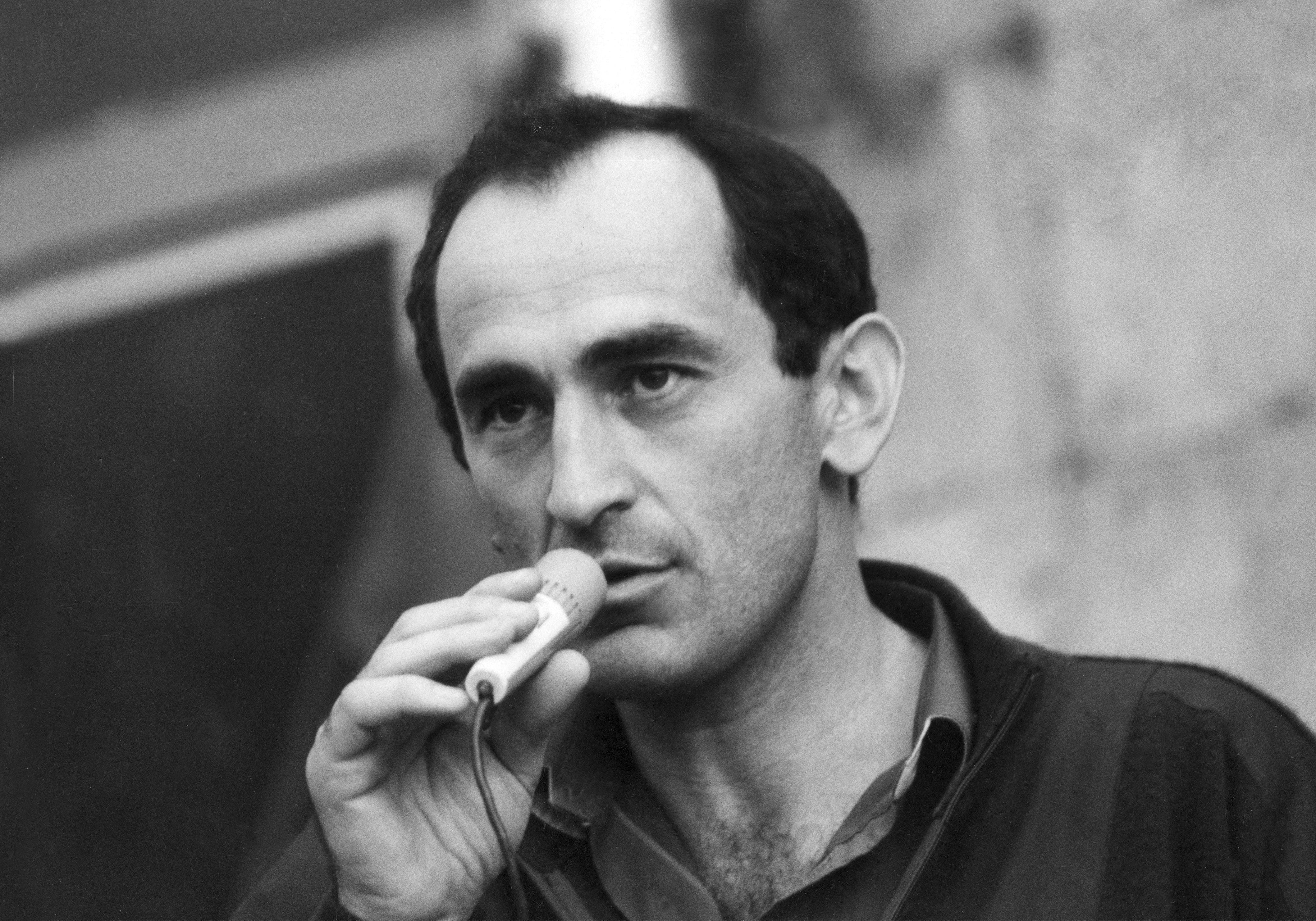
Prokhanov told his new friend ‘Robik’ that he would become president of Armenia. But while they enjoyed many nights sipping wine together, Prokhanov was also occasionally frustrated by Kocharyan’s remarks about the defects of the Russian nation when compared to the refined Armenians.
On December 1, 1989, full-scale conflict erupted between Armenia and Azerbaijan. And Prokhanov went to Baku at the invitation of his old friend Viktor Polyanichko, curator of the ideological front in the Afghanistan war and former patron of Najibullah (and his predecessor, Babrak Karmal).
At this time, Polyanichko held the covert reins of power in Soviet Azerbaijan, and supported a more proactive policy against Armenian nationalism in Azerbaijani territories, especially Karabakh. While in Baku, Prokhanov met with Azerbaijani leader Heidar Aliev, who discussed with Prokhanov the possibility of creating a corps of Russian mercenaries to defeat Armenian separatists.
Blood saturated the air. On January 14, 1990, Prokhanov witnesses the aftermath of ethnic pogroms that killed hundreds. He watches the military quelling of this unrest, commanded by Soviet Marshall Dmitry Yazov, who would soon become a close ally of Prokhanov’s in Moscow during and after the GKChP. Prokhanov then took part in a military operation to rescue a soviet infantry regiment and their families in Stepanakert, then encircled by Azerbaijani forces.
Polyanichko pleads with Prokhanov to lobby his connections in Moscow to provide more support in the pacification of the conflict. Prokhanov was again unable to save his old friend, and Polyanichko would be assassinated in 1992 by unknown forces.
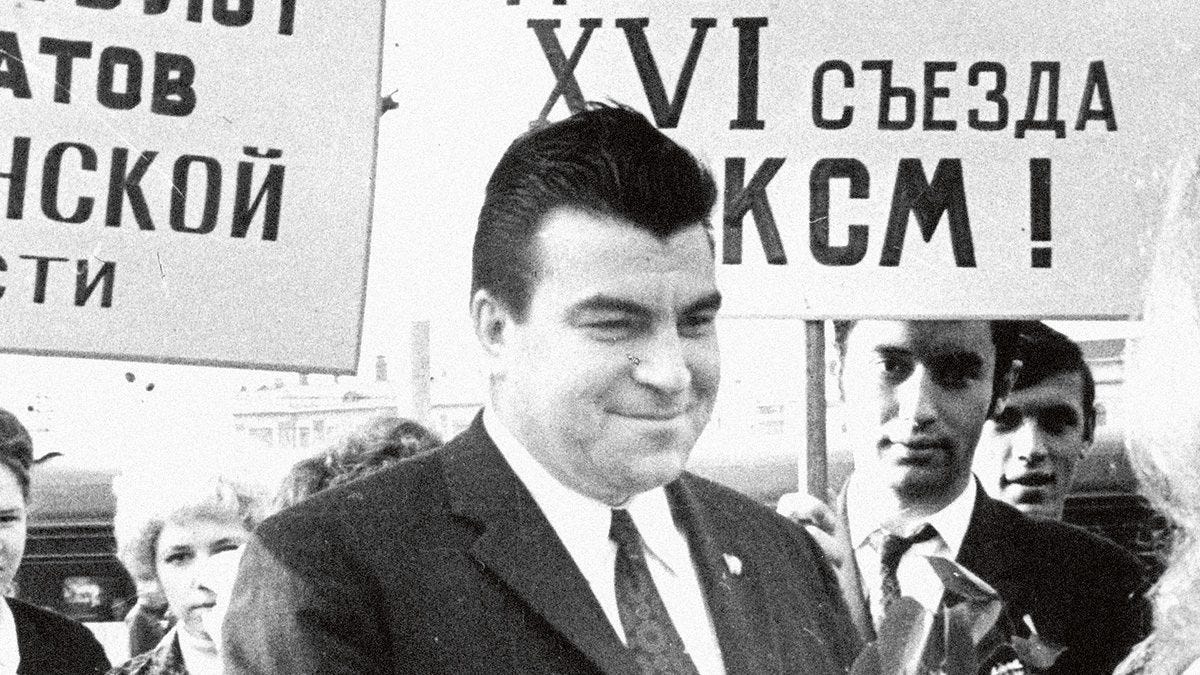
The slaughter of the Soviet State continued. When Prokhanov took a delegation of Soviet writers to Karabakh, Shusha, and Ganja, they were surrounded by violence. There were attacks on Soviet army garrisons, mass looting of property, roads were mined, officers’ wives were raped, and policemen and pilots were lynched: rolled into tractor or KAMAZ barrels and burned alive.
This theme of destructive conflicts in the imperial periphery resulting from the criminal negligence of the metropole became a key motif in Prokhanov’s fiction. His 90s and 2000s novels, whose main character is generally the retired KGB officer Beloseltsev, would be filled with guilt-laden hallucinations involving irruption of distant conflicts and dead comrades into decadent Moscow.
New political forces
By 1990, it was quite clear to Prokhanov that destructive forces had taken over the Union. Though the year saw a record agricultural harvest, it was left to rot amid the chaos caused by Gorbachev’s reforms.
Meanwhile, the KGB was furiously setting up new political projects in all Soviet republics. These tended to be of three types – liberal anti-communists, nationalist anti-communists, and conservative pro-soviet. But in Russia, the distinction between the latter two was not always so clear — with Prokhanov an excellent example. Prokhanov himself recalls how KGB director Kryuchkov set up the Liberal Democratic Party of Russia in 1990, the main nationalist anti-communist party of post-soviet Russia, led by Vladimir Zhirinovsky.
Prokhanov played a major role in this new political foment. He and other patriotic organizations gathered in the Central Committee building. Prokhanov petitioned Kryuchkov as a loyal soviet citizen with the impeccable reputation of having never joined the Party. The novelist deepened his friendship with Kryuchkov at one of the last pro-soviet rallies organized by KGB officers, where Prokhanov was a prominent speaker. Accordingly, Kryuchkov and other Party officials asked Prokhanov to create a coordinating committee of Russia’s patriotic forces, with the founding conference held in the October hall of the House of Soviets.
But for Prokhanov, politics was always primarily journalism. In 1990, he created a new journal, Den, with the support of Vladimir Karpov, head of the Soviet Writer’s Union. Prokhanov ensured the paper’s relative financial stability by meeting his old friend, General Yazov. In a typical barter arrangement of the time, Yazov gave Prokhanov ‘two or three’ massive Kamaz military transport trucks, which Prokhanov sold on the black market to pay off complicated debts.
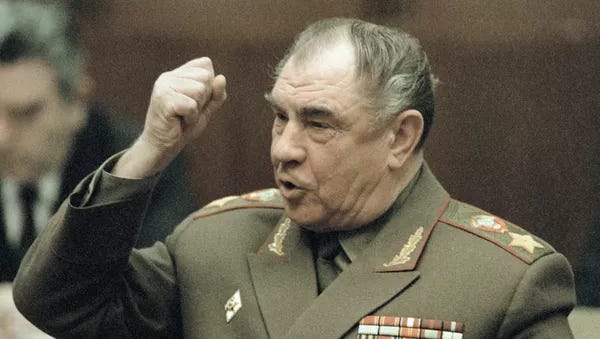
In the summer of 91, Prokhanov formed a relationship with another important bureaucrat and future GKChP figure, Vladimir Babichev. Meeting at Babichev’s palatial office, sizable sums of money for the operation of Den were bequeathed. These meetings would be replayed in the pages of Prokhanov’s fiction.
Prokhanov also met with general Varennikov at the headquarters of the Ground Forces, where the novelist was given a secret office for the Den editors at the soldiers quarters at the Krutitskoye Podvorye.
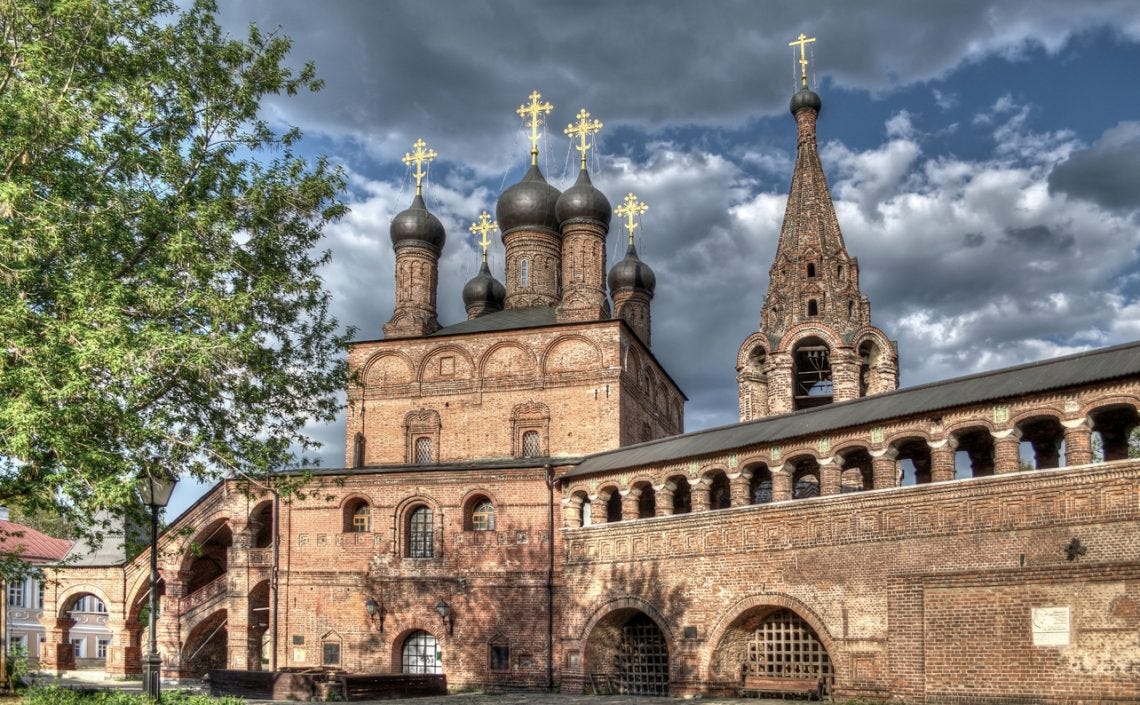
Its upkeep was financed by the ministry of defence, and soldiers renovated it for the new tenants. Its location would only be discovered by liberal journalists in Literaturnaya Gazeta (where Prokhanov used to often write) following the failed 91 coup. Prokhanov likes to wax lyrical about this lost office with its brass plaques on the doors:
The secret surrounding the actual address of the ‘Den’ editorial office was kept so tightly, as if it were at least a military super-classified site of strategic importance
He also claimed that the military industrial complex gave ‘Den’ a cutting-edge computer.
The Word and the Coup
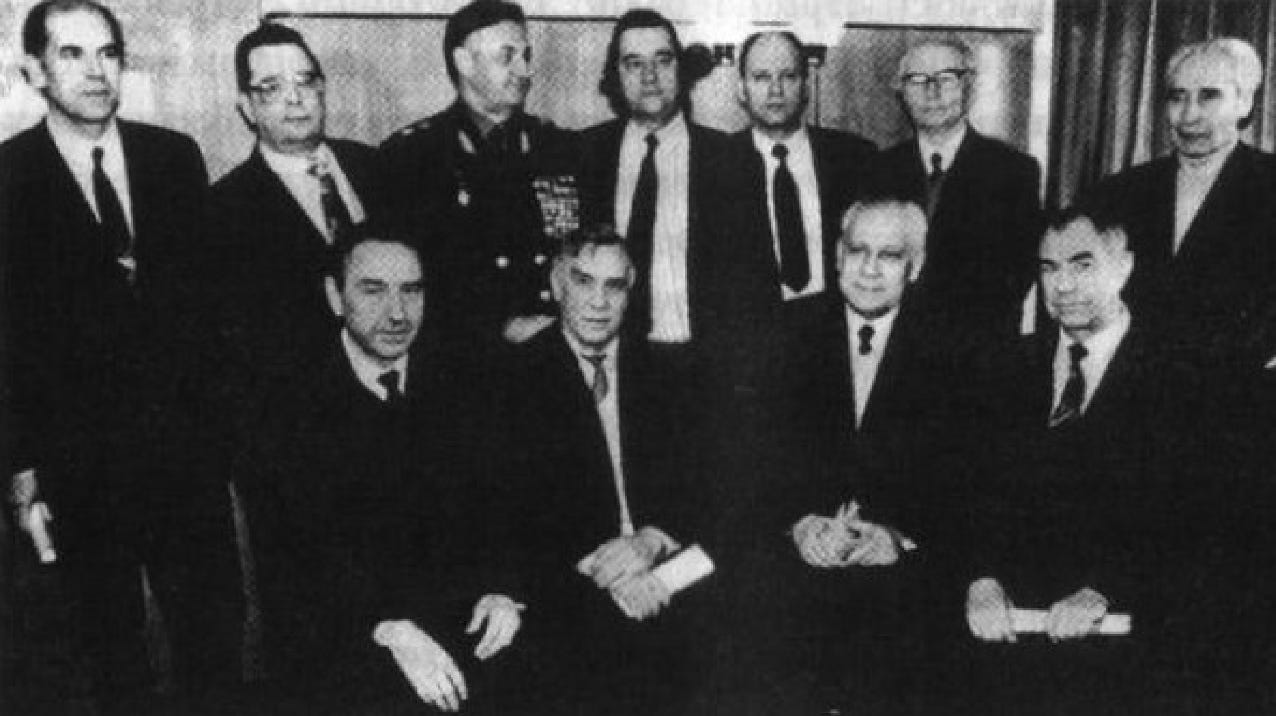
And now, finally, we get to the latter half of 1991. Below, you can see Prokhanov (centre, back row) with the cast of the GKChP, presumably taken towards the start of the year. Kryuchkov is second from left, wearing his usual Andropovite glasses.
One of Prokhanov’s most important exercises in writing took place in July 1991 - ‘a Word to the People’. The program of the GKChP, its firing salvo.
