Decoding Nord Stream II
The Ukrainians behind it that Bojan Pancevski's new book obliquely names.

In September 2022, at the bottom of the Baltic Sea, the world’s longest undersea pipeline blew up. 500,000 metric tons of methane were released, the most gas ever released into the atmosphere by human activity, equivalent to the annual carbon footprint of a small industrial nation. The blast was equal to the thermal output of a large nuclear reactor, destroying all marine life kilometers around. Germany lost $2 billion worth of leaked gas, enough to power two million households for a year.
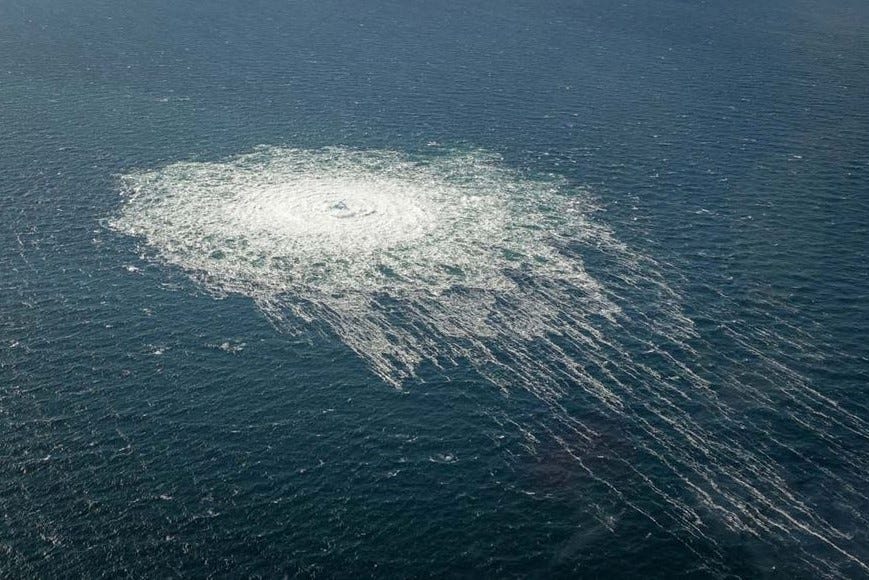
In late 2021, Biden had declared ‘we will bring an end’ to Nord Stream II if Russia invaded Ukraine. Later, his aides clarified that this merely referred to sanctions.
On October 19, German investigators set off to the Swedish site of the explosion. There, they encountered a number of ships, among which was the 418-foot American naval vessel the Hamilton. Also present near the site was the Russian survey ship Nefrit, hired by the Nord Stream operator to analyze what had happened. The highly-technologically advanced Hamilton then set about aggressively engaging the Nefrit, nearly ramming the much smaller Russian ship. It was ultimately forced to exit the area.
Of course, as any self-respected partisan of Democracy knew at the time, and hopefully still knows, it was Russia that destroyed Nord Stream II. After all, why wouldn’t you get rid of an asset you spent $5 billion building? Anyone can agree that Russia was highly interested in cutting ties with its largest export market, the economic lifeblood that kept Europe ‘geopolitically dependent on Russia’, which is the term the enlightened call international trade.
At the start, it was common knowledge that Russia did it. As the years went on, less effort was put into this narrative. And now, finally, we have the European press reporting that Ukrainian nationalists were recently arrested for the act of sabotage, to be tried in Germany.
It was certainly quite difficult for the western press to figure out why Ukraine would want to destroy the pipeline. But there are a few pieces of evidence. Nord Stream cut Ukraine out of the lucrative gas transport business, a business that guaranteed 2% of Ukraine’s budget in 2021 (and untold more billions in shadow money). It increased ties between Germany and Russia, raising the spectre of a united Eurasia, one where the need for Anglosaxons and their sundry clients would be obviated. In December 2021, there were protests against Nord Stream in Kiev, in which avowed Ukrainian neo-nazis like Evgen Karas accused Germany of repeating its Hitlerian past.
Anyway, an interesting new book has come out about the Nord Stream affair. It’s written by Bojan Pancevski, a journalist that has long covered Ukraine for the western press, the Wall Street Journal’s chief European political correspondent.
As we’ll see in the rest of today’s review, Mr Pancevski is quite a well-informed man. He is on quite good terms with many of the biggest names in the world of Ukrainian and European spookdom.
Today, I wanted to share some of the more interesting things I learned from Pancevski’s book. As always with grand geopolitics, the affair reveals a great number of important aspects of domestic politics, in this case Ukrainian. This intersects with a range of storylines I’ve covered on this substack, and also gives an interesting view on the explosive (apologies) future of Ukrainian politics.
To begin with, the obligatory mention to Seymour Hersh, who came up with a quite influential theory of the Nord Stream sabotage. I suspect that he is being given information by an American ‘member of the intelligence community’ who might not be entirely guided by the interests of accuracy. His strident prediction that year that the CIA would replace Zelensky with general Valery Zaluzhny was also rather off, as I wrote at the time of Hersh’s claim.
Anyway, per Hersh, Nord Stream was destroyed by an American-Norwegian team of divers. But though Norway certainly has economic reason to get Russian energy out of the European market, I find it hard to imagine this country executing the largest act of economic sabotage in history, let alone against its own European neighbours.
As for the CIA, I feel as though Hersh is somewhat stuck in the cold war era. As Pancevski rightfully points out, nowadays the CIA acts through proxies for its kinetic operations. Of course, this isn’t entirely new, with such glorious acts like the slaying of JFK operating largely through Cubans and other useful idiots. This reliance on foreign proxies ramped up in the post-Watergate, post-Vietnam eras. And in today’s world, crawling with surveillance technologies and rival powerful intelligence agencies, it’s most important than ever to operate at arms-length.
Pancevski even quotes a ‘former CIA official’ once involved with Europe, who perhaps ruefully answers that ‘my operations guys would have laughed at me’ if he’d asked them to blow up the pipeline. ‘I spend my days dealing with diversity training.’ He sighed. ‘We don’t go around blowing things up like that anymore.’
Personally, what interests me most about Hersh’s narrative about the CIA-Norwegian responsibility for destroying Nord Stream is who exactly gave it to him, and why. At minimum, the aim was probably to muddy the waters with a narrative that was simultaneously more true than the absurd ‘Russia did it’ one, but also still misleading.
There is one explanation as to who benefitted from Hersh’s story. Pancevski reports in his book that ‘the General’, one of the Ukrainian spooks that organized the operation to destroy Nord Stream, was delighted by Hersh’s reporting. That’s because it meant he and his allies would be spared attention from Russian assassination teams, at least temporarily. Indeed, until 2024/2025, the official Russian government line pointedly following the reporting of the ‘great American journalist Seymour Hersh’ in blaming the act of sabotage on the accursed American Agency. In my next article, I’ll write about why the Russian narrative changed.
There are some other issues Pancevski flags. For instance, the warships Hersh alleges were involved in blowing up the pipelines would have been easily identified by public radar systems and would have had to declare themselves to marine traffic systems. The small yacht Pancevski and German investigators allege was used, in contrast, had no need to declare itself in such a manner.
Operation Diameter
Pancevski’s story is quite a lot more detailed than Hersh’s, and relies on sources whose identity can be readily determined. Though it shares an explanation with Hersh — the destruction of Nord Stream II aimed to eliminate German economic reliance on Russia — the culprits are different: the Ukrainians. Best of all, Pancevski talked to the people involved in organizing and even executing the operation to destroy Nord Stream II. Sometimes he gives them pseudonyms, sometimes not.
Today, I’ll give my beloved readers the skeleton key to the true identities of the mysterious figures that Pancevski named ‘the General’ and ‘the Colonel’, the organizers of ‘Operation Diameter’ to destroy Nord Stream II. Though I would like to claim that this puts me at danger of assassination by the all-powerful Ukro-CIA cabal, I must admit that it isn’t all that difficult to figure out these identities for those familiar with Ukrainian politics or recent reporting on the pipeline affair.
I’ll also explain the identity of the man Pancevski calls ‘the Drone Master’. This is the first time I’ve seen anyone accuse this prominent figure of involvement in the Nord Stream affair.
Let me first give a brief overview of Pancevski’s narrative on what happened.
Nord Stream II was blown up by a group of Ukrainian intelligence officers Pancevski calls ‘the Startup’. They mainly served in the Security Services of Ukraine (SBU), but some also spent time in the GUR (Main Intelligence Directorate). The leaders of the Startup, ‘the General’ and ‘the Colonel’, were famous and successful spooks fired by Zelensky for political reasons in 2020 and 2021. Commander-in-chief Valery Zaluzhny also supported Operation Diameter, trying his best to keep it secret from the president.
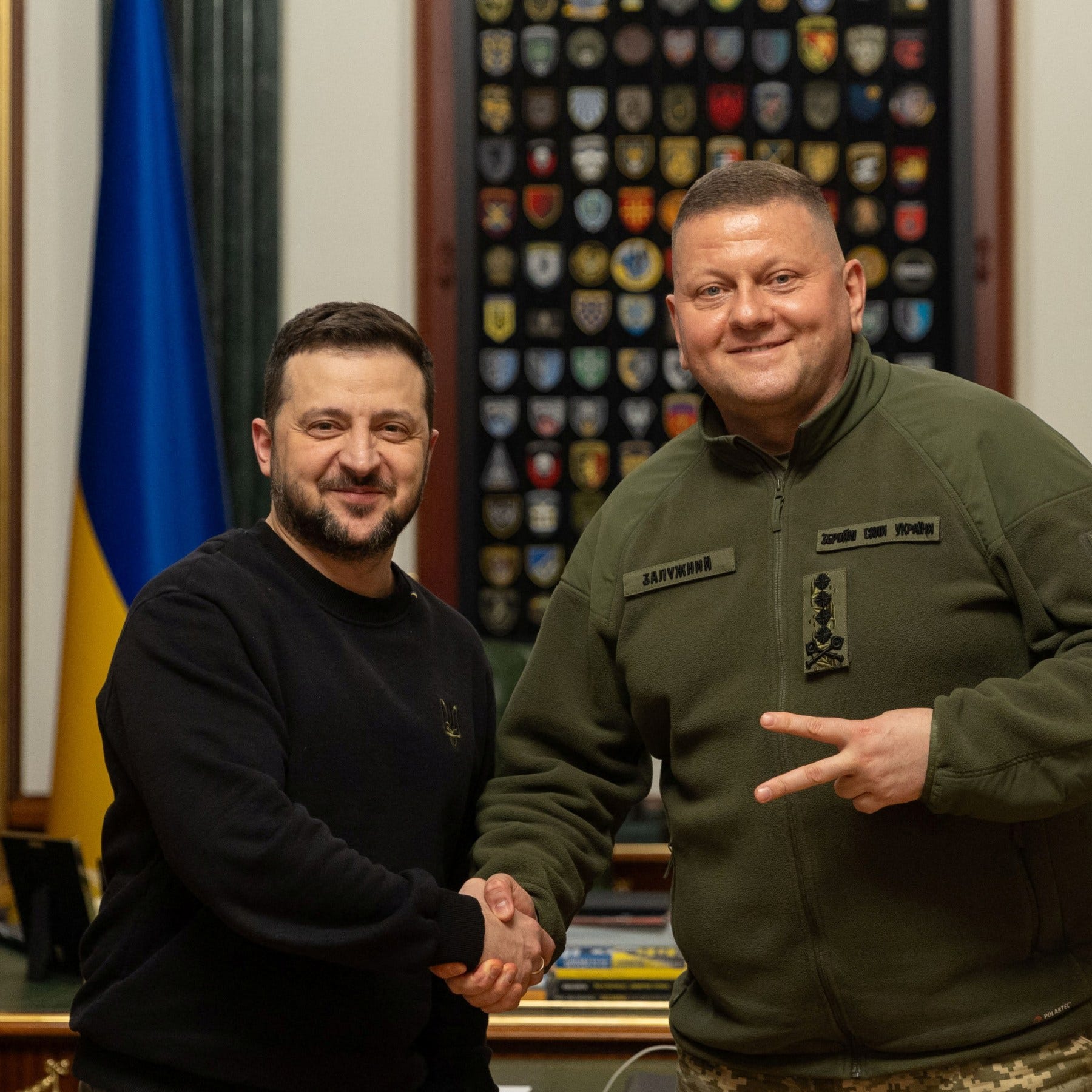
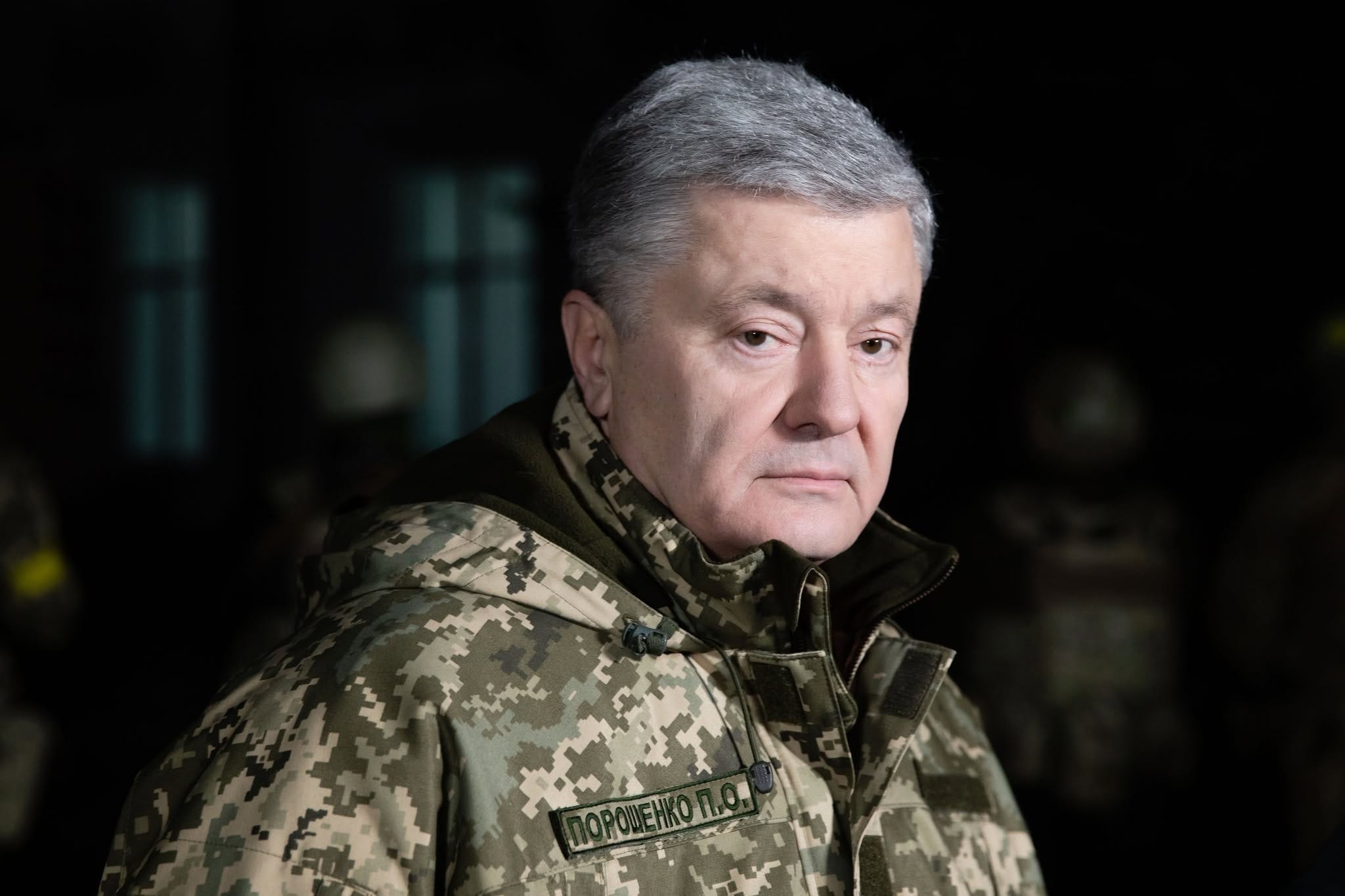
The ringleaders of the Startup call their group ‘a tiny little deep state’. They also received funding from ‘rich and slightly shady figures’ in Ukraine, among whom were prominent organized crime figures and ex-president Petro Poroshenko. Diameter was pulled off with a total of about $1 billion dollars. A Bulgarian mafia group was contacted for forged passports.
Whatever they call themselves, this group of military intelligence officers believed Zelensky was too soft on Russia, if not a Russian plant himself. The president, in turn, didn’t like how these intelligence officers operated outside of his remit, to put it mildly.
According to Pancevski, the ‘Startup’, created in 2021, aimed to launch a ‘two-front war: one against Russia, and another against key members of the Zelensky administration, whom they considered traitors and criminals’. The Nord Stream operation, correspondingly, was also not Zelensky’s idea. He may have gotten wind of it (more on that question in my next article), but it was kept secret from him for fear that he would once again ruin their great plan, as he had done in 2020 (more on that later today).
The CIA was very close with the leaders of the Startup, and knew that they were planning to destroy Nord Stream. They also apparently regularly gave the Startup $20,000 sums for various operations, which is the maximum sum that can be disbursed without official justification. The Station Chief in Kyiv, who Pancevski does not name, was apparently supportive of the idea to destroy Nord when the General presented it to him.
Pancevski diplomatically states that there is no evidence that these CIA funds were used for Diameter, though he notes that the members of the Startup are adamant that the CIA supported their venture, at least when they were told about the idea. They also say that the American proposal for how best to destroy Nord Stream would have required far too many boats and expensive equipment — $50 million worth — to be viable, not to mention taking too long. The Ukrainians apparently accomplished the operation with 5% of these funds. This was largely because their operatives took far greater physical risks, diving down close to 100 meters in wetsuits instead of using a submarine or underwater drone.
However, Dutch intelligence found out about Operation Diameter in mid-2022 and told its NATO allies. The head of the CIA got the Kyiv Station Chief to tell the leaders of the Startup to call off the operation, which they verbally agreed to do. Unsurprisingly, they didn’t keep their promise, though it did seem to delay the operation. Personally, and Pancevski somewhat hints at this, it seems rather obvious that the Americans didn’t exactly expect their Ukrainian friends to hold their word.
Indeed, Pancevski rather diplomatically notes that ‘not all senior CIA and national security officials who got wind of Operation Diameter were outraged about it’. Furthermore, despite the much-trumpeted official ban on CIA assistance to violent Ukrainian operations against Russia, ‘some CIA officials, individually, were not particularly bound by that aversion’ to kinetic operations’.
On the other hand, Pancevski often emphasizes that the Americans didn’t need to blow up Nord Stream, as they could destroy it just as easily with sanctions. He was told this by a CIA operations officer.
However, this explanation is less than satisfying. A mysterious explosion meant that Washington didn’t have to directly sanction Germany, something that wouldn’t be particularly conducive to already-frayed transatlantic relations. And while sanctions can always be removed with the flick of a pen, rebuilding a pipeline is a more lengthy and costly process.
Anyway, moving on with Operation Diameter. The idea came about in April 2022, shortly after the Russian invasion.
The pipelines were not destroyed by a team of trained SBU operatives for one simple reason — diving close to 100 meters underwater isn’t a skill many intelligence officers are equipped with, especially in Ukraine. That’s why the Startup turned to patriotic civilians well-acquianted with the aquatic world. It was these hobby/professional divers, following a sped-up period of training by their handlers, who rented a small boat to destroy the pipeline. Their training included simulated diving exercises in an abandoned Ukrainian quarry. The explosion went off using diving oxygen bottles filled with hexogen, the last detail reminiscent of the most famous Russian terrorist attack of the century, an explosion whose true authors are also often debated.
Though they managed to carry out the quite complex task successfully (at least in the Baltic Sea, but not in the Black Sea against Turkstream), the divers made a number of mistakes that more experienced intelligence officers probably wouldn’t have made. Hence, several of them have now been arrested in the European Union. Some were luckier, with the nude modeller Freya now apparently a diving instructor in the elite ‘Alpha’ special operations unit of the Security Services of Ukraine (SBU). Pancevski speculates whether she could be involved in a range of attacks against Russian tankers, a number of which involved explosives fastened to the hull of the ship.
A somewhat amusing aspect of Pancevski’s book concerns the question of guilt and admission. The General, the Colonel, Freya and Zaluzhny all tell Pancevski in detail about how Operation Diameter was carried out. At numerous points, he notes their pride in having executing the operation. They also express their opinion that Europe should be giving those responsible medals instead of persecuting them. German law enforcement has been stalking them to the ends of the earth, mostly due to the Saxon passion for bureaucratic procedure and rule of law.
However, as Pancevski always notes, they also all deny being part of the operation to destroy Nord Stream II, and he uses pseudonyms for the (rather easily recognizable) leaders. I suppose that’s just for legal reasons. In my next article, I’ll go into the domestic political context for why all these individuals are so eager to talk about their involvement in the largest act of economic sabotage in history.
The Colonel
Let’s now decode the identities of Operation Diameter kept anonymous in Pancevski’s book. We’ll start with the easiest one. Our sleuthing will take us into the heart of Ukraine’s political conflicts, as well as everyone’s favorite UK-based ‘‘‘‘independent investigative journalism’’’’ outfit.
