
Why this sudden bewilderment, this confusion?
(How serious people’s faces have become.)
Why are the streets and squares emptying so rapidly,
everyone going home lost in thought?
Because night has fallen and the barbarians haven’t come.
And some of our men just in from the border say
there are no barbarians any longer.
Now what’s going to happen to us without barbarians?
Those people were a kind of solution.
— ‘Waiting for the Barbarians’, C. P. Cavafy
The wrong parties are winning European elections. Ukraine’s economy is collapsing. Strange things are happening at German airports and post offices.
This Global North election season has also seen an unprecedented amount of speculations on a supposedly imminent war between the EU and Russia. And that’s in a context where there certainly has been plenty of precedent, speculation-wise.
What’s behind this hysteria? Is the ongoing European war really going to spill out of its Ukrainian container?
First of all, a disclaimer: maybe there will be a big Russo-European war. I’ve always been somewhat skeptical. But anything can happen. Until about February 20, 2022, I and most other people in Ukraine also doubted there’d be a big war there.
But before I get into the details, there is one big thing to keep in mind. I and many others didn’t believe in war back in February 2022 because it was a very unpleasant prospect. We let hope for the best take over our rational capabilities. But in retrospect, the signs of war were very clear. I even wrote a large article about the signs.
And the signs came from the Russians. Yes, the Russian government denied they would invade Ukraine until the very end. But Moscow sent out a dramatic ultimatum to NATO in December 2021, demanding that the North Atlantic Alliance cease cooperation with Ukraine and withdraw its military presence from much of Eastern Europe. Putin and Medvedev’s public essays over the course of 2021 were also quite evidently signaling Russia’s willingness to escalate if Washington didn’t force Ukraine into military neutrality. When that didn’t happen, Putin’s threat that a certain ‘beauty’ would ‘have to bear it’ came true.
What I’m saying is that Moscow likes to choreograph their next moves. The Russians love bureaucracy, in good Prussian fashion. If the Kremlin starts sending out official ultimatums for Europe to stop aiding Ukraine, then we can start worrying. But until then, the usual vague complaints about ‘red lines’ is all very meaningless.
It’ll also be interesting to see if the endless talk this year about how Russia will surely conduct a mass mobilization after the September elections will come true. It’s been several weeks since the elections ended, and there has been no mobilization. Maybe there will be, but I’ve still seen no actual proof that this is being planned other than the usual ‘anonymous insider sources’ and rumour-based hysteria in Russia. But the Russian mobilization narrative suffers from the same problem as the Russia invasion narrative — both assume that the Russian government believes it is losing on the battlefield, and hence must take massive escalatory risks.
Technical problems
Now we can get into the big problem with the Russian invasion narrative.
It all boils down to the claim Russia is escalating with Europe because it is losing on the battlefield. The Kremlin is striking out at the EU in a final paroxysm of rage, a refusal to go quietly into the night.
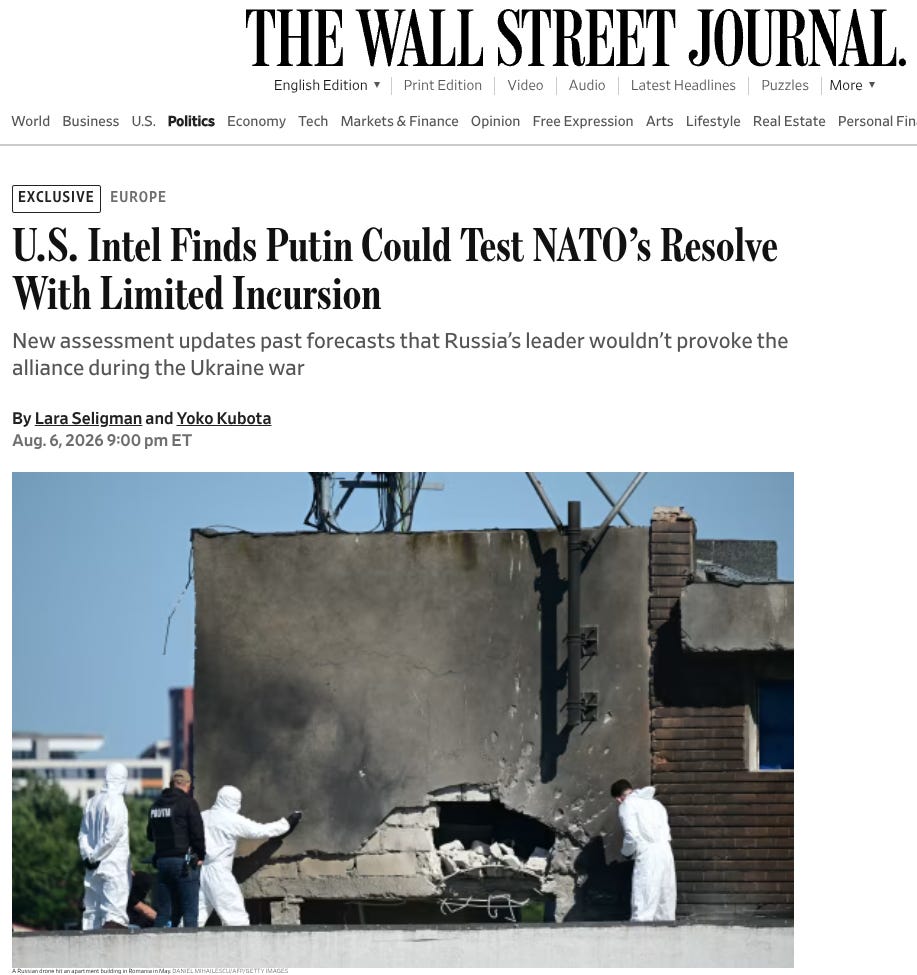
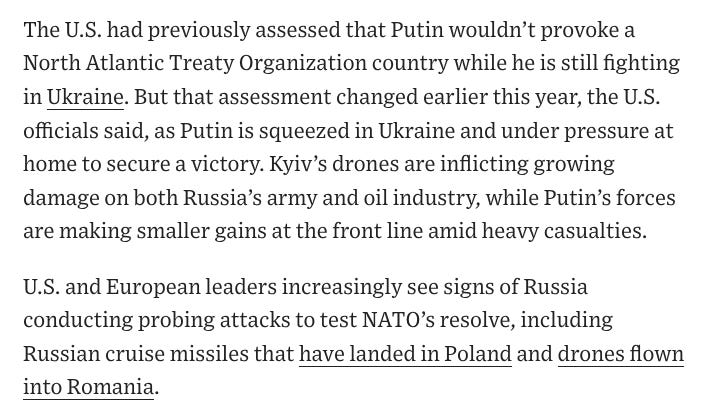
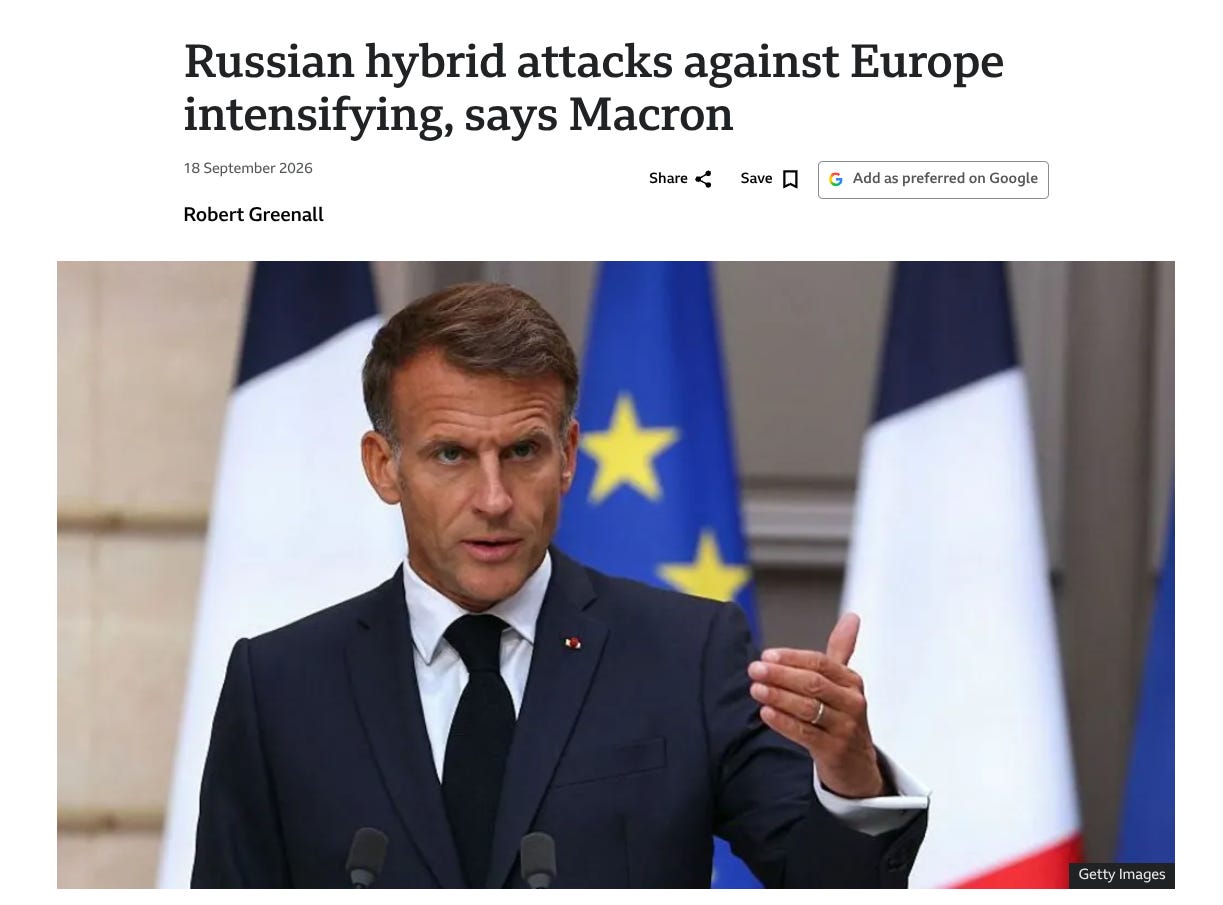
The Danish Defense Intelligence Service expressed this logic quite clearly in their September 24 statement, though it concluded that there were no signs of an actual Russian invasion.
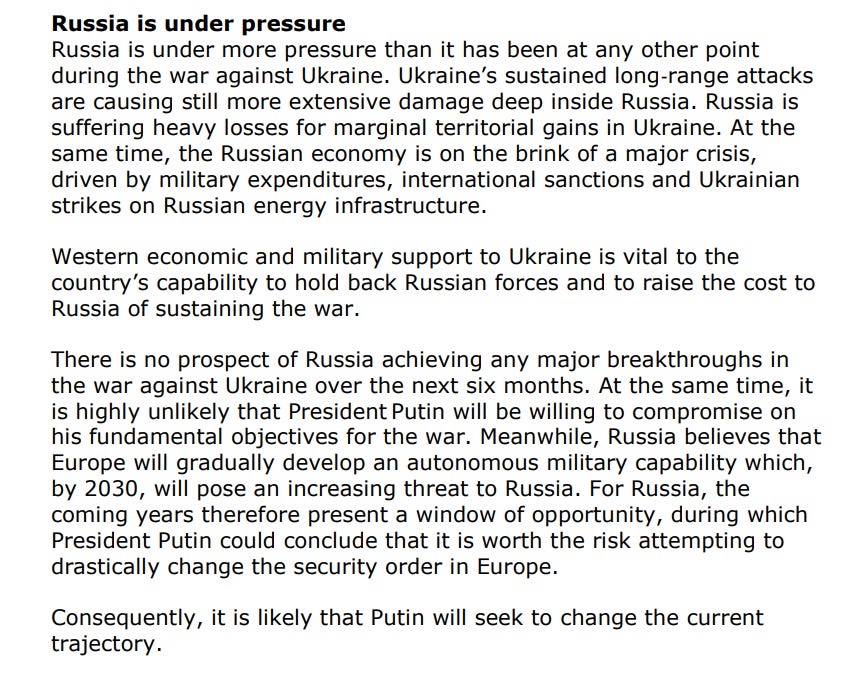
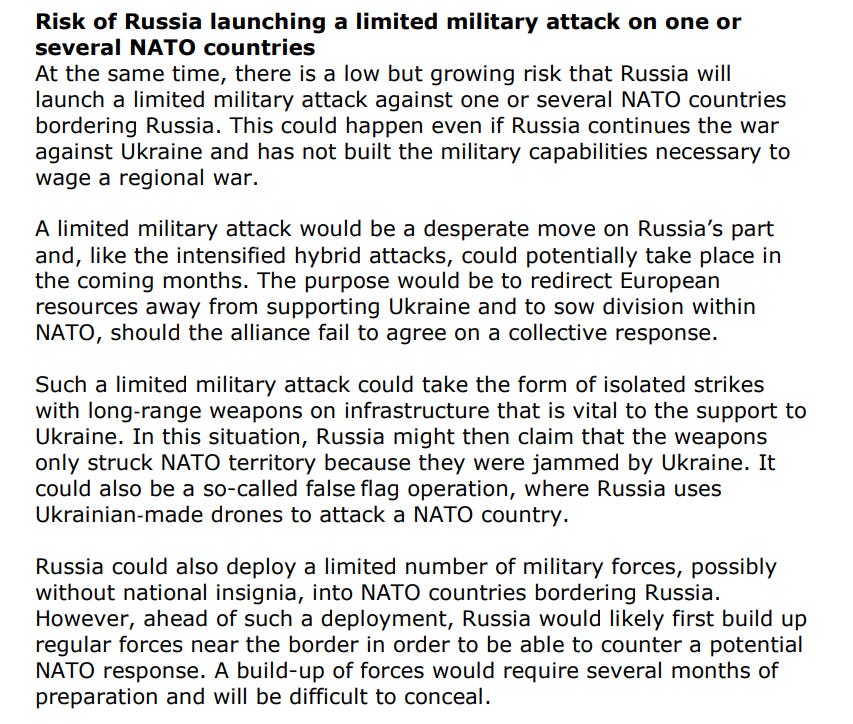
Perhaps the Europeans have drunk a bit too much of their own kool-aid. Their media campaign of ‘Ukraine winning on the battlefield’ this year was probably mainly aimed at their own populations and particularly Mr Trump, but perhaps European elite started believing it as well. And if Russia is losing on the battlefield, then maybe it really will decide on a last-chance banzai attack on Europe?
The problem is that Russia isn’t losing on the battlefield. It isn’t exactly carving through Ukrainian positions like putty, but it isn’t losing. And if you put yourself in the mindset of Russia’s generals and political leaders, they probably have reason to think they are winning. And given that the western argument is that ‘Putin knows he’s losing, so he is preparing to attack Europe as a last ditch effort’, what they think is all that matters. Let’s go into three reasons why.
Ukraine has made some ‘advances’ this year. But they are qualitatively different from Russia’s.
