Fortress falls
Kostiantynivka down, advances around Kramatorsk

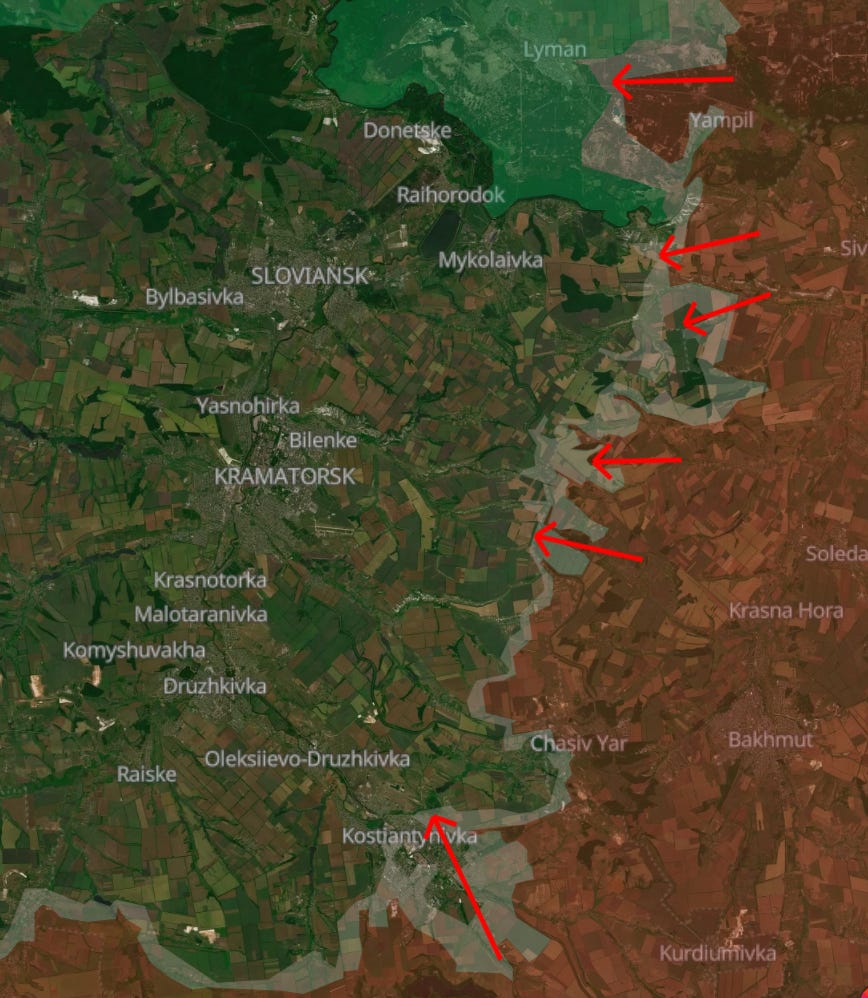
Today we’ll examine the rapidly concluding finale of the battle for Kostiantynivka. The fall of this fortress city is opening up the southern flanks of the Sloviansk-Kramatorsk agglomeration, the final cities of the Donbass. Then, we’ll look at Russian advances to the east and northeast.
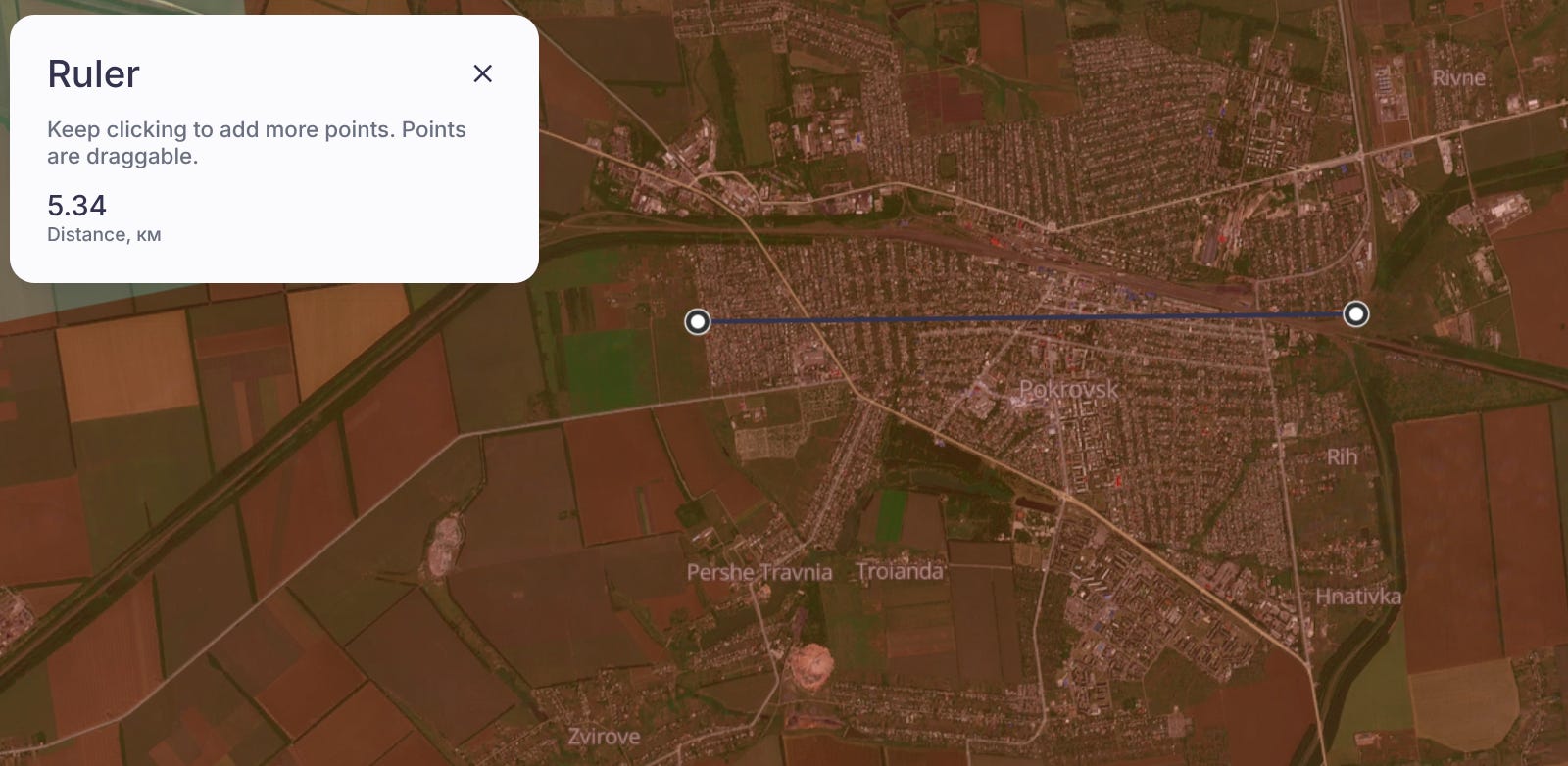
These urban battles for major cities in the Donbass tend to follow the same pattern. You could see it unfold with Pokrovsk, which fell at the turn of the year, and you can see it now with Kostiantynivka.
First, Russian forces advance around the flanks. This doesn’t only happen ‘first’, as it continues throughout all the following phases.
Then artillery, drones, and guided air bombs (KAB/FAB) level urban infrastructure, removing shelters for defending forces. Drones target all supply routes leading to the city. At the same time, infantry probing operations into the city begin. We can call this stage two.
The above phase tends to last some time, two, three, four months. Finally, Russian troops begin consolidating control over the outskirts of the city. The rubble is taken over by urban combat, guns, grenades, knives. Stage three.
The final stage often seems to be the fastest, often lasting less than a month. Consolidation over the flanks becomes consolidation of the whole city. At a certain point, there is a sort of critical mass of enemy troops that can no longer be stopped. Ukrainian soldiers write of a ‘blind defense’ — when all you have is drones, there’s a point at which there are simply too many targets to focus on. Stage four.
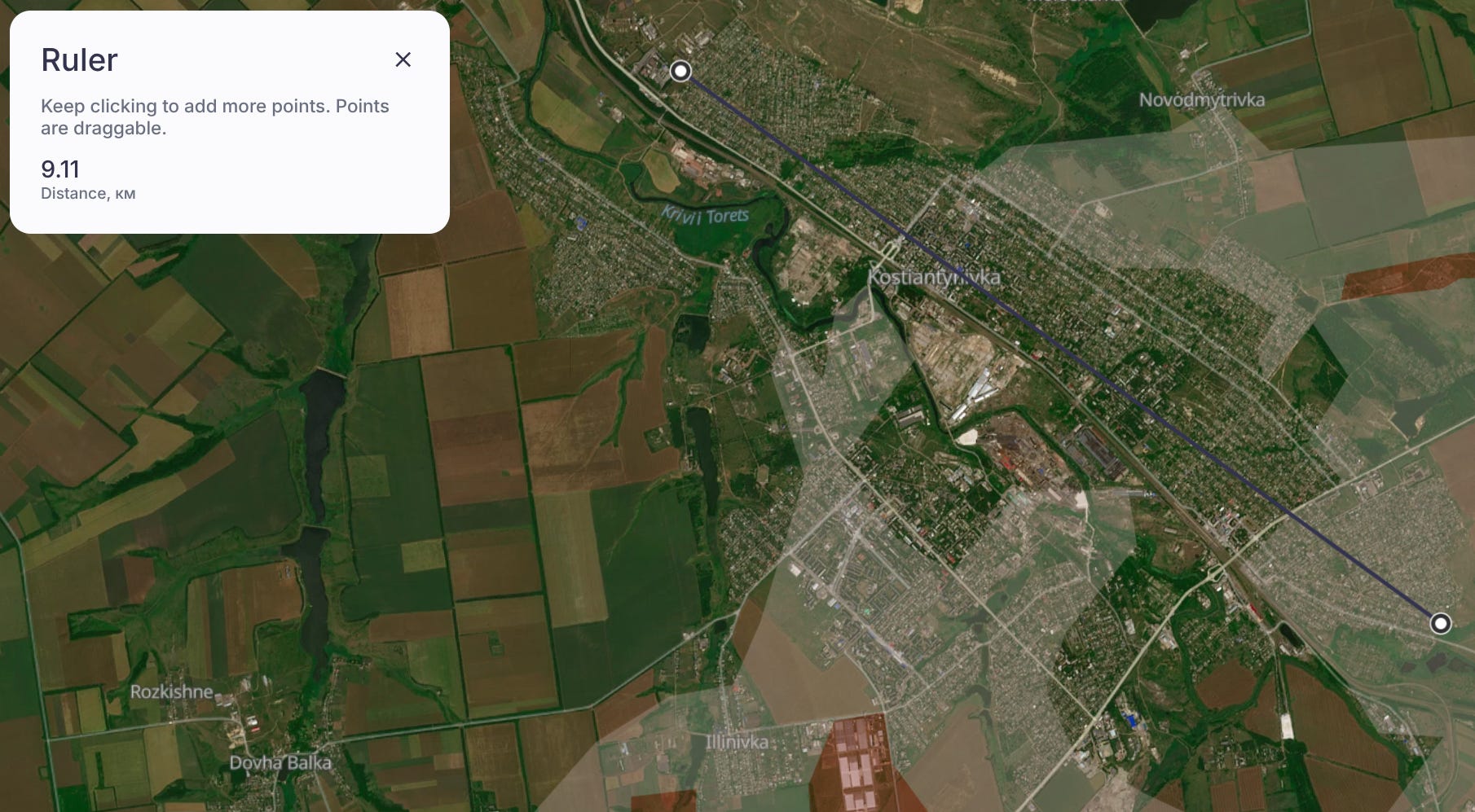
When it comes to Kostiantynivka (or Konstantinovka), we’re in stage four. I grew somewhat tired of reporting on the endless battles for the cities flanks over the past two months. But now, things are moving quite rapidly indeed. How much time is left for the city, which had a pre-war population of 70,000, like Pokrovsk, but a territory twice as large?
Russian infiltration of Kostiantynivka began in October 2025, accelerating over the past month. Over the past week, Russian control of the city rose from around 20% to over 50%.
Pro-government Ukrainian MP Mariana Bezuhla wrote a few days ago that the city will fall completely ‘this summer’.
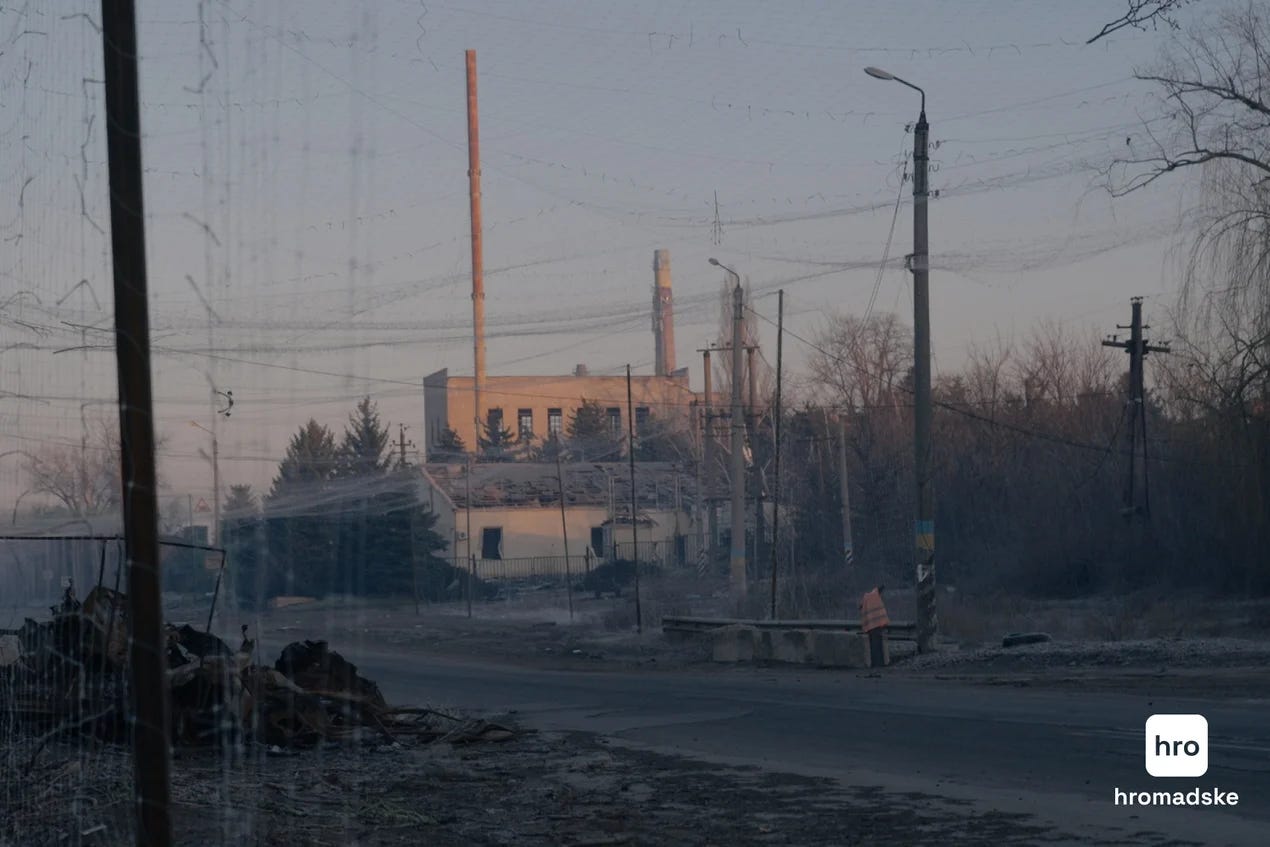
The liberal nationalist publication Hromadske published an article on the city today. Active soldiers interviewed expressed doubt that there would be any more Ukrainian troops in Kostiantynivka by the end of June.
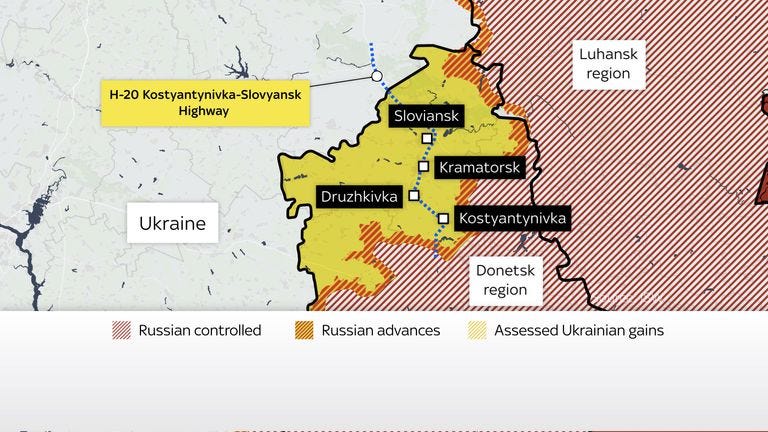
Strategically, this matters quite a great deal. Kostiantynivka, which had a pre-war population of 70,000, is the first of four ‘fortress cities’ that the western press often talks about. The others are Druzhkivka, Sloviansk and Kramatorsk. These are the last cities of the Donbass not under Russian control. Here’s a rather old CNN map showing the four ‘fortresses’, which are connected by the same highway.
In fact, all four of these cities are often considered part of the same urban conglomeration. As you can see in the (rather lagging) map below, there is an unbroken line of urban environment between the four of them, particularly Kostiantynivka, Druzhkivka, and Kramatorsk:
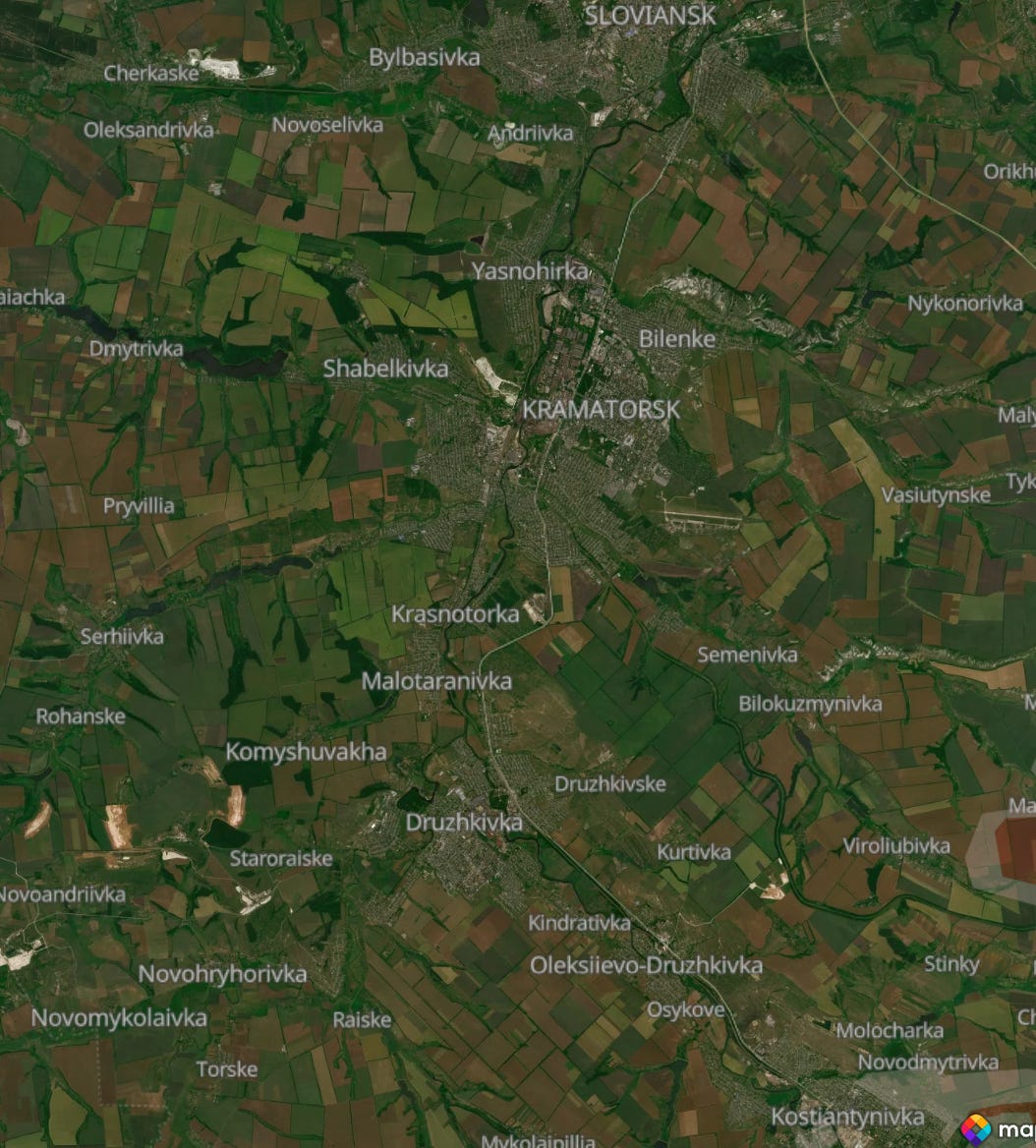
So in short, with Kostiantynivka down, there is a sense in which the battle for Kramatorsk is beginning. And with it, Sloviansk to its north.
Kostiantynivka now
First, a look at what exactly the picture for Kostiantynivka is at the moment.
The aforementioned Hromadske article from today gives a good idea of just how much pressure Ukrainian forces in the area are.
Soldiers active in or near Kostiantynivka describe the city as ‘semi-encircled’, both by Russian troops and Russian drones targeting logistics.
On June 10, Russian troops were even noticed in Osykove, which is to the northwest of Kostiantynivka. The DeepState map below, Ukraine’s beloved ‘semi-independent’ OSINT group, is clearly lagging far behind reality.
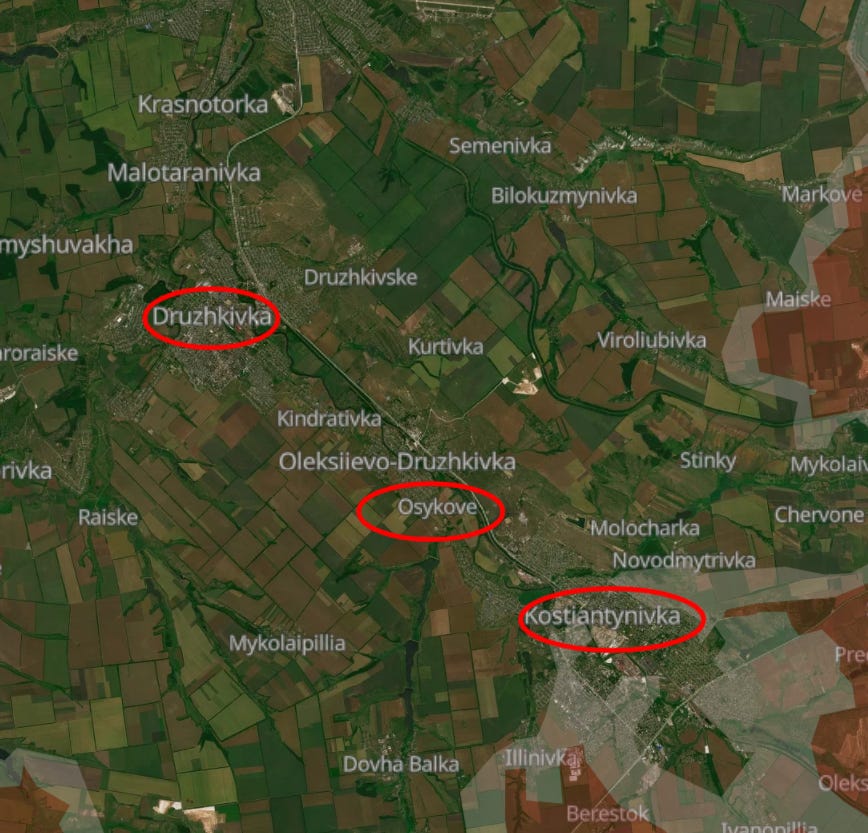
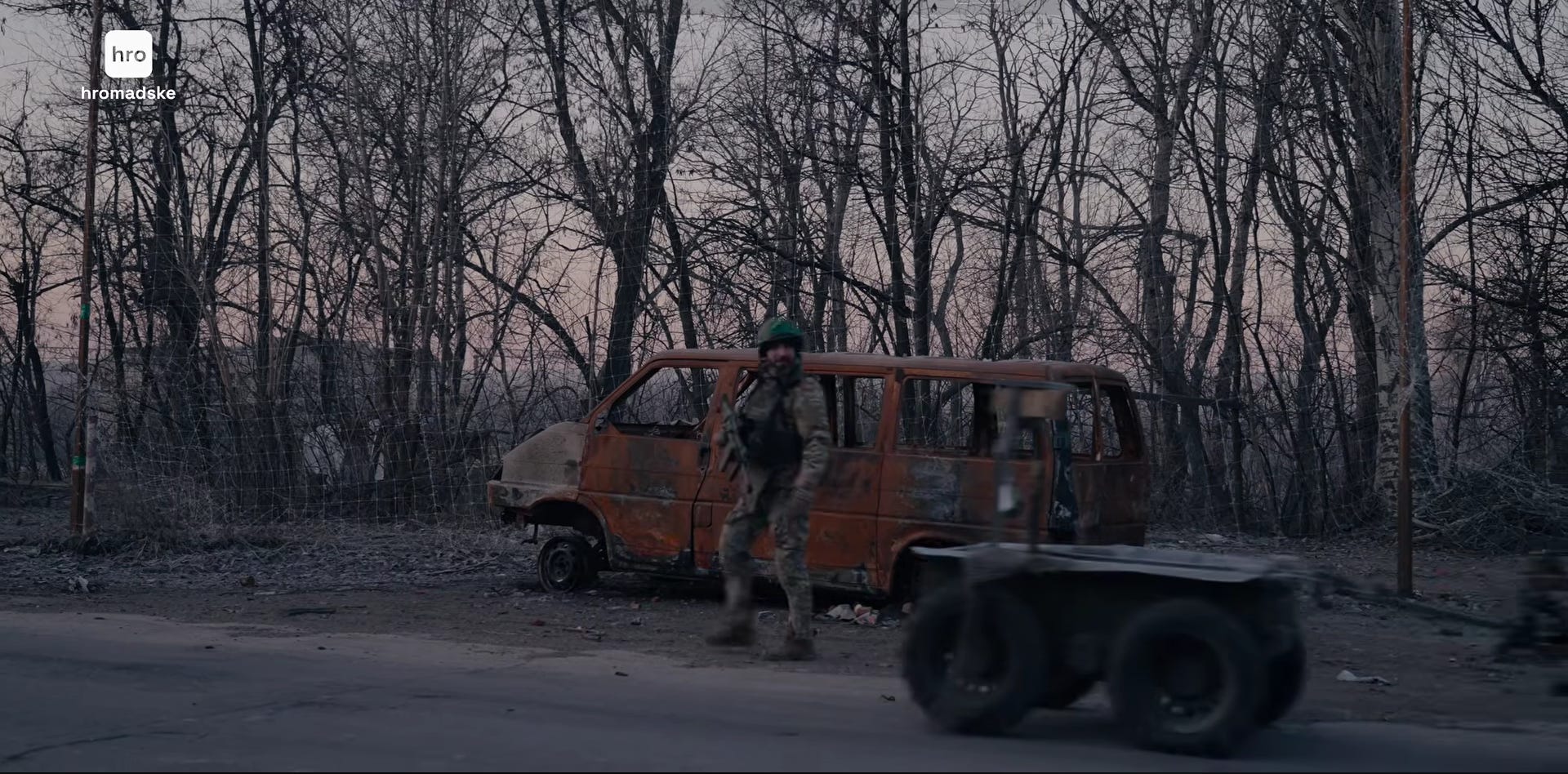
Even more important is Hromadske’s description of Russian drone domination of the area. Already in March, their journalists were only able to drive as far as Oleksiievo-Druzhkivka, and were forced to walk the remaining 6 kilometers to Kostiantynivka. Cars are too easily spotted by drones. The same method was used by Ukrainian troops. Supplies are often delivered with unmanned vehicles, as seen below (filmed in early March 2026).
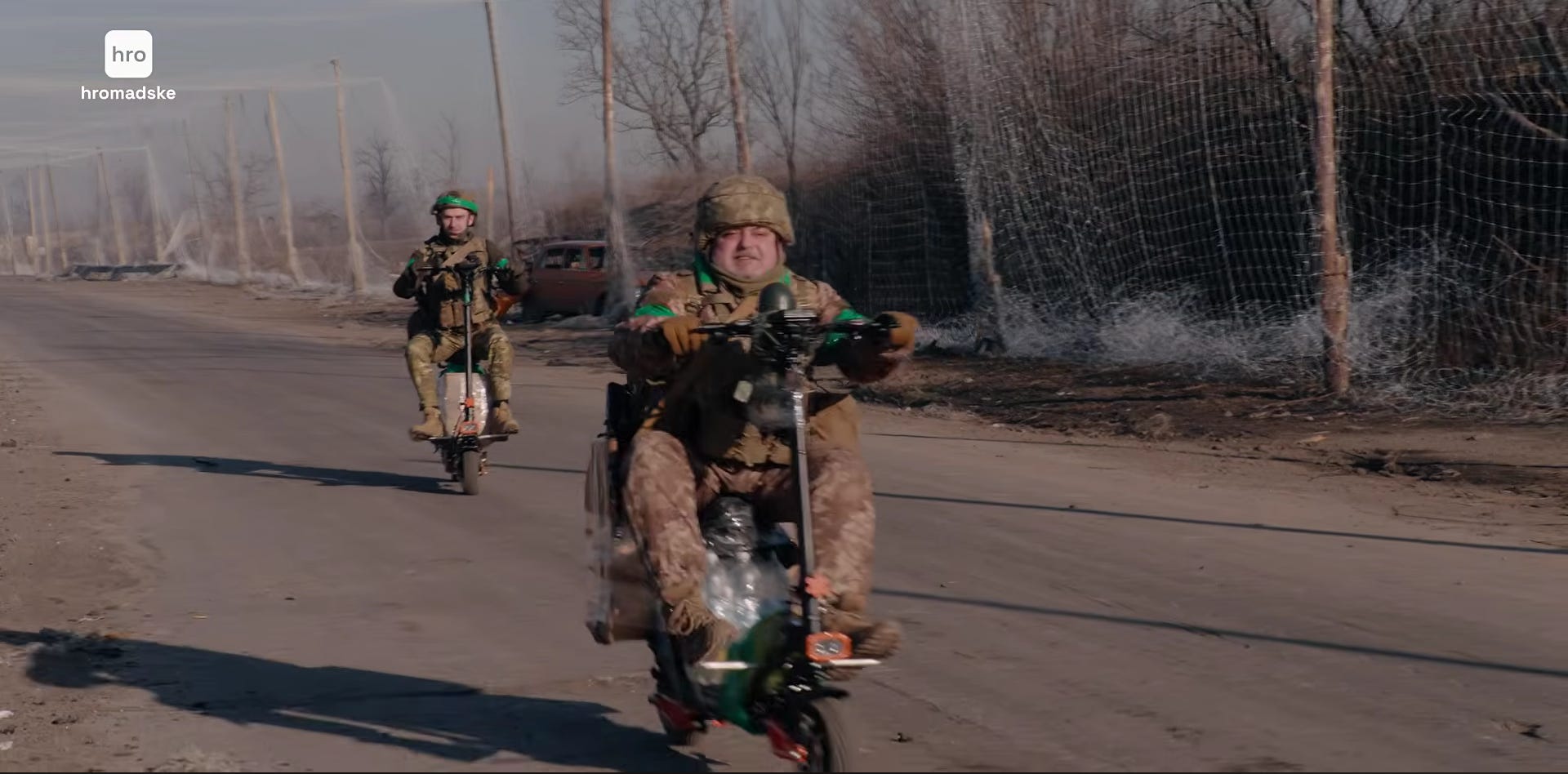
Back in March, Hromadske also filmed Ukrainian soldiers on electric scooters at the exit from Druzhkivka:
Now, they write, it is dangerous to even drive to Druzhkivka, which is around 8 kilometers from Oleksiievo-Druzhkivka. The following recent video from Radio Svoboda (the local branch of RFE) shows just how dangerous the Oleksiievo-Druzhkivka to Kostiantynivka road is:
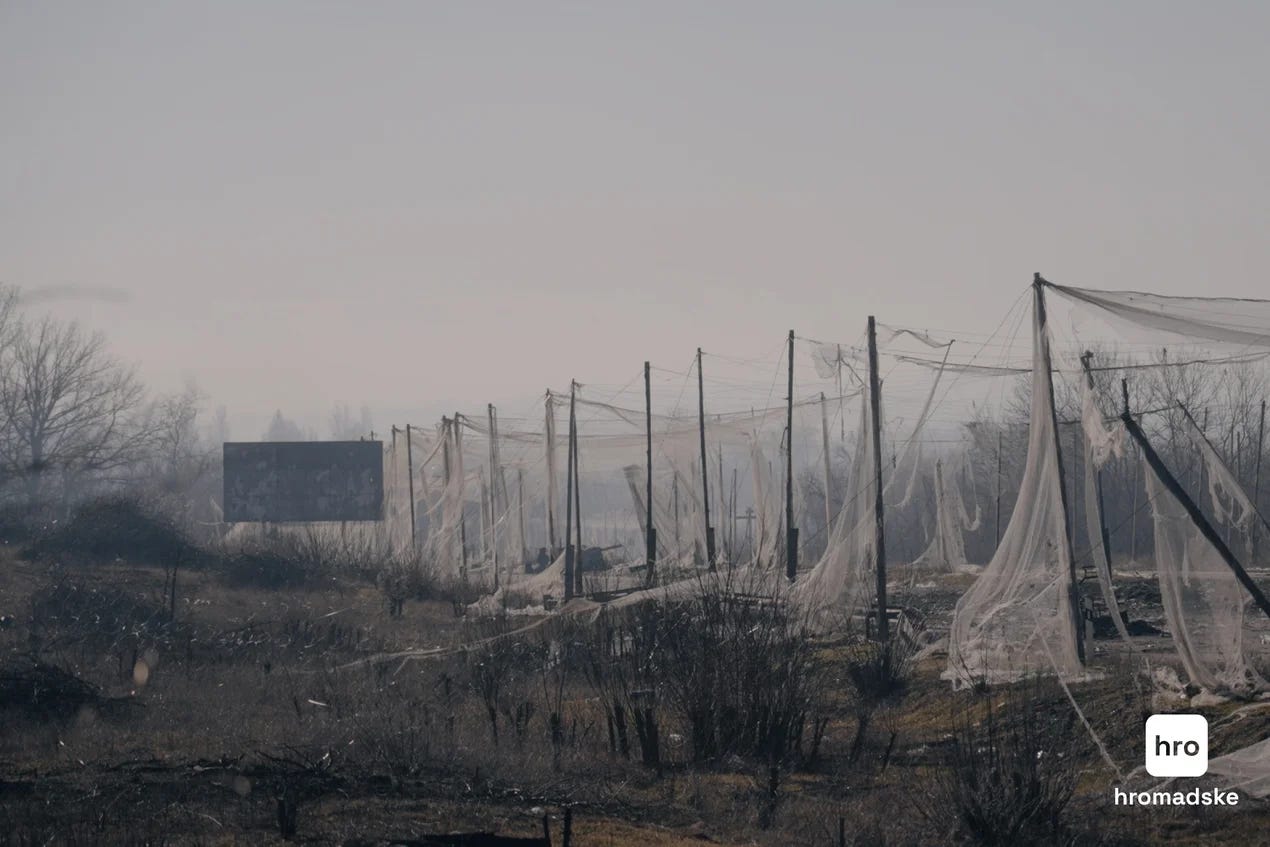
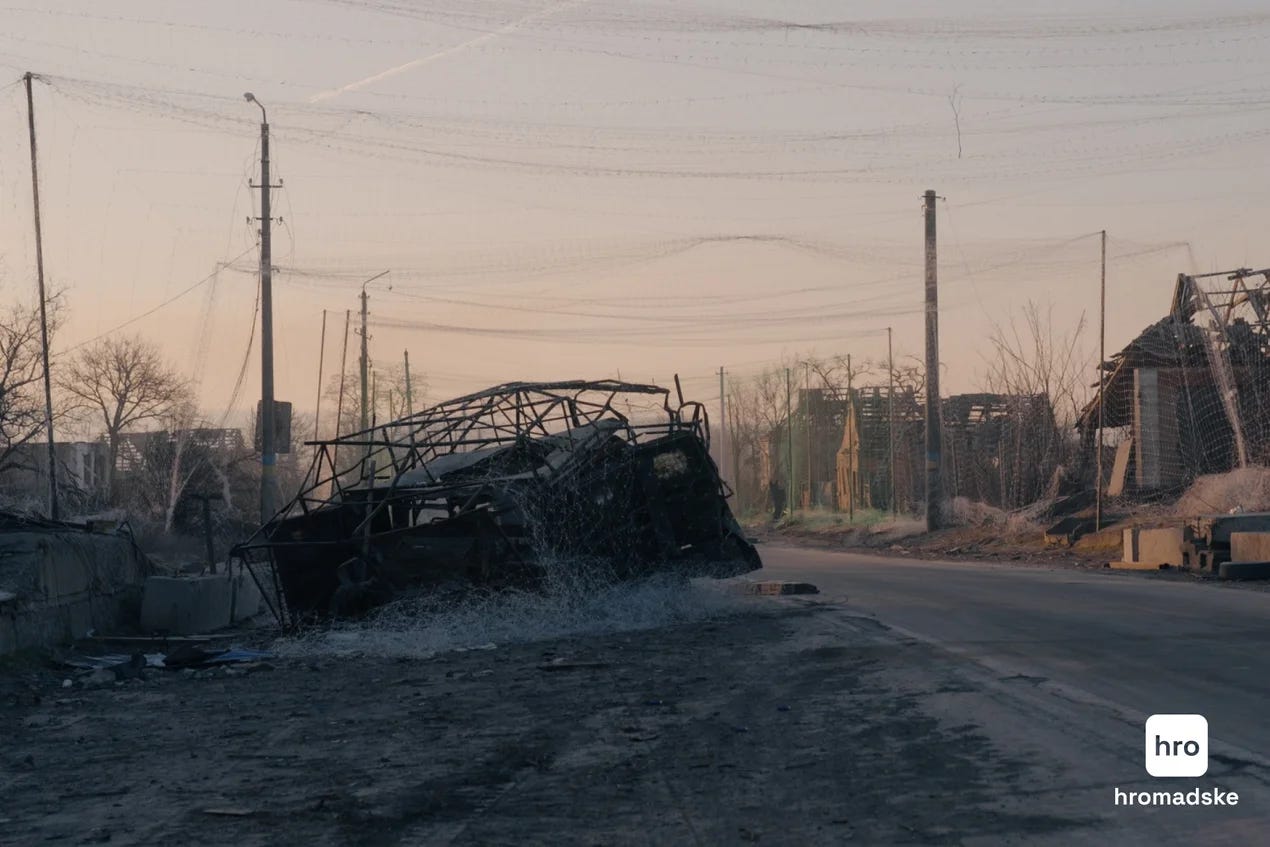
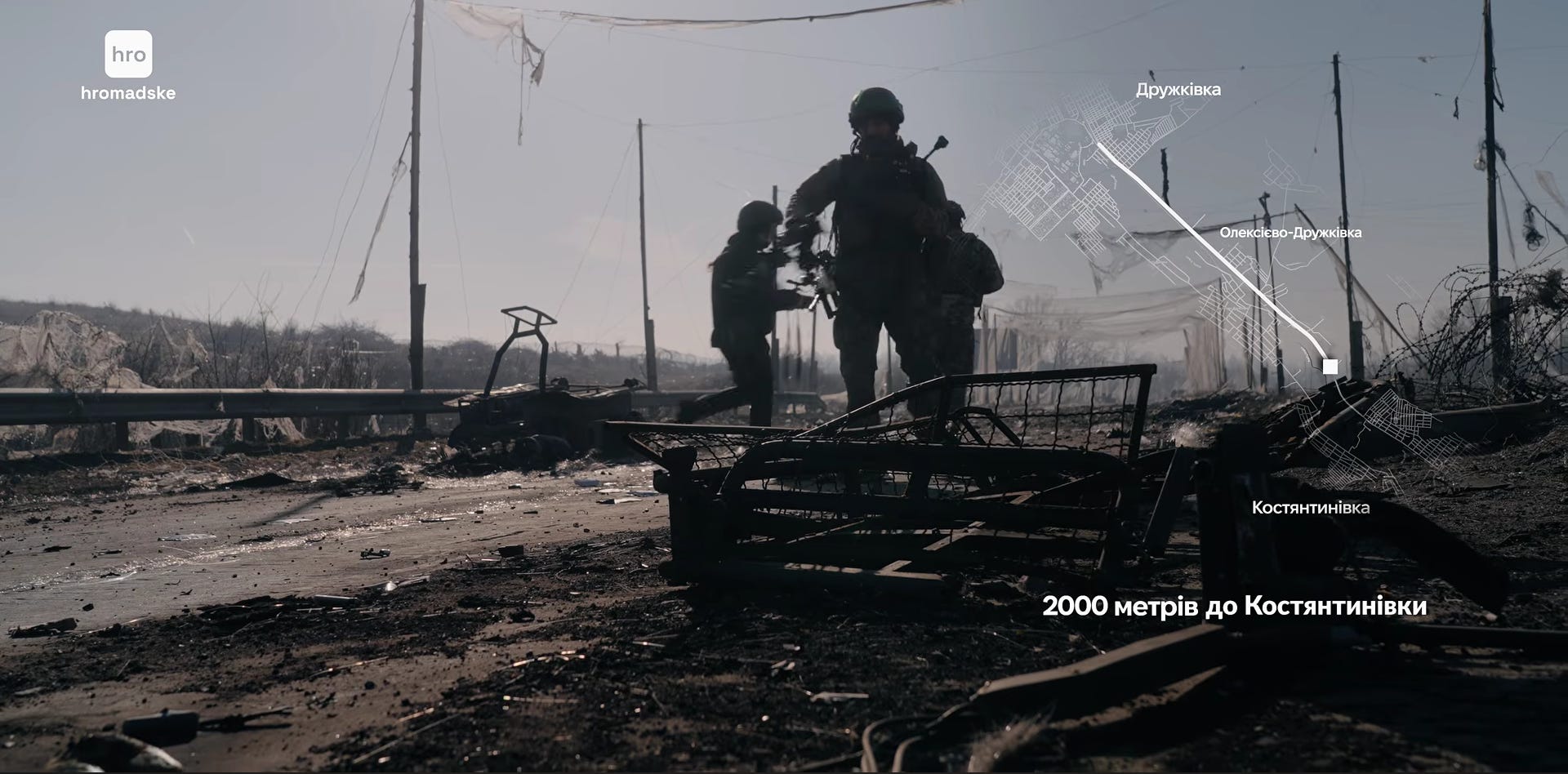
One battalion commander interviewed, ‘Yary’, states that Russia’s drones exercise a ‘kill zone’ (a subjective term, to be fair) all the way to Kramatorsk. That means that anyone moving in this area is under risk. As we’ll see later in today’s article, this isn’t an exaggeration. There have been constant reports of drone strikes and now, even artillery strikes on Kramatorsk and Sloviansk. When Russian positions are less than 20 kilometers away (and shrinking), that happens. The following photos are from Hromadske’s early March coverage of the road to Kostiantynivka, 2000 meters from the city itself.
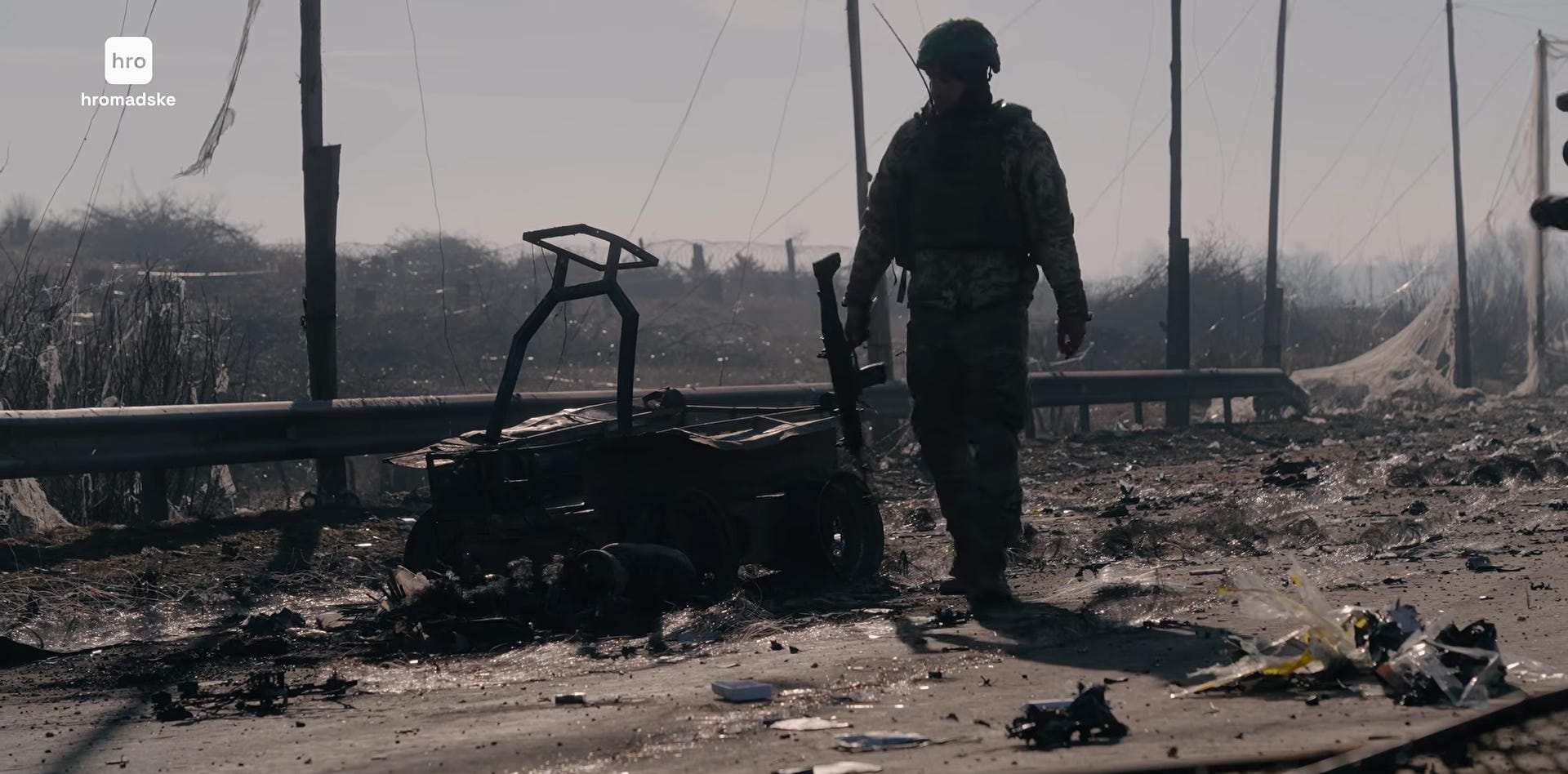
Just how many Russian troops are in Kostiantynivka? According to the officers interviewed by Hromadske today, anywhere from 100 to 250. And they have now ‘consolidated themselves in the city centre’, making it no longer possible to speak of mere ‘infiltration’. Quantity has transformed into quality, so to speak. Russian military channels posted this video of their troops raising the flag in the city centre today:
Ukrainian officers claim that the Russian army has full control over the southeastern half of the city, left of the river Kryvyi Torets. Ongoing fighting occurs on the other side of the river.
Interestingly, despite all the claims of vastly over-inflated claims on their side, the Russian Ministry of Defense largely agrees. In its June 11 statement, their MoD wrote that ‘Russian troops have fully established control over the eastern part of the city and have reached its northeastern outskirts’. Street fighting continues above the river, and Russian infantrymen are apparently clearing encircled Ukrainian troops in the southwestern part of the city.
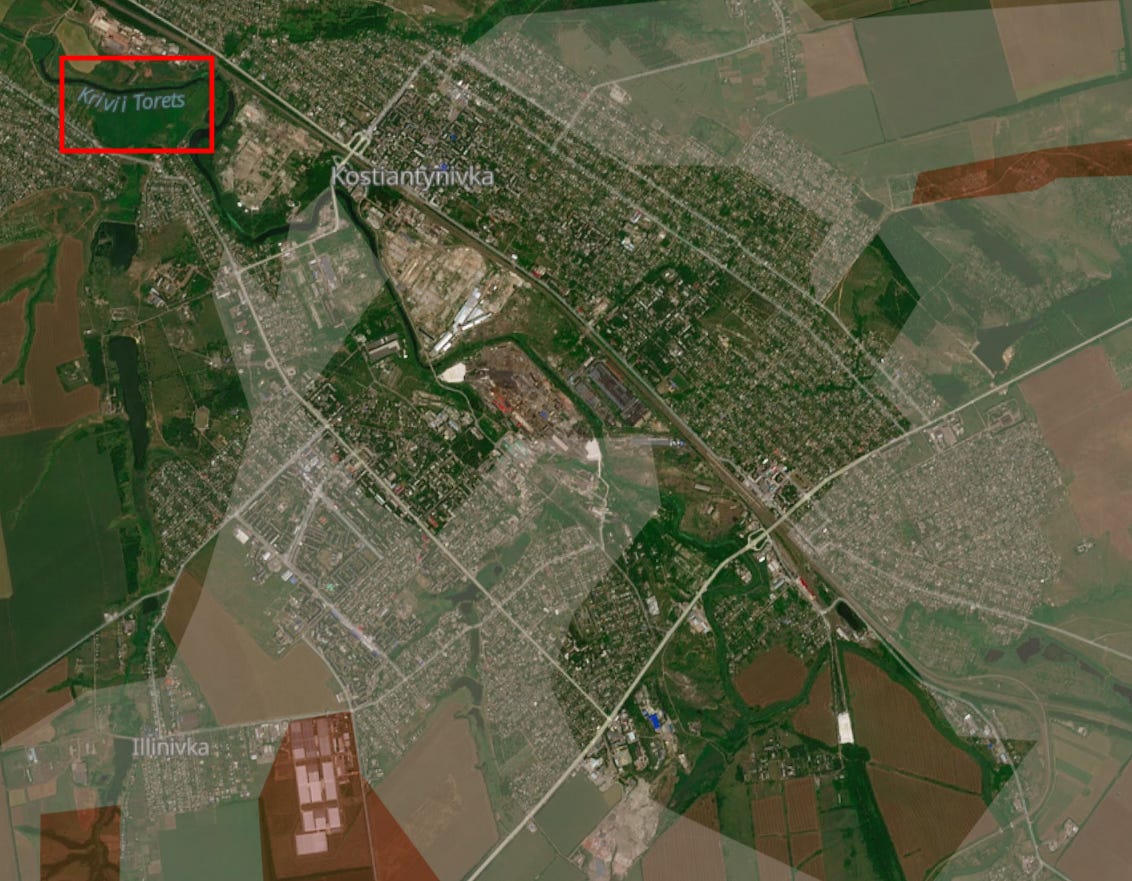
Based on the descriptions given by Ukrainian officers to Hromadske, there isn’t exactly a wave of Russians flooding the city. Apparently, single Russian soldiers enter the city every six to seven hours. However, some of the Ukrainian officers that have been fighting in the area for a long time blame the weakness of the newly-formed 156th brigade.
Officers interviewed by Hromadske claim that the 156th has been unable to conduct adequate drone surveillance of the city, allowing Russian infantry to continue to enter. They also accuse the 156th of complacently allowing its surveillance drones to be destroyed by the enemy. Given how much Russian drone teams target enemy drones, this is to be expected.
This criticism of the 156th is itself a backhanded criticism of commander-in-chief Oleksandr Syrsky, who is often criticized by nationalists for constantly creating new units that lack experienced troops and sufficient equipment, instead of reinforcing existing units. Hromadske also notes a number of personnel rotations for the units defending Kostiantynivka — the commanders of the 156th and 28th brigades were both recently replaced. Personal conflicts with higher-ups were mentioned.
As for the future, some officers call for more active counter-attack operations. They believe that simply maintaining dispersed units on the defense has led to the current situation.
As an aside, recall the example of Pokrovsk — despite falling to the Russians at the start of 2026, Ukrainian troops continued fruitless counterattacks all the way until April. That month, there was a much-covered mass-casualty event during one such assault. No doubt the same fate awaits Kostiantynivka now, depending on how quickly Russian troops move forward.
Anyway, other officers maintain hope that the ravine and river dividing the city will act as a natural barrier for further Russian advances. However, the Russians are on both sides of this barrier, and in any case have already been sighted northwest of the city entirely.
Kostiantynivka
Let’s now take a look at how fighting for this city has transformed since May 30. In the updates from the last few days, the Ukrainian officer who runs the private telegram Muchnoy Jugend has been pleading for high command to give the order to retreat, so as to avoid encirclement.
Here’s the most detailed map of the city I could find online. Ignore the colors, it’s old, but some of the locations will appear in the following battle descriptions.
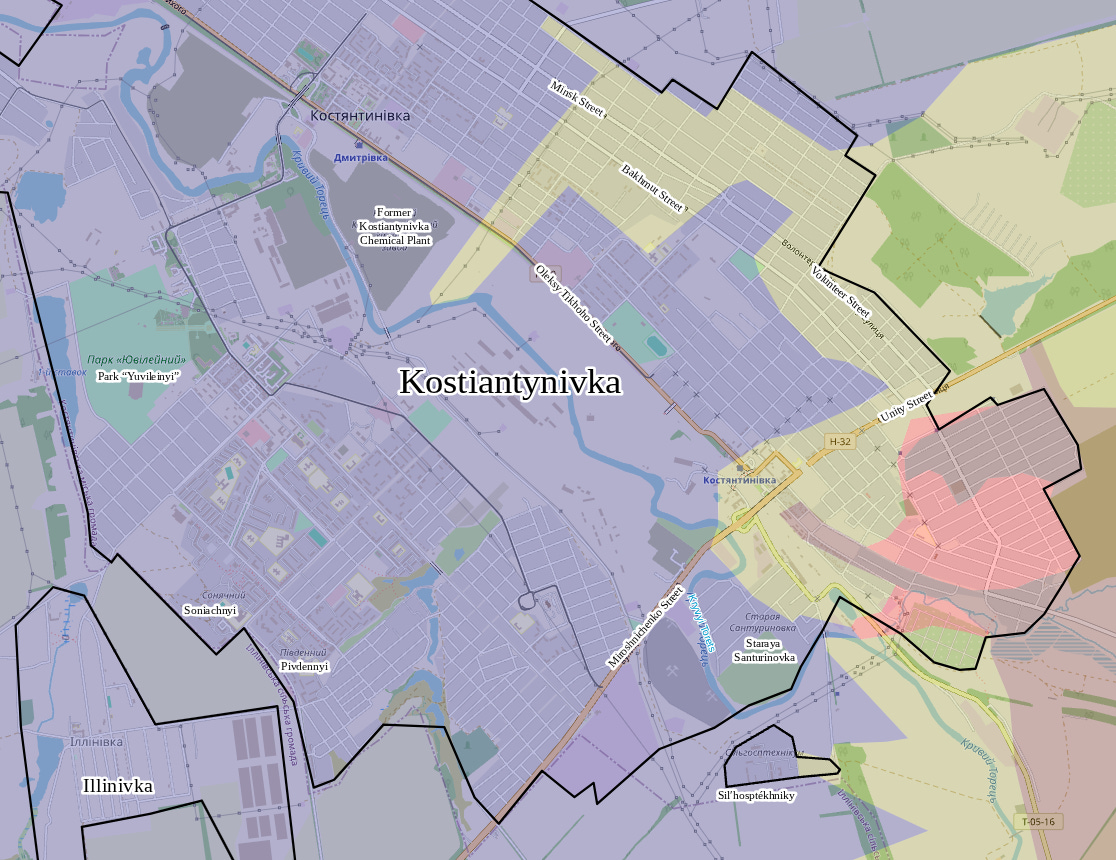
We begin in late May.
