Reverse Kissinger?
Russia + USA vs China? Geopolitical plots, past battles, literary depictions.

Politico ran a story on March 17 showcasing Mr Trump’s long-held geopolitical fantasy: pulling a reverse Kissinger. Instead of pulling over China to defeat Russia, the current master of the white house hopes to get Russia on his side against China. This desire has played a major role in Trump’s interminable — and quite unsuccessful — Ukraine peace talks campaign.
Will Moscow take the bait, abandoning its rhetoric of alliance with the global majority against the ‘parasitic’ west?
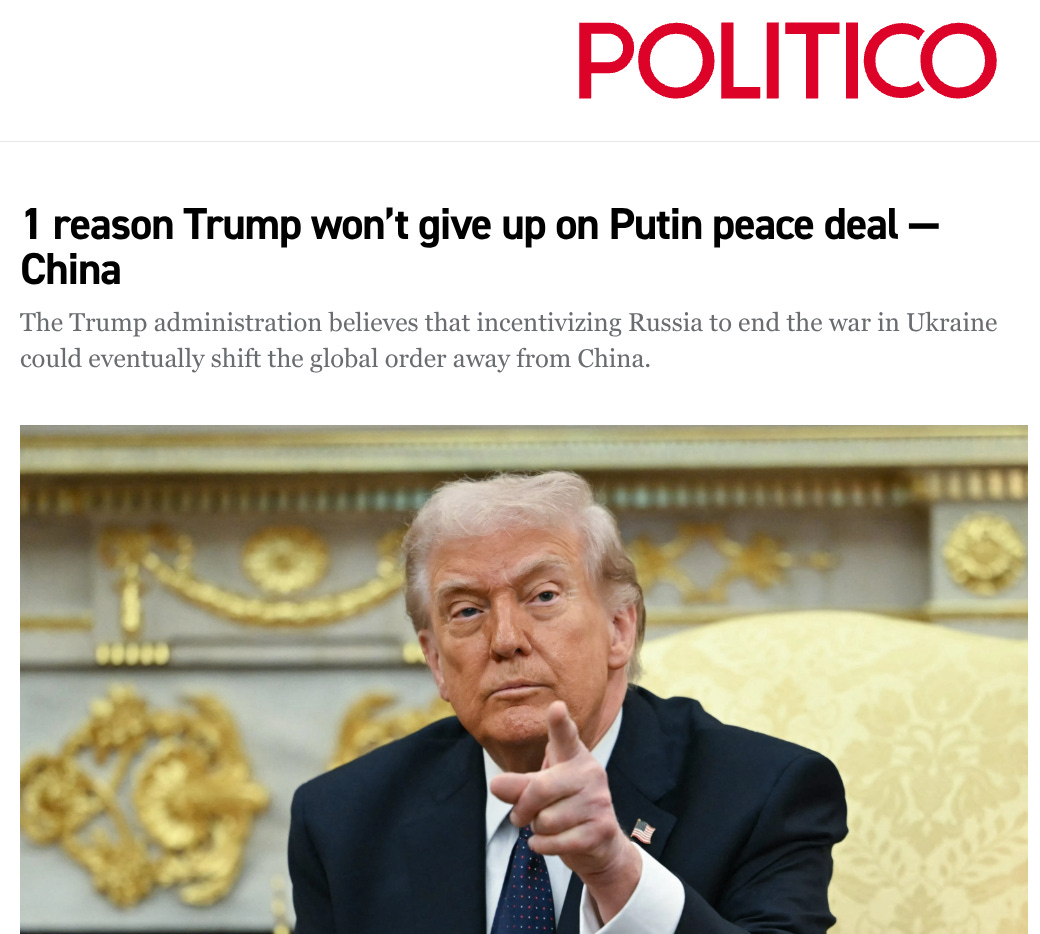
While countering China isn’t the only reason the administration wants a truce, it does help explain why after more than 15 months of fruitless talks and multiple threats to walk away, the president’s team – special envoy Steve Witkoff and son-in-law Jared Kushner – keep looking for a breakthrough.
A Trump administration official, granted anonymity to discuss ongoing negotiations, said finding a “way to align closer with Russia” could create “a different power balance with China that could be very, very beneficial.”
Secretary of State Marco Rubio, shortly after his confirmation, hinted at the broader strategy, saying in an interview, that “a situation where the Russians are permanently a junior partner to China, having to do whatever China says they need to do because of their dependence on them” is not a “good outcome” for Russia, the U.S. or Europe.
How do Russians feel about this idea?
A March 19 post on the popular telegram channel ‘Secret Chamber’ emphasized the possibility for Russia to benefit from ‘additional remove for manouever’ if ‘Washington is indeed interested in reducing tensions on the Russian front in order to concentrate resources on the Asian vector’. Trump’s obsession with pulling a reverse Kissinger could give Moscow ‘a window of opportunity to strengthen its positions and impose more favorable terms of interaction’ with Washington.
However, the Americans prefer to focus on the quite real wariness towards China that exists in the Russian national psyche. Today’s article will look at this fear of the Chinese ‘yellow peril’ in the ‘spiritual leader’ of post-soviet Russian patriots.
Meanwhile, China’s attitude towards Russia has also known a number of seriously rocky periods, particularly in the 19th century and from 1960 to the 1990s. In the 60s and 70s, the fear of a Soviet military invasion animated Chinese strategic thinking, leading to the 1971 rapprochement with the US through Kissinger.
By the 70s and 80s, China supported anti-Soviet forces around the world, including in southern Africa (the South Africa-aligned UNITA), Afghanistan (the Mujahideen), and Pol Pot’s Cambodia (against Vietnam). 1979 also saw a Chinese invasion of Vietnam, motivated in large part by Vietnam’s recently-signed defense partnership with the Soviet Union.
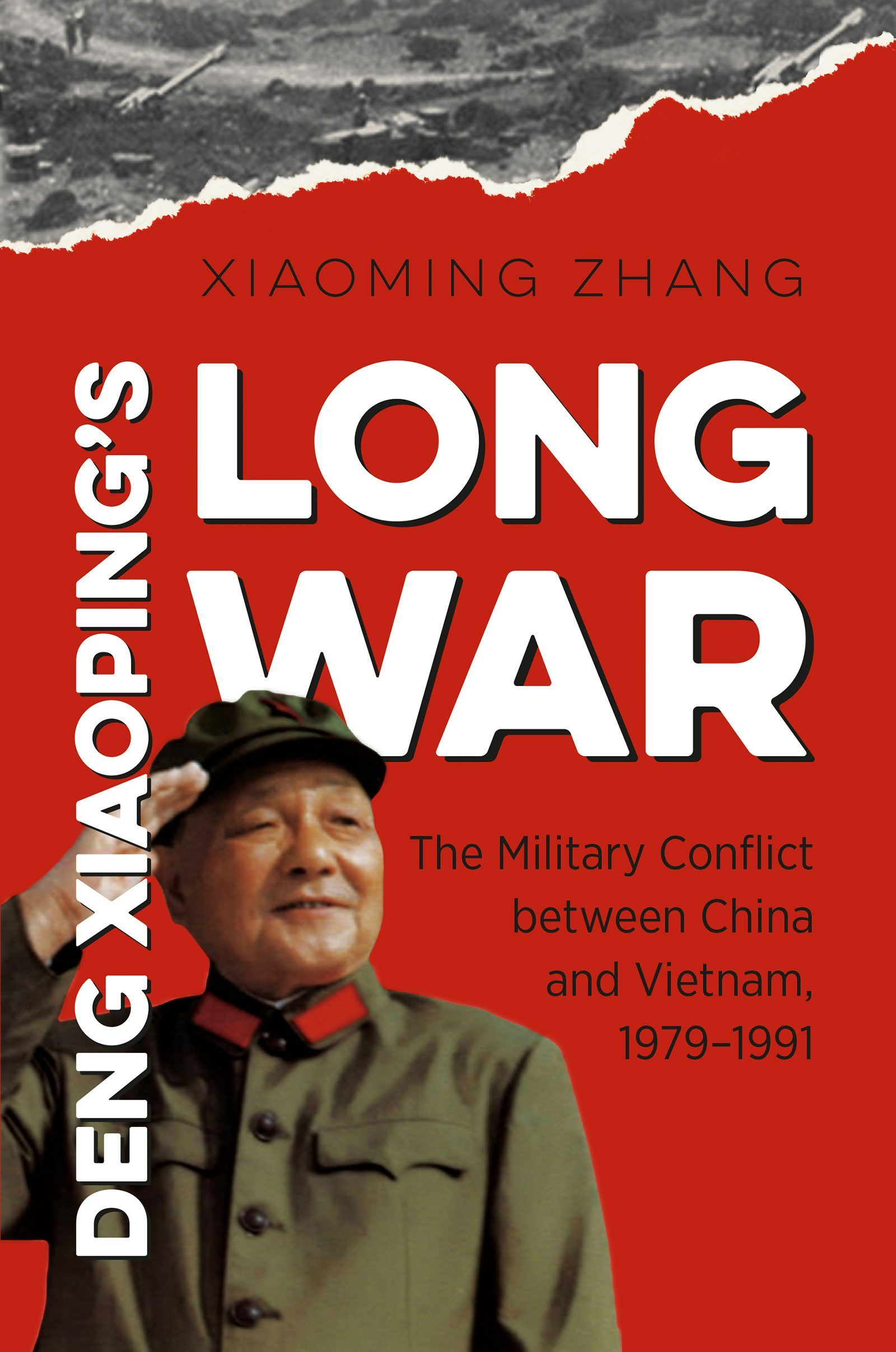
But today, alliance between Beijing and Moscow remains much more likely than any of Trump’s geopolitical fantasies. This is because overlapping Chinese and Russian economic interests, as well as the consistent abuse both face from NATO.
These objective factors have kept these old faultlines dormant. But the existence of these faultlines keeps the Americans — at least some of them — hopeful that splitting China and Russia may be possible. It is this hope that seems to animate Trump’s foreign policy. Hence, even if the idea of a reverse Kissinger is a non-starter, it is worth understanding the origins of this illusion.
1969
Aleksandr Prokhanov is perhaps most well-known in his role of the Russian nationalist journal ‘Zavtra’ (formerly ‘Den’). In the 90s, this paper engaged in antics like inviting David Duke to Russia in order to convince him on the virtues of Stalin. Zavtra helped bring figures like Aleksandr Dugin and Eduard Limonov to fame in Russian politics. For this and many other reasons, Prokhanov is often rightfully considered the spiritual godfather of the Russian patriotic opposition.
Following Putin’s rise to power in 2000, the ideas of this opposition were repackaged by the state, though often in a way that irked Prokhanov. Despite Prokhanov’s often vitriolic distrust of Putin, the president still awards him a number of recognitions, including the 2025 ‘Hero of Labour’. Prokhanov is undoubtedly Russia’s most influential nationalist novelist.
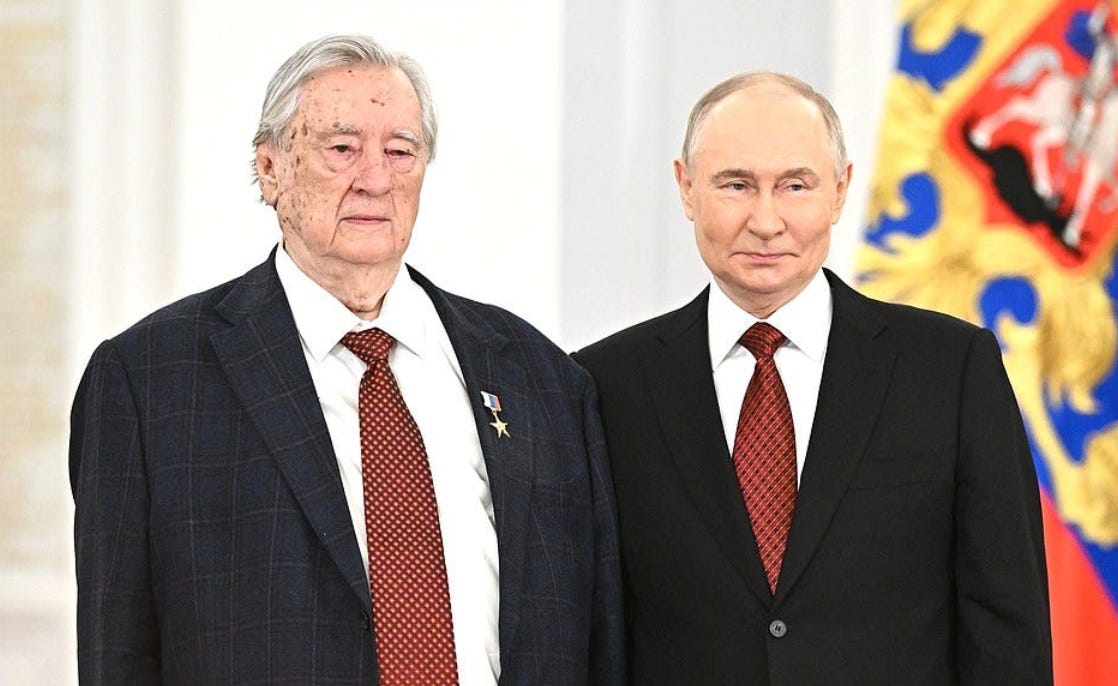
Prokhanov’s views — he has an opinion on everything, after all — give at least some sort of view on how the Russian security elite might view things. Military bureaucrats aren’t as likely to open up their hearts as the rambunctious novelist Prokhanov. And in any case, Prokhanov is also quite well-acquainted with politics on a personal level. He played a major and visible role in the 1991 failed coup against Yeltsin, the 1993 failed defense of the parliament against Yeltsin, and apparently played a crucial role in the mysterious 1998 ‘coup attempt’ by General Lev Rokhlin (murdered that same year).
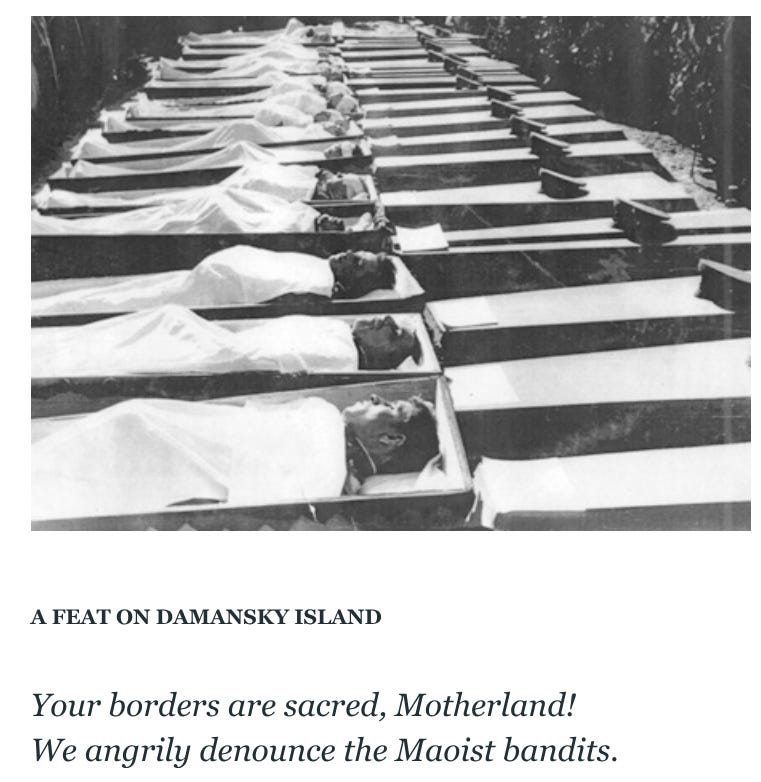
His enormous heft in the patriotic scene makes Prokhanov’s origins quite interesting. He first burst on the literary-journalist scene with his 1969 article on the Soviet-Chinese border conflict. Fighting on the island of Damansky claimed the lives of more than 30 Soviet border guards, and a seriously disputed number of Chinese troops. Prokhanov’s ‘Feat on Damansky Island’ won him great recognition, particularly for his use of evocative literary techniques in the generally stale sector of journalism.
A border officer leads us to a pile of equipment abandoned by the Chinese. Here are tin canteens containing the remains of a potion—they drank it all night before the provocation. Here are worn mats—the Chinese lay on them after they had thievishly snuck onto the island that night and gone into hiding. Here’s a telephone cable, telephones in rusty plastic cases, through which the command to open fire on the Soviet border guards was transmitted from the island to the gun and mortar firing positions. And from all this—the stupefying, nauseating smell of spilled hypocrisy.
One after another, the helicopters descended on the hill. From them, from the approaching cars, the mothers and fathers of the fallen soldiers emerged and ran down the snowy slope, bathed in blindingly bright sunshine, to where the sounds of a funeral march could be heard, fading and then waxing…
A taut tent. An honor guard with machine guns. The color red hits the eye: the red-lined coffins stand in a row. And in them, frozen, beautiful, despite the terrible wounds, are the faces of our soldiers.
Mothers run in. They fall to one, then another. Not this one, not that one… There he is! And he falls dead on his son's body, kisses his wounds, grabs his hands, sobs inconsolably. And next to him – another, a third… We stand right there and, unable to hold back our tears, listen, write down everything, as it was said here, as it burst from a mother's heart.
― My son, my hope... What have they done to you, the monsters... They've cut you up, stabbed you... You wrote to me that your forelock was growing, but they smashed your whole head...
...The young widow grabbed a tent pole: she stared and stared at him, in the coffin, bandaged...
...The gray-haired father was crying, the soldiers standing in the honor guard were wiping away their tears. The reporter was writing something in a notebook, sobbing...
They were carried out on shoulders and placed carefully in the sun. Scarlet red and the green line of border guard caps. They lay there, young, surrounded by a dense crowd. The sky above them was high, and spring clouds were floating in it. And in these white, flying clouds, it was as if the echo of the recent victorious battle still lived. And there, on the island, their blood burns...
Fallen soldiers lie, and workers from Iman, peasants from the surrounding villages, friends, comrades from the border service, officers, generals... bid them farewell. Smoke from a rifle salute flows over the river. A wide mass grave, their native land welcomes them. The first handfuls strike the coffin lids. And the Ussuri river, white and bright, spreads the wings of its sleeves over this sacred grave.
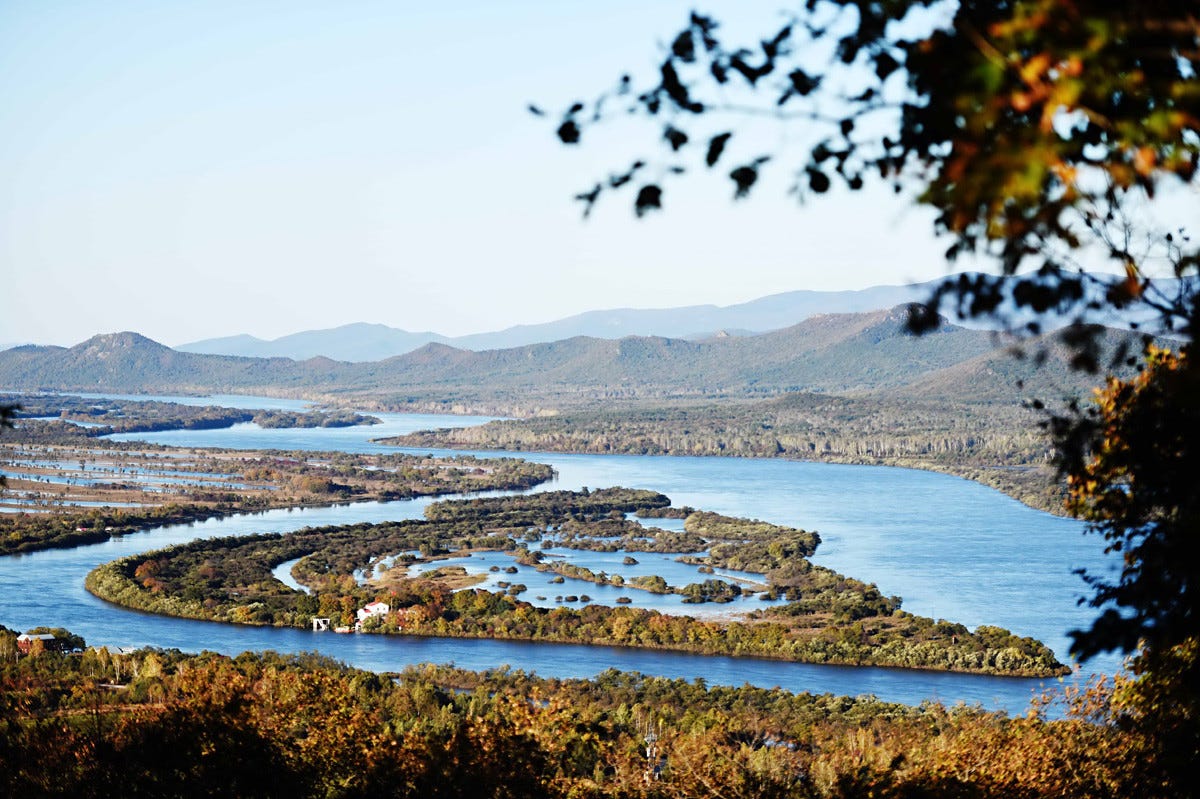
Crawling on the tank-muddied ground with KGB agents, Prokhanov overcame his previous distaste for agents of State Security. Until then, he’d been a prominent member of esoteric underground literary salons led by the right-wing mystic Mamleev, where paranoia of the ‘Jewish-Communist KGB’ ran rampant. This is an excerpt from Lev Danilkin’s 2007 biography:
Damansky was not only his Arcole Bridge but also the place where a “Copernican revolution” began in his consciousness. It’s not that he directly witnessed war, death, and so on; he felt that the border guards, then part of the State Security Department—so many of these troops were special agents, KGB analysts—were “our own,” because both he and they had to defend the borders from the Chinese, and it didn’t matter who wore which epaulettes. He—someone who had always been almost a dissident, opposed to the official ideology—”suddenly found himself smeared, cemented into this military-state intelligence KGB monolith.” Prokhanov still sometimes recounts on various talk shows that moment: the first fight, crawling on ice next to a former enemy special agent, feeling that faced with an external threat, they were allies, their own, “my dear ones”!
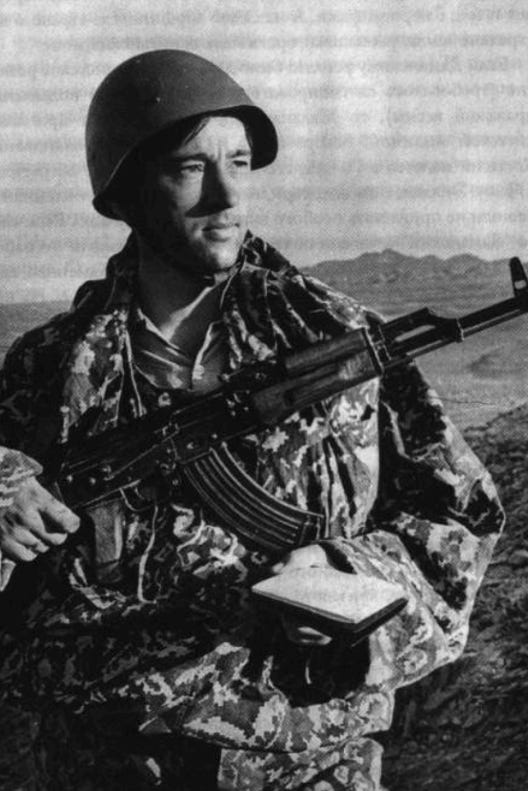
But the most famous photo of Prokhanov was not taken at Damansky — it was taken at lake Zhalanashkol, on the Kazakh-Chinese border. There was also a rather bloody border conflict here a few weeks after Damansky. But Zhou Enlai met with Kosygin in Beijing, and the two countries decided to smooth things over — there was no glorification of the feats at Zhalanashkol in the Soviet press.
Likewise, there have been a number of quite bloody border skirmishes between India and China and recent years. And yet, it doesn’t particularly look like India is gearing up to join an American war on China. Broader state interests generally take precedence over such border quarrels, no matter how romantically they may be portrayed by the likes of Prokhanov.
Nevertheless, the spiritual leader of the Russian patriots is quite suspicious when it comes to the ‘yellow peril’, speaking to his biographer Lev Danilkin in the mid-2000s:
The Chinese threat is an eternal nightmare of the Russian self-consciousness. I think it has existed since the 17th century, when China was very far away and Russians had not even seen the Chinese. It was connected with our traditional Russian terrors, with Gog and Magog. The ‘yellow peril’ was first felt in the early 20th century—Blok, Rozanov; Soviet civilization lived without thinking about it, and only at Damansky did it come close again. For now, the vector of Chinese expansion is directed south, toward Malaysia, Indonesia, and Australia. But such an enormous mass, of course, also sends its envoys to the North—each ‘envoy’ numbering a million people. From time to time, they arrive in the depopulated Russian spaces.
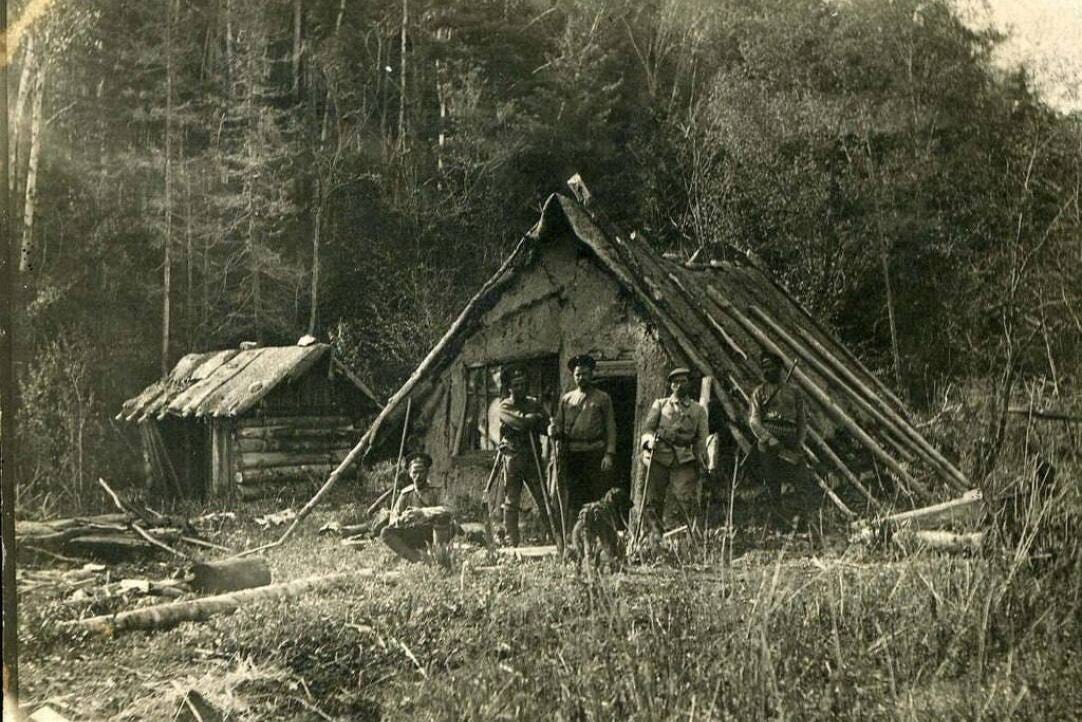
Mystically, metaphysically, this vast Chinese civilization has always breathed down Russia’s neck. And once Siberia became Russian, and when, say, Arsenyev with his Cossack expeditions reached the lands of Primorye [in the early 1900s - EIU], he saw a huge number of Chinese there—fanzas, settlements. Nazdratenko, the governor of Primorye, told me how Arsenyev’s Cossacks burned Chinese settlements; in essence, Arsenyev’s expedition was not only topographical, it was also military, connected with the ethnic cleansing of the territory: even then the Chinese were advancing in great numbers, reaching almost as far as Yakutia.
— An extremely weakened Russia, continuing to decline and rapidly losing the will to historical existence, will have future politicians constantly maneuvering between China and America, seeking protection from the Chinese threat through America. I was acquainted and friends with Americans who terribly feared the settlement of Siberia by Chinese, China with its gigantic economy, colossal population, and powerful expansionist vector. There was even a project to Americanize Siberia, almost establishing “Pershings” on the Chinese border. I think the appearance of American bases now in Central Asia is partly the fulfillment of that plan. Americanization of Central Asia targets China more than Russia. On the other hand, Russia must constantly exploit the anti-American factor present in Russian consciousness, assuring the Chinese that in the future China-America conflict, which seems inevitable, Russia will side with China. Hence the cautious stance on Taiwan, rejection of the Dalai Lama, and so forth.
But part of the American elite—say, the Bush-era elite—counting on Russia in their clashes with the Islamic world—and later in a major conflict with China—could be replaced by another, anti-Bush, liberal, democratic elite that will simply play Russia, trade it for strategic time, throw China a Russian bone, and buy respite for the entire 21st century. Since the Americans will absorb and digest the world whole—the insatiable neoliberalism—at some point, they will confront the China problem directly. And inside that terrible triangle—China, India, Pakistan—lies a huge conflict ready to explode from within. I think the Americans will play that conflict at some point. Whereas Angola, Mozambique, Nicaragua were local conflicts in relatively lightly populated areas, which great powers used to keep continents tense, Kashmir, for example, could become a nightmare, dragging billions of Chinese, Indians, and Pakistanis into its dreadful vortex. Such a massive fire could be ignited to distract these nations—the sources from which peoples erupt—from Europe and Russia, engulfing them in endless carnage, because these peoples are easily manipulated and provoked, especially India and Pakistan. Thus, Russia’s future in the light of this terrifying hypothetical conflict seems problematic, since the conflict will take place on Russia’s borders. If nuclear clashes occur between India and Pakistan or India and China, there will be a massive population outflow. They will flee to Afghanistan, Kyrgyzstan, Central Asian republics, and, of course, pour into Russia, where there is much emptiness, many rivers, vast untouched forests, and few Russians.
This division between the ‘Bush-style’ American elite and the dastardly Democrats is quite interesting. The former are more inclined to ally with Russia against China, whereas the latter are apparently more inclined to antagonize Russia as well. Trump certainly seems to be trying to play the role of such a Bushist.
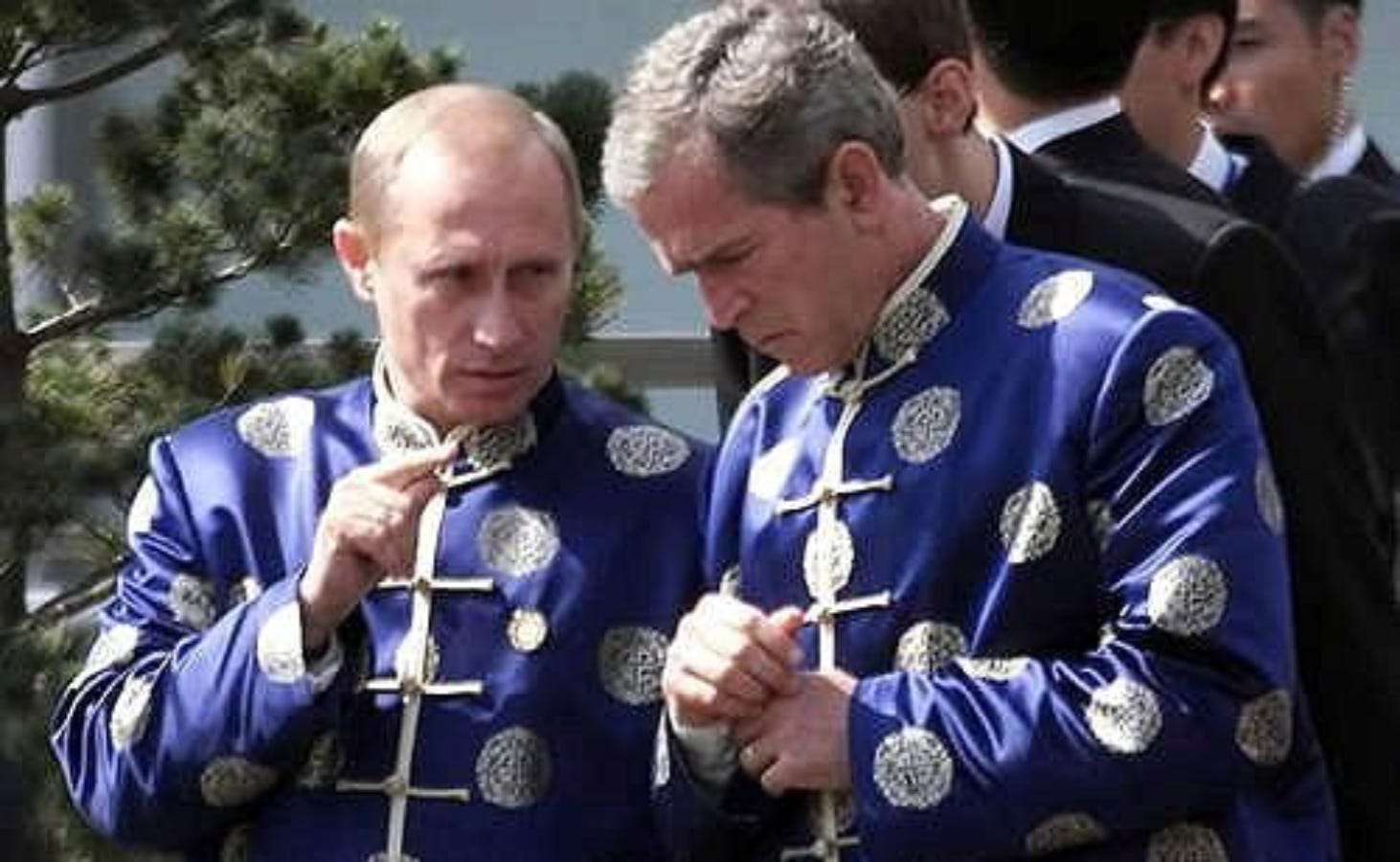
And speaking of Bushist attempts to get Russia on its side against the non-western world, I would be remiss not to quote the recently released Bush-Putin files:
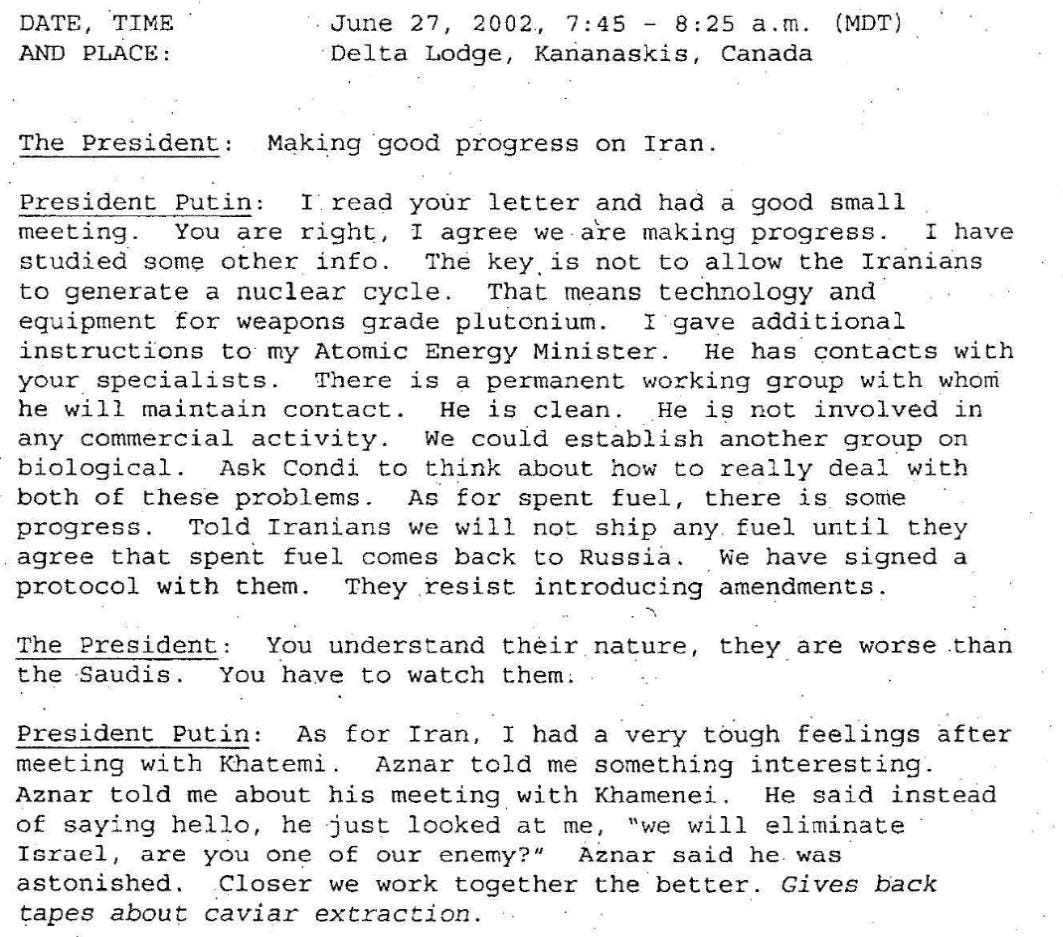
Prokhanov finally met with Putin in late 2000. Prokhanov would soon come to hate Putin as a pseudo-patriot whose rhetoric hid his reality as an American lackey. And yet, he and Putin were in symphony when it came to China:
They spent an hour and a half in that library. The most interesting topic discussed was the China question. It all started when the editor-in-chief [of Zavtra, ie Prokhanov ] noted that the new administration’s relations with the US were causing irritation in the patriotic camp. Putin responded that, in his opinion, the main threat was the East: China was the potential adversary for Russia. Then they moved on to Prokhanov’s favorite theme — the triangle of Russia, China, and America, within which the fate of the 21st century and Russia itself would be decided. Putin’s statements aligned with Prokhanov’s vision that by maneuvering between the States and China, Russia could buy strategic time. They discussed whether to deploy Pershing missiles on the Russian-Chinese border. Then about the Communist Party, about the left movement, “childishly, quietly, naïvely, kindly.” Putin, according to him, said it wouldn’t be a big problem if the Communist Party was squeezed and its influence limited.
Clearly, Prokhanov doesn’t advocate simply allying with the US against China. Prokhanov, after all, publicly called to fly planes into the Twin Towers — in 2000! A few days after 9/11, he published his views on it in Zavtra, titled ‘the Angel of Death has kissed America’. The first sentence was ‘Just so did the Tower of Babylon fall’.
But he does like the term ‘maneuvering between the States and China to buy Russia strategic time’. Indeed, this phrase often reappears in Russian strategic thought. What does it mean in practice? One could use it to partly explain the fact that Russia’s alliance with China is much shallower in its military and political dimensions than that between the US and NATO EU states.
China and telegram
The China question also reappears in all range of Russian domestic politics. The influential ‘Towers of the Federation’ telegram channel had quite an interesting post about the link between the ban of telegram and Russian-Chinese relations on February 12. Telegram, one might also note, is the favored platform of communication for fiery Russian patriots like Prokhanov — the government’s attempted ban of the platform has earned it vitriolic criticism from ‘Z-patriots’.
And now, it seems that pro-Chinese figures in the Russian government are pushing to get rid of telegram, but all for different reasons. Steve Witkoff and the so-called ‘Spirit of Anchorage’ is also involved.
