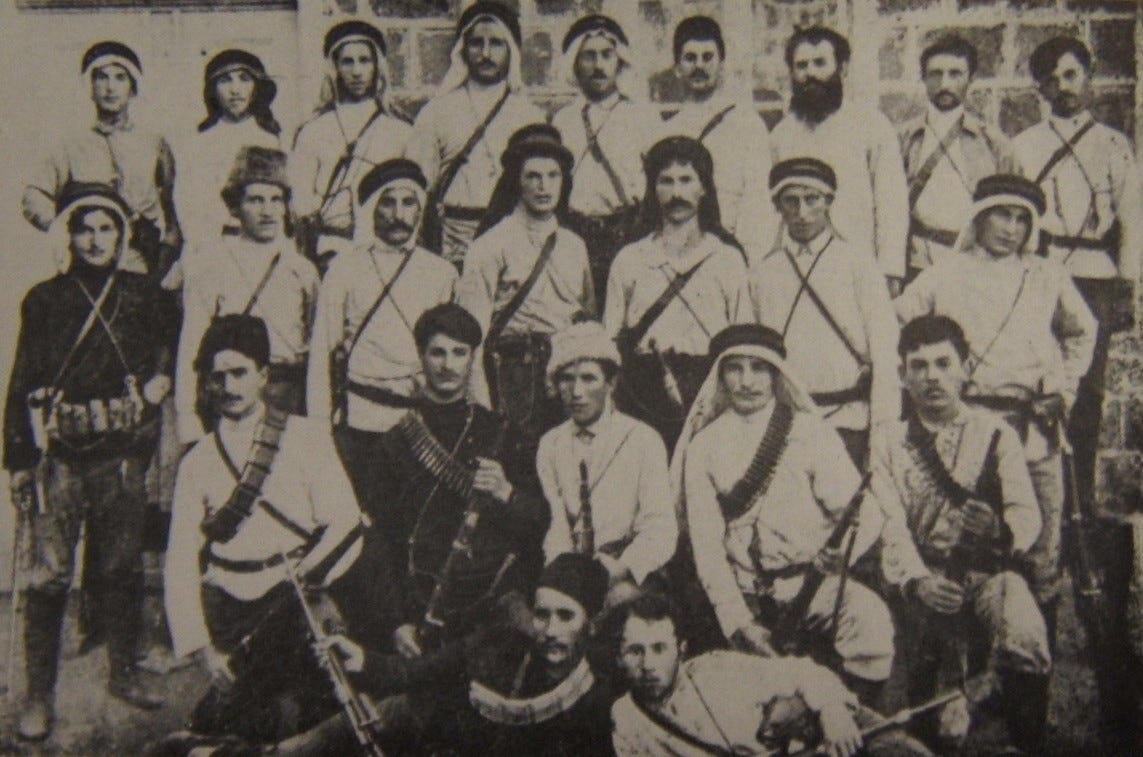
Zionazis I
-1948. Zio-cossacks, Jabotinsky, and Dontsov.

Who knows the origin of this photograph. Whatever this gentleman’s intentions, there certainly is a deep connection between Ukrainian and Jewish nationalism. It stretches all the way back to the cusp of the 20th century, at the origin of the two political movements.
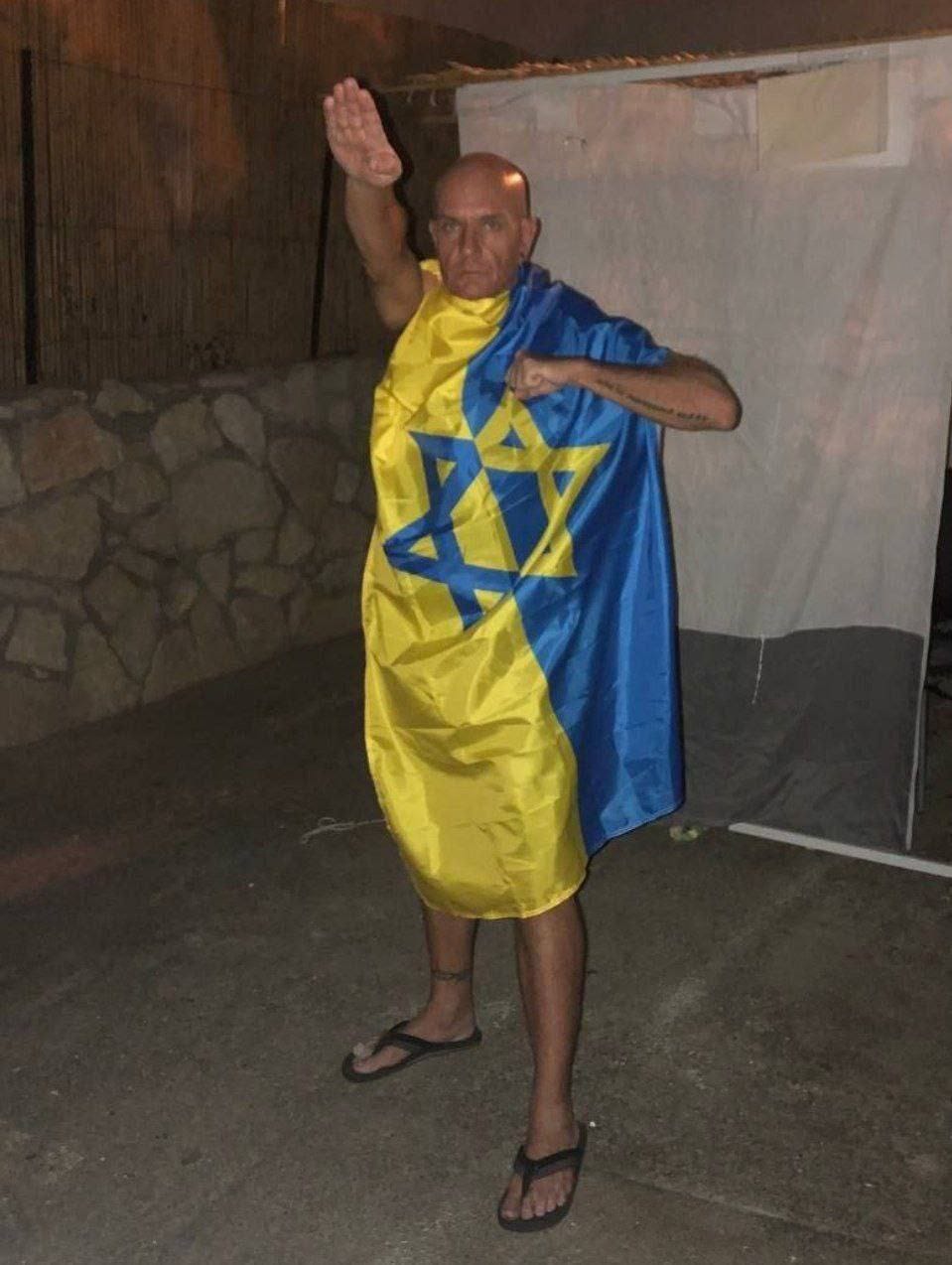
Ze’ev Jabotinsky, the early 20th century Zionist paramilitary leader regularly cited by Netanyahu as his political inspiration. Jabotinsky’s contemporary, Dmytro Dontsov, the ideological forefather of Ukrainian fascism, someone who supported Nazi Germany so much that even the genocidal Ukrainian nationalists who idolized him took issue. The Cossacks, a militarized society that colonized modern-day Ukraine from the 15th century onwards, remembered chiefly in Israel as the perpetrators of massive anti-Jewish massacres, but forming the basis of the national mythos in Ukraine.
What could possibly unite all these figures? In fact, a great deal. To begin with, Jabotinsky, Dontsov and the Cossacks all came from modern-day Ukraine.
But there are much deeper connections. The Cossacks were praised and emulated by Ukrainian nationalists and Zionists as colonists of the Muslim steppe. Jabotinsky wholeheartedly supported and cooperated with Ukrainian nationalists, including those responsible for killing thousands of Jews.
Funnily enough, it was the Jewish Jabotinsky that actually cooperated in practice much more closely with the fascist governments of 1930s Europe than Dontsov, who admired them from afar. The closest he got was in 1941-2, where he contributed to the Prague-based and SS-operated Reinhard Heydrich Institute.
And Dontsov’s racist, imperialist political philosophy is deeply similar to Jabotinsky’s. Both the Ukrainian nationalists and the Zionists had a common enemy — international cosmopolitanism — and a common aim — the establishment of linguistically, ethnically homogenous nation-states.
They are also united by genocidal eurocentrism. Jabotinsky and Dontsov both believed that their respective ‘races’ needed to get as far as possible from the ‘asiatic Russian barbarism’. Dontsov and his contemporary followers deride the ‘Mongoloid’ Russian empire — despite Dontsov himself being rather more Russian than Ukrainian. The generation inspired by Dontsov, led by the Organization of Ukrainian Nationalists (OUN), would enthusiastically ally with Nazi Germany in its operation to ‘civilize the east’, with the OUN massacring tens of thousands of Poles and Jews in the process.
Just so, any good Zionist knows that nothing is immoral in ‘Democratic, Civilized Israel’s fight against Arab barbarians’.
In short, today we’ll be looking at the ideological affinities and political cooperation between early Zionists and Ukrainian nationalists. There’ll be some whimsy as well. For instance, the wolf-fetish Azov has taken up from Dontsov, which includes magical rituals and cringe-inducing prose.
Ukraine and Israel
First, a quick overview of the Ukraine-Israel connection. I’ve written about its present nature at length, but today’s focus is the past.
Much is often made of the fact that so many of Israel’s leaders were born in the Russian Empire. But this is somewhat misleading.
In fact, there has not been a single Israeli president or prime minister born in the current borders of the Russian Federation. Thee prime ministers were born in Ukraine (Sharett, Eshkol, and Meir), one in Poland (Ben-Gurion), and two in Belarus (Begin and Shamir). Two presidents were born in Ukraine (Ben-Zvi and Katzir), and two in Belarus (Weizmann and Shazar). Netanyahu has Polish background. Liebermann was born in Moldova. There are a total of 8 Ukrainian-born Jews on Shekel banknotes.
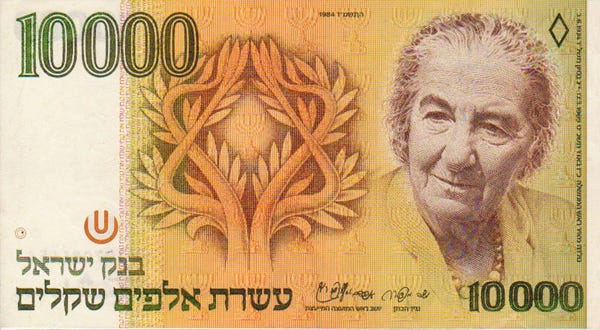
When speaking to the Israeli Knesset in 2022, Zelensky brought up Golda Meir:
I want to remind you of the words of a great woman from Kyiv, whom you know very well. The words of Golda Meir. They are very famous, everyone has heard of them. Apparently, every Jew. Many, many Ukrainians as well. And certainly no less Russians. "We intend to remain alive. Our neighbors want to see us dead. This is not a question that leaves much room for compromise."
He also emphasized the similarities between Israel and Ukraine:
Our people are now scattered around the world. They are looking for security. They are looking for a way to stay in peace. As you once searched.
There’s a sense in which the affinities go even further. Some Israeli historians give the Ukrainians credit for creating Israel. Historian Israel Bartal pointed out that each wave of Zionist settlement of Palestine took place during or after a new wave of Jewish pogroms in Ukraine. The so-called ‘first Aaliyah’ following the pogroms of 1881-2, the second after those of 1903 and 1904-6, and the third from 1919 onwards.
He leaves out, though it is quite obviously assumed, that Israel was actually created and received a far bigger inflow of colonizers after 1941-5. It was then that 2 million Jews died on Ukrainian territory with the indifference or help of their gentile neighbours, whipped up by nationalist political organizations that are today glorified as state heroes in Ukraine.
Today we’ll see how despite all this violence — in fact, because of it — Ukrainian nationalists and Zionists have actually taken a great deal of inspiration from each other.
Jabotinsky
We begin with the lodestar of modern Zionism — the Odessan-born Vladimir (Ze’ev) Jabotinsky (1880-1940). Some like to qualify Jabotinsky’s influence to ‘rightwing Zionists’. However, if there’s one thing I can agree with Jabotinsky about, it’s that all he did was say out loud what all Zionists do in practice, no matter their liberal rhetoric.
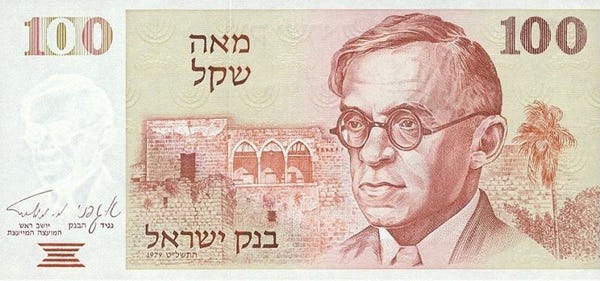
Jabotinsky founded a number of Zionist paramilitary groups, including Betar, Hatzohar, and Irgun, as well as the Jewish Legion of the British army in WW1. Jabotinsky’s paramilitaries played the principal role in the 1948 Nakba, uniting with the formerly less militant Haganah paramilitary.
Jabotinsky’s fascist gangs then formed the basis for the IDF. Today, the youth paramilitary Betar is quite active in the trenches of New York in such daring special operations as giving a pager to Norman Finkelstein.
Irgun would play a particularly infamous role in the 1940s, committing a number of brutal terrorist attacks against the British and massacring entire Palestinian villages in 1948. Irgun leader Menachem Begin would found Likud, today Israel’s ruling party.
Naturally, Jabotinsky is today Israel’s most-commemorated historical figure — 57 streets, parks and squares are named after him. The Jabotinsky House in Tel Aviv (below) is Likud’s central institute. Benjanim Netanyahu’s father was Jabotinsky’s secretary, and the Israeli leader often invokes Jabotinsky as his chief ideological influence.
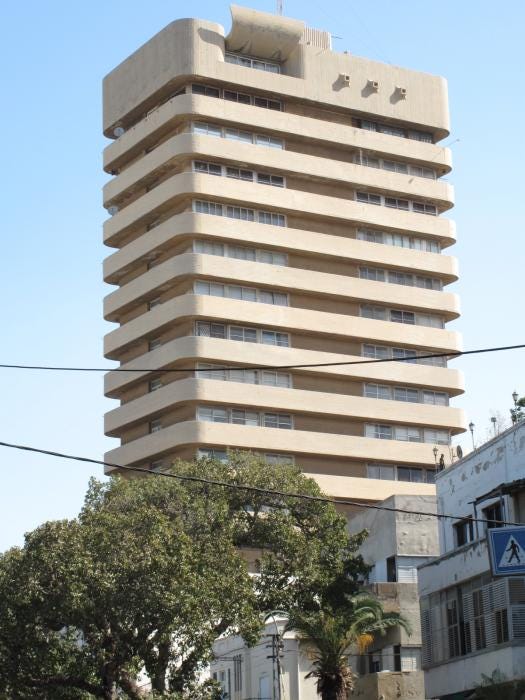
And his original homeland also appreciates him — in 2022 the Murom street in Kyiv was renamed to the Volodymyr Jabotinsky street. Murom, after all, is the name of a Russian city. Ukrainian Wikipedia proudly describes Jabotinsky as ‘co-founder of Israel’, which, though not entirely factually correct, is somewhat true in spirit.
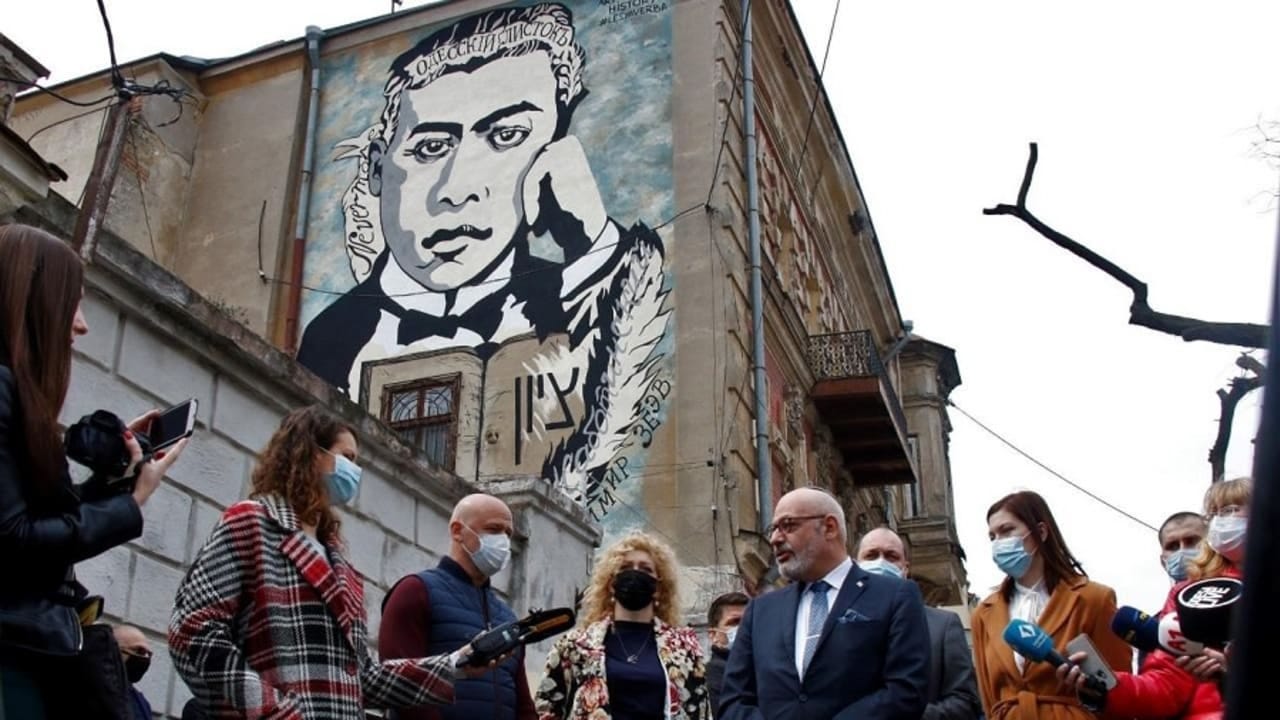
But one thing is something forgotten about Jabotinsky, at least in the west — he was a devoted defender of Ukrainian nationalism.
First, a brief overview of this individual’s life.
Jabotinsky started out as a cosmopolitan, Russified intellectual who moved in leftwing circles. Following the 1903 Kishinev pogrom, he began forming armed Jewish paramilitary groups. He then spent the rest of his life fiercely opposed to excessively liberal, marxist-oriented Zionists and Jewish groups.
Ukrainian nationalist historians like Ivan Rudnytsky credit Jabotinsky as the first Jewish publicist to deal with the Ukrainian question in the pre-WWI era. Ukrainsky Vestnik, the main Ukrainian liberal nationalist paper in the post-1905 period, published articles by Jabotinsky.
In 1907, Jabotinsky unsuccessfully participated in Duma elections for the west Ukrainian province of Volhyn, with his Zionist-Ukrainian nationalist alliance losing out to Russian monarchists. Interestingly, right-wing Russian monarchist parties were actually by far the most popular in modern-day Ukraine, whereas Moscow and St Petersburg kept on electing liberals and leftists.
Jabotinsky also mounted a large, relatively successful campaign in 1911 for Ukrainian nationalist personalities and publications to support the Kievan Jew Menahem Beiliss against the government charges of ritual blood murder.
Jabotinsky always had a complex relationship with the British. Jabotinsky organized a Jewish unit in the British army to fight the Turks in WW1. His Zion Mule Corps saw fighting in Gallipoli. He was then arrested, however, and briefly imprisoned by the British in 1920 for armed struggle against the Arabs.
Jabotinsky’s most well-known political intervention was his 1923 essay ‘the Iron Wall’. In it, he criticized ‘moderate Zionists’ for their refusal to admit that the creation of Israel would involve violence against the Arabs. Netanyahu brought up the essay in 2023 as the model for current Israeli state policy.
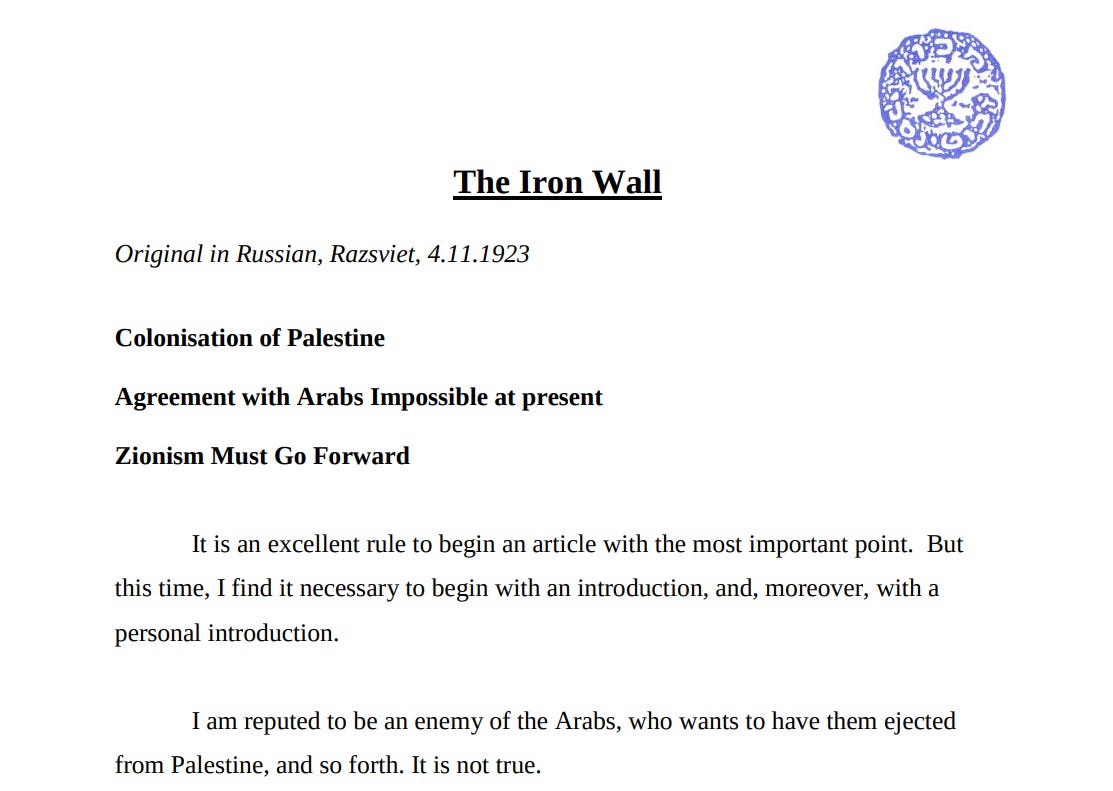
Whatever else might be said about Jabotinsky, he was certainly honest — he saw Israel as a colonial endeavor. The target of his polemic were the leftwing ‘Labor Zionists’ who persisted with the illusion of peaceful coexistence with the Arabs. Though Jabotinsky claimed to support minority rights for the Arabs, he forcefully made the point (which should have been uncontroversial) that evicting people from the land to make them into a minority cannot be done without violence.
My readers have a general idea of the history of colonisation in other countries. I suggest that they consider all the precedents with which they are acquainted, and see whether there is one solitary instance of any colonisation being carried on with the consent of the native population. There is no such precedent. The native populations, civilised or uncivilised, have always stubbornly resisted the colonists, irrespective of whether they were civilised or savage.
And it made no difference whatever whether the colonists behaved decently or not. The companions of Cortez and Pizzaro or (as some people will remind us) our own ancestors under Joshua Ben Nun, behaved like brigands; but the Pilgrim Fathers, the first real pioneers of North America, were people of the highest morality, who did not want to do harm to anyone, least of all to the Red Indians, and they honestly believed that there was room enough in the prairies both for the Paleface and the Redskin. Yet the native population fought with the same ferocity against the good colonists as against the bad.
He ended with these famous words:
We hold that Zionism is moral and just. And since it is moral and just, justice must be done, no matter whether Joseph or Simon or Ivan or Achmet agree with it or not. There is no other morality.
In 1923, Jabotinsky founded the Zionist youth paramilitary Betar. His split with the mainstream of Zionism was now open, and Jabotinsky led the ‘revisionist zionist’ movement, opposed to the dominant current at the time, the socialist Labor Zionists. Jabotinsky, in contrast, was a free marketer whose main ideal was expansionary nationalism.
By the 30s, like his old Ukrainian nationalist friends, Jabotinsky was orienting himself towards the new fascist regimes of Europe, instead of unreliable Albion. In 1934, Jabotinsky set up the Betar Naval Academy in Civitavecchia, Italy, upon agreement with Il Duce himself.
In 1936, he toured fascist ‘New Europe’ to advertise his ‘evacuation plan’ of 1.5 million Jews from eastern Europe. Jabotinsky met with the Polish Foreign Minister, Colonel Józef Beck, the Regent of Hungary, Admiral Miklós Horthy, and and Prime Minister Gheorghe Tătărescu of Romania. All three states supported his plan. As usual, Zionists made close allies with the most backwards anti-semitic regimes in existence at the time.
However, the British vetoed the plan. According to chairman of the Zionist Organization Chaim Weizmann (Jabotinsky’s political enemy), Jabotinsky was supportive of the idea to send some of the Jews of eastern europe to Madagascar, which Hitler would take up after Jabotinsky’s death in 1940.
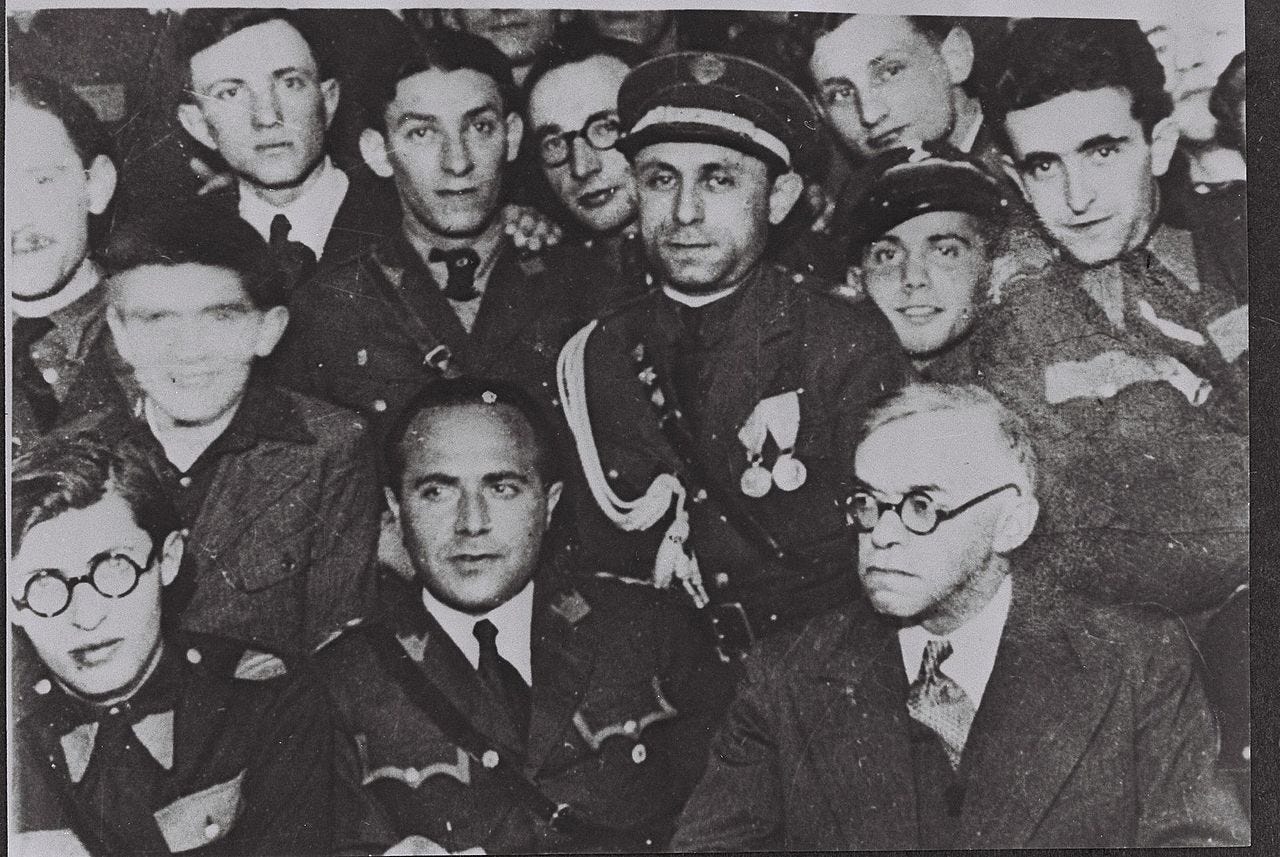
Jabotinsky was even more enthusiastic about Ukrainian nationalists than about Mussolini. He consistently campaigned for an alliance between the two against the Tsarist government. In one 1911 article, Jabotinsky criticized the Russian liberal politician Peter Struve for not advocating Ukrainian independence:
it is crucial to understand, recognize, push through, and grant a lawful place to the mighty brother, second in strength in this empire—the Ukrainian people.
As a nationalist, Jabotinsky forcefully advocated Russified Jews and Ukrainians to ‘return’ to Hebrew and Ukrainian. He also praised the works of the Ukrainian national poet Taras Shevchenko, despite the fact that Shevchenko’s poems are filled with relishing depictions of anti-Jewish pogroms:
Like cruel death, they spare
Neither age nor beauty —
Neither noblewomen nor Jewish girls.
Blood flows into the water.
Interestingly, Jabotinsky also attacked Jews in the Russian empire who celebrated the birthday of Nikolai Gogol in 1909. Though Gogol certainly does not depict Jews particularly positively in his novels, there at least isn’t the same sadistic bloodthirst as Shevchenko’s poetry. I suspect that the real problem was Gogol’s pro-imperial, Russian nationalist beliefs, unlike Shevchenko’s separatist convictions.
All Jabotinsky cared about was whether his allies were anti-Russian separatists. It isn’t hard to make the hypothesis that antisemitism was to be welcomed, at least privately, insofar as it encouraged more Jews to come to Palestine.
For instance, Jabotinsky consistently defended Ukrainian nationalist leader Simon Petliura, despite the fact that Petliura’s forces committed a number of anti-Jewish pogroms in the civil war (1917-20).
In 1921, Petliura had lost the civil war, having retreated to Poland — this heroic patriot also signed away half of Ukraine to Warsaw. The rabidly anti-communist Jabotinsky decided this was an excellent time to agree with the exiled leader on the creation of a Jewish militia that would defend Jews in a hypothetical Petliura-run Ukraine.
Unfortunately for Jabotinsky, Petliura would be assassinated by a Jew in 1926 for his role in the pogroms of 1917-20.
But Jabotinsky always defended him. When asked why he worked with Petliura, Jabotinsky replied:
In working for [the Jewish state in] Palestine, I would even ally myself with the devil
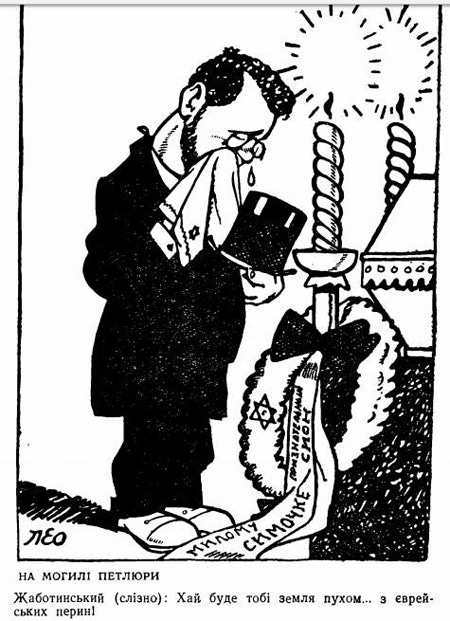
Incidentally, Petliura’s assassin Sholom Schwartzbard would actually be reburied with honors in Israel in 1967 by one of Jabotinsky’s most important successors — Menachim Begin. This famed terrorist and war criminal was leader of the Irgun (1943-48), founder of Likud, and prime minister of Israel from 1977-83. An excellent example of the fact that it is the nationalistic ideological affinity between Zionism and Ukrainianism that can also lead to conflicts.
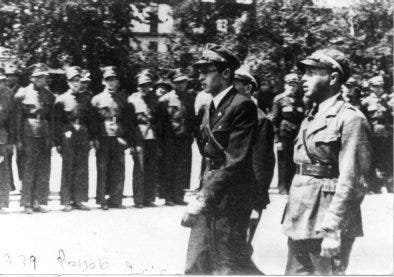
Zio-cossacks
Jabotinsky wasn’t the only militant Zionist inspired by the Ukrainian nationalist tradition. The historian Israel Bartal has researched extensively how early Zionists emulated the Ukrainian Cossacks. Though his full 2007 book on the topic is only in Hebrew, I relied on his article in the recent essay collection Stories of Khmelnitsky, edited by Amelia Glanser.
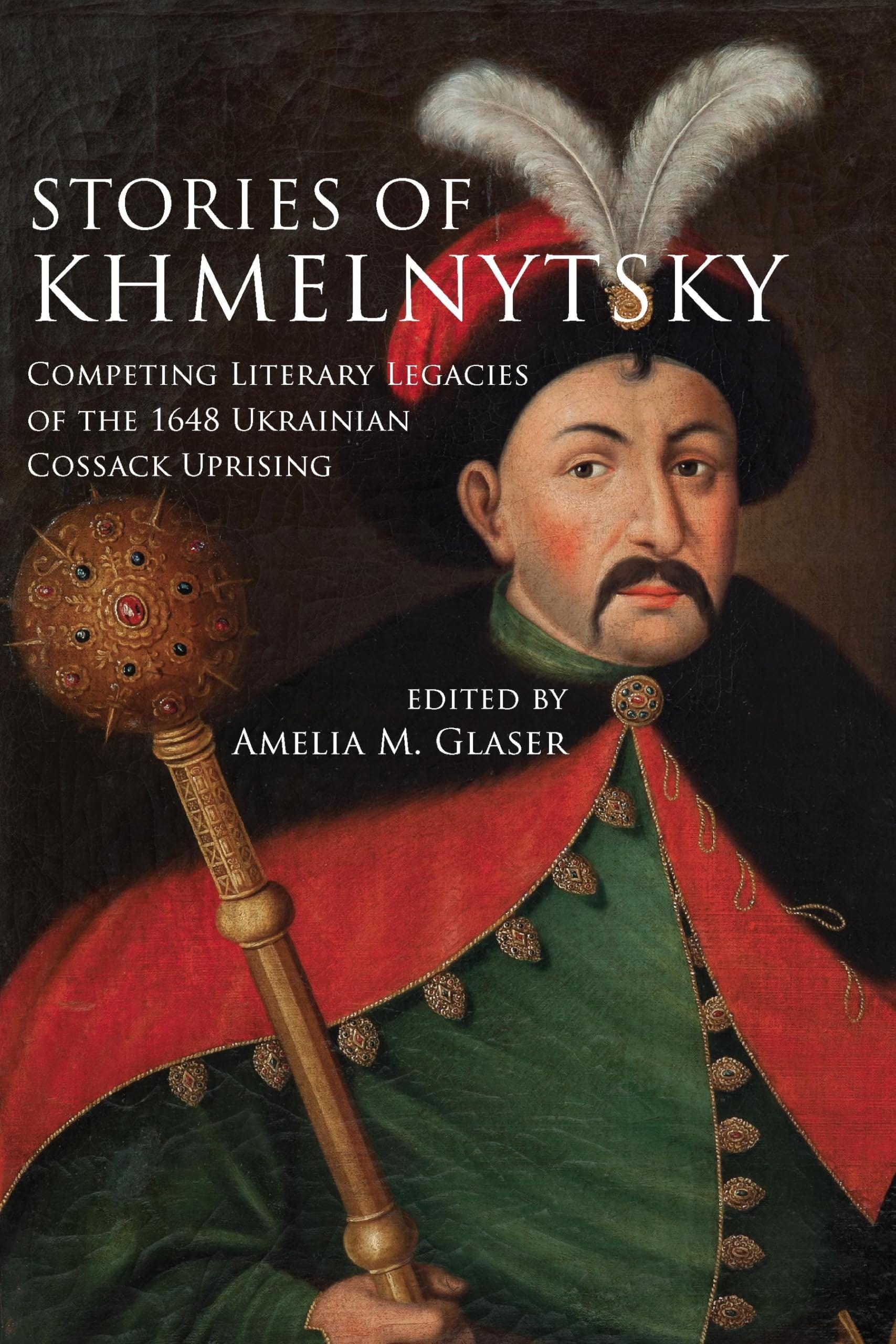
The Cossack-Zionist connection might seem surprising, given that the Cossacks were responsible for so much slaughter of Jews in the 17th and 18th centuries. 17th century Jewish chronicler Natan Hanover famously cursed Ukraine’s most famous Cossack leader, Bohdan Khmelnitsky — ‘may history blot out his name’. Khmelnitsky’s 1648 uprising against the Polish nobility involved mass killings of Jews, seen by the broader Ukrainian peasantry (not necessarily by Khmelnitsky and the Cossack elite, to be fair) as the avant-garde of oppressive Polish colonialism.
Nowadays, Israeli history textbooks cover the Cossack uprisings as proof that it is impossible for Jews to live outside Israel without becoming victim of antisemitic violence. When Soviet Ukraine voted against Israel in the UN, Israeli diplomats would often retort that the genetically Jewhating ‘sons of Khmelnitsky’ were at it again.
However, the early Zionists were enamored with the Cossacks for two reasons. First, Zionists admired the ideals they represented — chiefly, the colonization of a dangerous frontier, one populated by dangerous Muslims.
Second, because the Zionists wanted to break decisively with the perceived passivity and victimhood of the eastern European diaspora Jew by creating their own nationalist warrior state in Palestine. The entire idea of Zionism is that the only way not to be destroyed by nationalist cleansings is to become a nationalist and commit ethnic cleansings. Hence, the Cossacks were a perfect model.
A quote from Jabotinsky is quite relevant to understand the zionist lust for violent, masculine role models:
Let us erase from that picture all the personality traits that are so typical of a Yid, and let us insert into it all the desirable traits whose absence is so typical in him. Because the Yid is ugly, sickly, and lacks handsomeness we shall endow the ideal image of the Hebrew with masculine beauty, stature, massive shoulders, vigorous movements, bright colors, and shades of color. The Yid is frightened and downtrodden; the Hebrew ought to be proud and independent. The Yid is disgusting to all; the Hebrew should charm all. The Yid has accepted submission; the Hebrew ought to know how to command. The Yid likes to hide with bated breath from the eyes of strangers; the Hebrew, with brazenness and greatness, should march ahead to the entire world, look them straight and deep in their eyes and hoist them his banner: “I am a Hebrew!
The key organization inspired by the Cossacks was Hashomer (‘Guardian’), founded in 1909 to guard Zionist settlements. Naturally, this ‘defense’ also involved attacking neighbouring Arabs. Hashomer was dissolved into the aforementioned Haganah in 1920. However, as we’ll soon see, the Hashomer brand has today been taken up once again by Jewish supremacist paramilitaries. And just like 100 years ago, the modern Hashomer encourages its followers to understand Arabic, the better to take their land.