2026 war trends
Losses, drones, the front, satellites, Palantir.

The clash of military servicemen, organizations and technologies at the frontline is what really matters. Whatever has been happening politically and geopolitically this year, it all depends on the front. Zelensky has always faced corruption scandals, but they won’t matter if the war goes well — and will if it doesn’t. And all the chatter about nukes and global European war is only happening because the war is dragging on. The longer it does, the more tempting radical solutions become.
However, it has become harder and harder to actually understand what’s happening at the front this year. I’ve been covering battlefield events closely since 2024, and things were certainly clearer before 2026.
This year, the frontline has become more obscure than ever. Rival mappers always disagreed, but the level of dissonance has grown qualitatively this year. This is a result of the development of drone technologies, but it also creates
Now, not a week goes by without new claims of ‘secret counteroffensives that are very successful but which we can’t talk about yet because of opsec’. I’ve got a super hot girlfriend, but she goes to a different school so you don’t know her.
Anyway, today we’ll take a look at the year’s trends. Linked throughout are links to my articles on the topic at hand.
First, the war business — the rise of Palantir-supported military capitalists who can never shut up about how much they love to kill, or at least watch others kill. With the most delightful technology, of course. Just how effective actually are these new heroes? I’ll also let you in on some recent claims by ‘Ukraine’s number 1 witch’ about strapons, witches, and scatplay. It’s relevant.
And in parallel, a seemingly contradictory trend — the rise of Ukraine’s assault units. Instead of unmanned warfare, quite manned battle. With human ‘one-time uses’. It seems that despite all the bravado about a war of drones, it is human material that is becoming more necessary — and devalued — than ever.
Third, losses. This year, a number of Ukrainian and pro-western sources have indicated Ukraine’s military losses to be increasing. Meanwhile, Ukraine’s own military of defense has been publishing the opposite trend when it comes to Russia. Why?
Fourth, the energy war. Why has this year seen Ukraine put pressure on Russian energy? What about vice versa? And does it even matter?
Fifth, the front. Though obfuscated in the media, the battlefield is still moving, and largely in one direction.
Sixth, drones. While quantitative production levels matter, what is far more important is the effectiveness of the units wielding them. And just how many of these effective units there are. This year has seen quite interesting developments on this front for both armies. This is what will really determine the future.
As well the seventh trend, that of Starlink, and its emerging Russian analogue. It is intelligence and connectivity, more than anything else, which is the most powerful weapon wielded by Washington. If Russia is also able to control drones from space, making jamming impossible and the range almost unlimited…
The war business
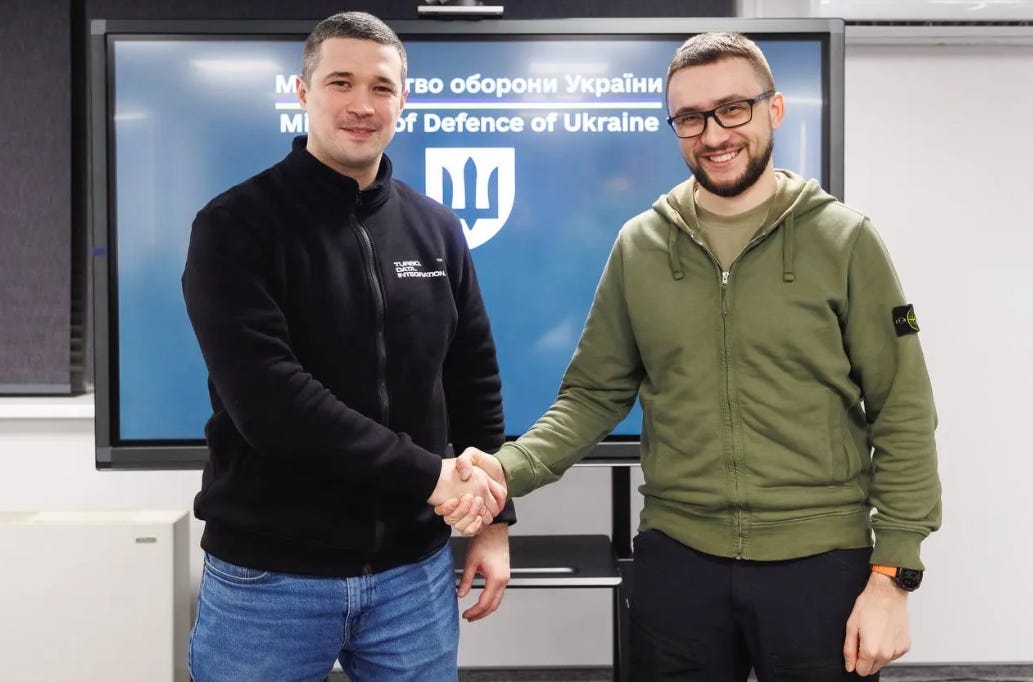
I’ll start with probably a rather global trend — the Elon Muskification of the world. A young face beloved by the western press experienced a dramatic rise this year. A new defense minister appeared in January, the tech whizz kid Mikhailo Fedorov. Along with his hitlerite-murderer-blogger-draft-dodger advisor Serhii Sternenko, he has provided the slick new face of the ministry of defense.