Concentration camp army
Mobilizing and beating to death drug addicts, the mentally disabled, and conscientious objectors.

The Ukrainian army has developed an ingenious method to deal with the desertion wracking it throughout 2025. Mobilized men trying to escape are murdered.
Drug addicts mobilized during their methadone treatments. Mentally disabled men mobilized and beaten for discipline. Ordinary drafted men subjected to the laws of the post-soviet prison system. Drug addicts going through agonizing withdrawals, hallucinating and throwing piss in the same punishment dungeon as conscientious objectors.
All troops go to the toilet under the barrel of a gun. Often all they have is a bottle in their tent. Wrapped up in duct tape and thrown into a concrete floor after an escape attempt, shitting on the floor beneath their immobilized body.
To prevent escapes, training bases are surrounded by mines. Men still try to run away, or perhaps simply prefer suicide by mine to the constant beatings and torture endured daily to break the spirits of the new recruits.
Nine suicides witnessed by one man in four days at the training camp. Commanders play with their recruits, forcing them to beat each other in mock gladiator fights. A mobilized man beaten so hard his face is blue, commanders laughing that he can only crawl, calling him ‘bluey’.
Dozens officially dead of ‘pneumonia’ this year. A 50 year old Baptist conscientious objector, forcefed through an IV drip after he went on hunger strike, beaten daily by a medic whose call sign was ‘Satan’. His wife said his broken body had an ‘inexplicable dent’ in his back. His face unrecognizable, only identifiable by a mole. Heart problems, the doctors concluded. No signs of a violent death.
A soldier suffering from methadone withdrawals dragged around the base from a quad bike. He and others photographed with large patches of skin missing. Complains to family he’s being beaten so hard he’s shitting himself. He escapes to a hospital and tells doctors of his ordeal. Dead a few days later.
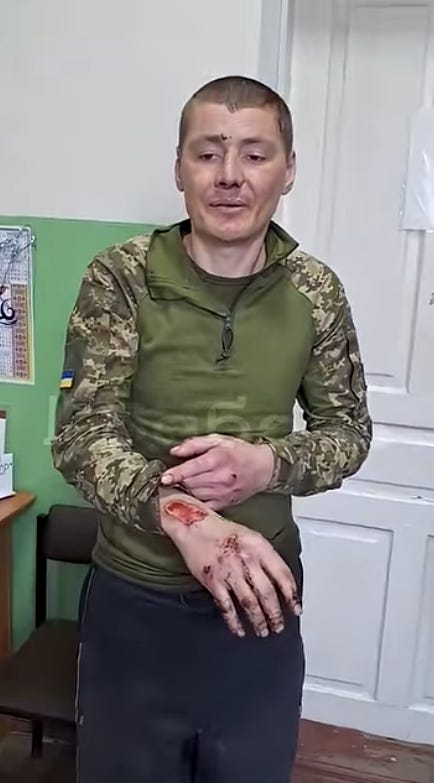
Dogs maul those trying to escape the camps. The training camps. Dogs are set on anyone else breaking discipline. Ribs broken during meetings if you mess up paperwork.
Commanders call all of them ‘one-time uses’. That’s all that any soldier is good for — one assault operation. At least someone in Maryland or London can get some frisson from news of counter-offensives by the daring, democratic Ukrainians.
The west is funding a concentration camp army. That’s from the words of Ukrainian soldiers, quoted by the most liberal, western-funded Ukrainian media out there. Of course, this latest investigation into the obscene brutality reigning in the army won’t be translated into English any time soon. Luckily, we’ll go through it together.
But let’s start with a less nauseating story, albeit one just as sad.
Denchik
This was Denchik.

The 29 year-old’s real name was Denis Opara. I was once told that being born in Ukraine is karmic punishment for past sins, and Opara’s past life must have been particularly wicked — he was born in Ukraine black and mentally challenged. Bullied cruelly in school, he was given three years in jail for stealing a pair of sneakers.
Denchik lost his teeth in prison from the constant beatings. When he got out, he vowed to stay on the straight on narrow.
So he became ‘Denchik’, a street performer amidst the gypsies and cartwheeling monkeys on Khreschatyk street in central Kiev. More than a million people subscribed to his tiktok. He was overjoyed to bring a smile or a laugh to people’s faces.
Despite his popularity, Denchik’s life remained a brutal one. He continued to endure regular beatings and humiliations. In 2021, he was beaten by nationalists for singing popular Russian pop songs.

He turned to alcohol and drugs. He made tiktoks about cappuccino ballerino. Those calling him a trash blogger probably weren’t wrong. He spent part of 2025 in a psychiatric facility.
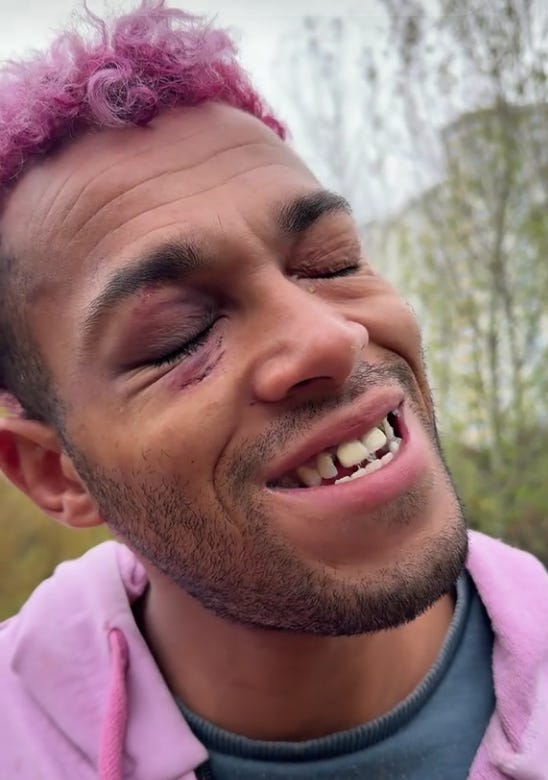
At the start of 2026, Denchik was mobilized into the armed forces of Ukraine while on the way to a night club. He put out a few videos in uniform, declaring that he’d sworn to defend the people of Ukraine. He also gave a ‘big, big thank you to Volodymyr Zelensky!’ He also called for the president to vote for him in the next elections. Curiously, these lines were said with a voice that seemed on the brink of tears.
On June 21, Denchik died. He hadn’t reached the front lines. The official cause of death was pneumonia.
Pneumonia claims many lives in the Ukrainian army. Especially lately.
But Denchik, like many others perishing in this manner, was a physically healthy young man. He also died in the sweltering month of June, seemingly not the typical conditions for pneumonia.
And he put out a video 6 days before his death, where he seemed quite fine.
Unsurprisingly, many in the comments doubt Denchik died merely of pneumonia.
In fact, based on the endless news stories about deaths just like Denchik’s, it is possible to hypothethesize about what really happened.
Let’s assume Denchik really did die of pneumonia. This can and does happen for several reasons.
First, because the newly mobilized are kept together in dank, badly ventilated dungeons. This is done to prevent them from escaping and impress upon them the total power of their new military overlords. Though Denchik was mobilized several months ago, he could have been infected by new recruits.
It’s also quite likely that Denchik wasn’t entirely appreciated by his new commanders. As we’ll see later in today’s article, drug addicts are regularly beaten to death or prevented from accessing their state-prescribed methadone treatments. Denchik’s commanders probably weren’t overjoyed to have been gifted a mentally challenged tiktoker, and it is not inconceivable that he didn’t meet their demands, in terms of discipline and physical capacities. Maybe they found drugs on him, which some commanders believes warrants the death sentence.
Maybe Denchik simply didn’t want to kill. He doesn’t seem like much of a killer. Unfortunately for him, it’s kill or be killed in the Ukrainian army. Evropa won’t defend itself, after all.
So maybe Denchik was punished. Beaten, not for the first time in his life. Maybe he was thrown into a pit to wait out drug withdrawals. Lying in a muddy hole for a few days is a good way to catch pneumonia, especially if you’re already nursing some broken bones.
Alternatively, it’s also quite possible that Denchik was simply beaten to death. As we’ll see in the rest of today’s article, slapping a ‘death by pneumonia’ medical certificate onto a bodysack of broken bones is all too common in the Ukrainian Armed Forces.
Many Denchiks
Ukraine’s assault units, the fastest-growing and most politically-favored section of the army, seem to have made mobilizing drug addicts like Denchik their specialty. Or rather, they have become very well-known for their approaches to the drug dependent.
On June 23, a remarkable new article appeared about the practices reigning in the 425th ‘Rock’ Assault Regiment. The article was published by Babel, one of Ukraine’s premier western-funded investigative journalist platforms.
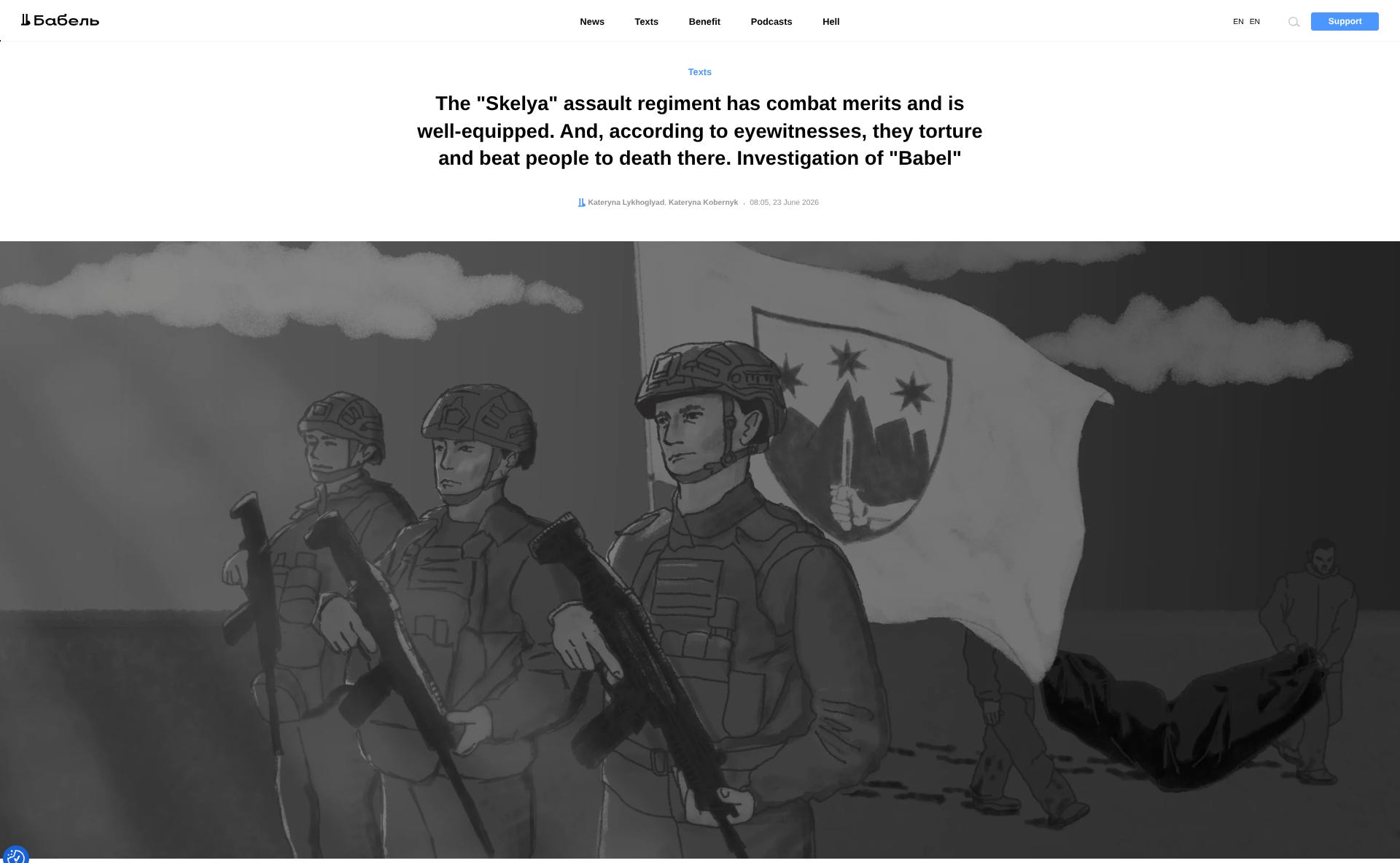
The 425th is Ukraine’s largest regiment, having expanded tenfold over the past year, and now boasting more than 13,000 troops. It has absolute priority in receiving new recruits, receiving 20 times more troops than other brigades. As I’ll talk about at the end of this article, is the most politically favored units in the army. Ukraine’s political and military leadership need the 425th for their frontline info-operations, and the 425th needs absolutely obedient, expendable meat for these operations.
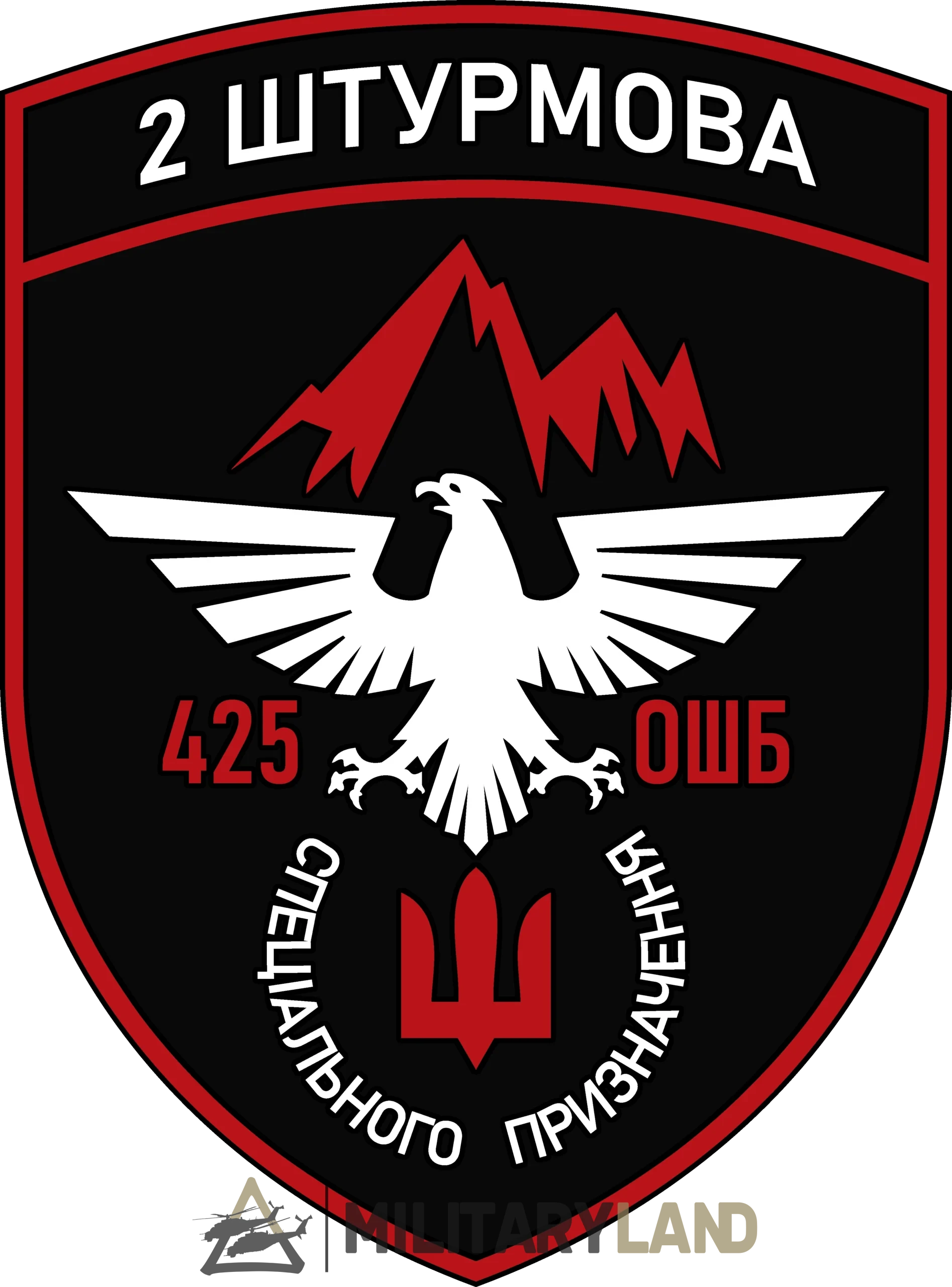
To begin with, drugs. According to Ukraine’s military ombudsman Olga Reshetilova, the 425th has 2000 soldiers dependent on methadone treatment. Ukraine, as I recently wrote, has state-funded methadone treatment clinics as a way to wean drug addicts off of street opioids.
Now, the problem is that the commanders of the 425th seem to believe that they know best how to deal with drug addiction.
The ‘Rock’, according to Babel, has the following approach:
First, officers from the 425th show up at state-registered methadone distribution clinics along with mobilization press gangs. There are 26,000 people registered for these programs across the country, mostly men, an excellent mobilization resource. Doctors in the Kropivnitsky methadone clinic told Babel of 160 patients mobilized in the hospital over the past few months. Officers from the 425th simply marched straight in and took them.
Then, the mobilized are taken to the 425th’s distribution warehouse. This has the evocative name ‘the chicken coop’. This long building, located on the edge of a distant village, apparently resembles an abandoned agricultural facility. The 425th uses it as a sort of barracks, dividing the six living sections with fiberboard panels. In good industrial farming practices, there are no windows.
Eyewitnesses tell Babel that there are 1,000 to 1,200 men in the chicken coop at any time. Many are suffering from drug withdrawals. Naturally, all phones are confiscated long before they even get to the chicken coop.
Oleksandr Zhykin, a man sent to the 425th despite his methadone dependence, told Babel about the prison conditions reigning at the chicken coop:
“They brought us there, got us out like we were coming out of a prison transport van — stripped us naked, searched us, made us take off our underwear and squat”
Zhykin actually joined the army relatively willingly back in 2023. Due to his methadone dependence, he was not able to serve at the frontline, and says he was quite happy working as a medic and clerk at his old, non-assault unit. Everything change in mid-February 2026 when a new commander took charge.
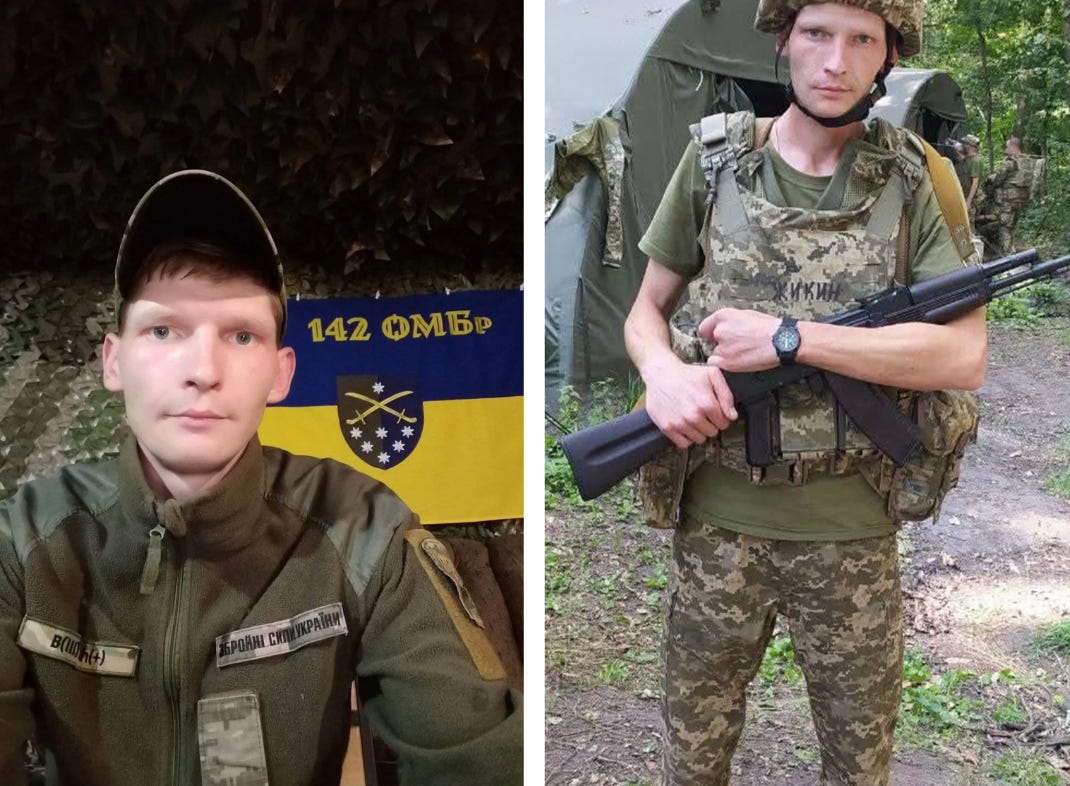
The new commander confiscated Zhykin’s methadone. Zhykin filed a police report because he could not live without the medication. Over-ruled, he was sent to a reserve battalion. He encountered the same problem there. When he left the unit to collect his methadone tablets, he was officially recorded as AWOL.
As punishment for his desertion, he was sent to the 425th. He would eventually be sent to the 3rd infantry battalion of the 425th, despite earlier military medical commission concluding that he was unfit for service in such assault activities.
Zhykin recalls that new recruits apparently spend several days in the chicken coop. They are collected by visiting officers from the many battalions of the 425th. Their new owners have the evocative name ‘internal buyers’.
“I was there for two days. But there were people who had been sitting there for two months. I even saw some who ended up staying there to work,”
Once they have been chosen by the ‘internal buyers’, the fresh meat is sent to the training bases of the 425th. These are much more dangerous places than the chicken coop.
The Rock is deeply suffused with the lingo and practices of post-soviet prisons. Special armed men accompany newly mobilized men at the training bases. These armed men are called ‘vertukhai’, meaning ‘jailers’ in post-soviet prison slang. Below is an artistic depiction of a vertukhai.
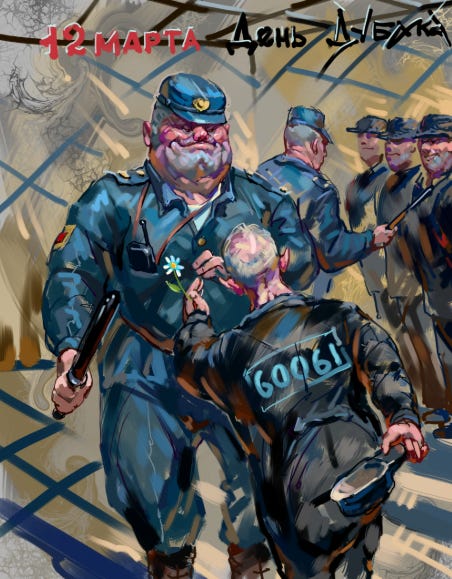
Zhykin recalled to Babel the welcome given by the ‘jailers’:
“Your priceless first experience of going to the toilet: moving in groups under the barrels of assault rifles, accompanied by ‘refined’ insults and rough kicks for not standing in a straight enough formation or not looking the way they wanted. Endless squats, planks, and the ‘one-and-a-half’ position—
“One-and-a-half,” according to the soldier, is something like a standing wall sit: thighs parallel to the ground, arms stretched forward.
—so that you ‘understand where you’ve ended up,’ don’t waste time, and get ready for your future ‘mission.’ To the toilet, to the dining hall—everywhere under armed escort. Like prisoners of war”
According to another interviewed soldier, new recruits are sorted upon arrival, Auschwitz-style:
“The drug addicts go one way because they’re behaving erratically, some of them are already feeling sick. If they behave badly, they’re beaten severely. The calmer ones just wait their turn”
Naturally, the withdrawals often begin already in the chicken coop. Insomnia, omnipresent pain, nausea, diarrhea, suicidal ideation. Only a minority receive IV drips, which somewhat mitigates symptoms. Those hallucinating are isolated.
One mobilized soldier speaking to Babel on condition of anonymity recalls sitting in the punishment cell with four people that were seeing pink elephants. Even worse, he couldn’t join in. He was not going through any withdrawals, he was simply punished for refusing to do squats — two days in the tiny punishment cell, covered mainly with a double mattress. At one point there were six or seven people in it, with at least four going through methadone withdrawals:
“Each of them was in their own little fantasy world, talking to people who weren’t there. They [the drug addicts] were trying to break down the door and causing chaos. The guards subdued them by spraying tear gas into the cell, and all of us had to breathe it”
The soldier also recalls not being allowed to go to the toilet. Only a bottle in the cell for urination was available. At one point, his hallucinating cellmates stripped naked and began jumping around while pouring water over themselves. Once the water ran out, they turned to the urine. The minority of prisoners not addicted to drugs managed to beat them into submission.
“One of them later started freezing, but he refused to put his clothes back on and refused to eat. I remember he crawled under a blanket and, right there under it, defecated on himself. There was masturbation too”
After this ordeal, the soldiers and a few others were gathered for training. While travelling, several soldiers in a nearby minibus smashed a window and tried to escape. They were beaten by commanders in front of all the other recruits.
Babel was able to identify at least four separate bases used by the 425th. A number of new ones are also being built. Soldiers that went through these bases recall that the rules and conditions are largely the same everywhere, except that recruits live in tents in some, and in dugouts elsewhere.
Babel describes one base in a pine forest. The tent camps are located several kilometers from the training grounds. 35 to 40 men sleep in each tent’s bunk beds.
One of the first rules they learn is that new recruits are not allowed to walk around the base without permission. One recruit who somehow managed to escape from this concentration camp told Babel the following:
“Even if they want to go to the toilet, they’re only allowed to do so once enough people have gathered—at least five—and only under the escort of a guard carrying an assault rifle,”
I would add that these reports are not new — I covered the exact same descriptions a few months ago.
Babel continues, writing that each tent has two armed guards assigned to it. One guard accompanies troops going to the toilet, the other remains behind.
Whenever recruits leave the tent, they must march in formation. Failure to do so or appropriately line up provokes guards to fire live ammunition into the ground or in the air. An anonymous soldier who escaped told Babel the following:
“As they constantly emphasize, all the ammunition in their rifles is live. They can easily shoot a mobilized man in the legs, and nothing will happen to them. After seeing that, some people forgot they even wanted to go to the toilet—or they relieved themselves before they got there.”
Zhykin also confirmed that no one was allowed to go to the toilet at night. New recruits were told to use a bottle instead.
Blasts in the night
The Rock has many ingenious methods to reduce desertion rates. For instance, mines.
A number of mobilized men told Babel that all of the 425th’s training camps are surrounded by mines. Recruits are constantly reminded of this fact by large warning signs on the barriers encircling the tents.
The warnings don’t stop everyone. One mobilized man told Babel that explosions occurred every night. Sometimes wild animals fell victim, but not only.
One forty year old recruit from Kharkiv was particularly dissatisfied with his new fate, remaining withdrawn around other recruits. A witness remembers a loud explosion on the night of February 26, 2026, after everyone had already gone to sleep. Shouting followed, then another explosion. Guards entered the tent, ordering everyone to line up outside for counting. At this point, they discovered one man was missing.
The head of security arrived about 10 minutes later to restore discipline. His nom-de-guerre was ‘the Finn’. He was driving a quad bike.
Sitting behind him was the missing man from Kharkiv. He may have originally escaped the tent by crawling underneath an opening.
One of his eyes was covered with tape. Shrapnel-riddled flesh was visible under his torn pants. A guard lifted his shirt, showing recruits a hematoma across his abdomen.
The Finn used this as an educational opportunity for new recruits, illustrating that attempts to escape could cost you an eye.
Then he ordered the wounded man to kneel on the ground. He didn’t react. Then he collapsed under the Finn’s blow. The Finn drew his pistol and fired towards the kneeling man.
Those in the first column saw that the bullet entered the ground, not the man. Those in the second and third rows weren’t so sure. A witness recalled his legs giving way beneath him at the sight. Commanders told those present that escape was pointless, upon which they were allowed to go back to sleep.
The unlucky attempted escapee, whose name Babel believes to have been Oleksandr Isaev, was never seen again. According to official documents, he died on March 15 from ‘pulmonary and heart failure’. This is what the 425th officially stated regarding Isaev’s mine encounter:
During training on 26.02 he deviated from the designated route and blew himself up on an unknown device
Babel found another soldier in the 425th who fell afoul of a mine. A relative told Babel about it on conditions of anonymity and provided documents. He’d apparently been at the training camp for less than a month. One day he called his relatives, saying ‘I blew myself up’. He was discharged from duty and told to call his relatives to be taken home.
His relatives believe he was trying to commit suicide:
I don't think he wanted to escape. By and large, they all know that there are mines there. And if there is any quick movement, they shoot him in the back
When his relatives came to pick him up a few days after the incident, he was still bleeding. As usual in the 425th, he was not allowed to visit a hospital for medical treatment. His relatives counted 50 shrapnel fragments around the lower part of his body, confirmed to Babel by medical documents. His genitals suffered most, and expensive operations seem to have not helped. He is now understandably depressed.
The Rock still decided that it was time to return their property, and came to the man’s house to take him back to a ‘medical unit’. He is now in hiding.
When pressed about the minefields, 425th representative Andriy Suray eventually gave this answer:
If you see ‘mines’ written on signs, it isn’t worth testing that with your legs
Escape and tape
The aforementioned Oleksandr Zhykin tried to escape the 425th on his first day in the forest. Luckily, he was in an old camp that had not yet been mined. He ran away with a fellow soldier while going to the toilet, rushing in different directions while the guard was distracted. The guard shot at their legs with live ammunition, but they were saved by trees. They were also followed by drones.
However, they were caught. Zhykin’s teeth were knocked out and his ribs broken.
It was hell. And that guard I ran away from said: ‘So, you little bitch, do you want me to go to the front instead of you?
As usual in Ukraine, whether in the assault units or the mobilization units, discipline is maintained by the constant threat of being sent to the front. If you fail to fulfill your mobilization target or lose fresh meat, you yourself become meat.
The 425th officially denied beating Zhykin.
After his beating, Zhykin says he and his fellow escapee were covered completely with duct tape and thrown onto a concrete floor. They spent a week in ‘the barn’, occasionally visited by guards for a new beating, sometime with the butt of a gun, sometimes kicked by boots. Zhykin didn’t eat or drink much because he feared going to the toilet.
On the third day after leaving the barn, Zhykin ran away again. He and two other soldiers fled, with one lucky man successful. Zhykin and the other one were caught, beaten, thrown into the barn again, then taken out after a day. Handcuffed to each other, they were transported to the training ground. They spent a week there walking around with their hands cuffed to each other. They even slept on the second bunk like that. Climbing up was not easy.
A week later, they were given shovels and told to dig toilets and holes while handcuffed. Zhykin finally managed to be transferred to another unit after writing an official report.
Babel writes that all the men they spoke to recalled being taped. There was also a separate zone in the dugout of each training centre for those refusing to serve for religious reasons. Those experiencing withdrawal were also sent there.
Three witnesses recalled particularly unruly elements being taped up. They also remembered being ‘tied to a pole inside the dugout where we were kept’. The pole, like the dugout, was built using wood. This is certainly not a practice invented by the assault units. Back in late 2024, Ukrainian media shared an image of a soldier tortured and crucified onto a wooden cross in a dugout.
Zhykin’s family looked for him while he was in the 425th. When he was eventually given a phone, he wrote and then deleted a message to relatives reading ‘Call the hotline every day. At least they’ll stop beating me. I’m in hell.’
It was a long time until he was allowed to make a phone call, and even then only under supervision, in speakerphone mode. Luckily, his troglodyte guard didn’t suspect that Zhykin, sitting on the second bunk, might dial on video. He told his relatives he was ‘Alive, healthy, everything is fine’, while showing his bloodied, beaten face.
Zhykin’s father wrote an official complaint to the military law enforcement service. Of course, the 425th soon found out about it. The company officer visited Zhykin in his tent: ‘What are you doing, you wanted to fuck everyone up around here? You video called?’ Zhykin thought he was about to be killed, and denied calling on video. The company officer said he had photo evidence. Nevertheless, they stopped beating him after that, though they forced him to record a message proving he was fine.
Zhikin only managed to escape from the 425th while being transferred to another location. It also helped that he was near his hometown.
The 425th continued to search for its lost material, and sent representatives to Zhykin’s father’s house, questioning him and waiting several days for the son to return. They also called Zhykin’s girlfriend using his tablet, which he’d left on the base.
The expendables
There were also men with psychological disorders to keep the drug addicts and conscientious objectors company. Unable to understand instructions, they were apparently constantly kicked, punched, and beaten with rifle butts by the guards.
I’ve covered cases before of mobilized schizophrenics, but it appears that in this case, men with something like autism were mobilized. Babel found the parents of one man mobilized into the 425th. The man is clearly mentally disabled, unable to properly speak. He was approved as medically fit and kicked just as much as everyone else during training by the 425th.
Babel also recorded cases of men mobilized with HIV, tuberculosis and hepatitis C. As usual in the Rock, they were prevented from receiving necessary medications and medical aid.
As you might imagine, the soldiers produced by this machine don’t have the highest morale. The aim seems to be to produce instruments forced to move forward, knowing that retreat or desertion is just as deadly as the enemy.
That’s what mobilized witnesses told Babel. One overheard a conversation between the training ground leadership of the 425th about the next frontline deployment of new recruits:
Good luck, get ready, there’ll be a thousand 200s.
A ‘200’ is the post-soviet military term for killed in action.
Zhyzhkin also recalls a chief of staff coming up to his tent and remarking:
Who’s here? Ah, the third company. “One-time-uses”.
It is apparently widespread for commanders to call soldiers in the 425th ‘one-timers’. Expendable material, used up by the first assault operations. It’s not for nothing that Ukrainian military analysts often complain about the ‘suicidal’ assault operations of the 425th and other assault units. The aim is to impress western media with news of x kilometers of frontline grayzone ‘liberated’, and that’s it.
And that’s why the 425th and other assault units have absolute priority from army command in receiving new recruits. They need it. And it also encourages them that there’s no need to change their current practices. They’re doing exactly what the country’s political leadership wants. That is, what NATO wants, to project the perception that Ukraine is winning, particularly to Mr Trump.
These supersoldiers seem barely capable of holding a weapon, let alone leading a charge. Babel recounts stories from a soldier still serving in the 425th, who describes a ‘zombie apocalypse’ during training exercises, with beaten drug addicts shitting themselves on duty. This soldier nevertheless adds that despite his digust at such methods, he has seen some success in turning drug addicts into ‘people, real motivated tigers’. Of course, not everyone survives their journey into the eye of the tiger, but what does that matter.
According to the head of the All-Ukrainian Association of People with Drug Addiction, Oleg Dymarytsky, people registered with a narcologist can only join the army voluntary. It isn’t clear whether he means that it is illegal to do so, or simply a very bad idea. Dymarytsky says that there are many soldiers on substitution maintenance therapy (SMT) with commanders that allow them to take methadone, and go on to conduct combat missions. Dymarytsky says he knows of 26 people on SMT and ‘accompanying serious diagnoses’ who died in combat. Nevertheless, he urges against forcibly mobilizing them.
Gladiators, dogs, suicides
Oleksandr Semenov tried to apply for military service twice, in 2022 and 2024. Despite his narcotics problems, this car enthusiast was apparently eager to get involved in the evacuation of the wounded. He was refused because of being on methadone therapy.
This changed in 2026, and his third voluntary visit to the Territorial Recruitment Centre (TRC) saw him taken into the army, straight ot the 425th. That was January 10. Semenov managed to escape from the 425th while being transported with other troops to another base. On January 23, he came to hospital in his hometown of Kropivnitsky, bloody and beaten. That’s when he told doctors filmed him saying the following:
They beat you, tie you up to a quad bike and start dragging you along the ground until your skin is all scraped off.
The video shows that Semenov had deep wounds on his head, dirty and beaten arms and legs, and cuts on his palms and back. Tetyana Gurenko, head of the drug substitution maintenance therapy department, told Babel she filmed him and then went to cry in her office. She says that 160 people under her care were mobilized into the 425th over the winter — often grabbed directly from the hospital.
Semenov shared with Gurenko testimony about all the people he remembers committing suicide in the 425th:
Skipa Maksym — he hung himself from his bulletproof vest. Then — I personally got him the cord — a boy climbed into the toilet tank and strangled himself. Then — two people — their first shooting range — they each took a bullet and shot themselves in the head. In short, in four days, nine people committed suicide
He also described the abuse he faced:
Semenov: They walk around drunk like that in the TRC. They say, “What are you looking at?” Then one of them smashed me in the face with his boot, and my whole face was covered in blood.
The faggot took off my hat and yelled, “Wipe the blood off your face, you faggot”
Doctor: How did you end up here today? Show me your hands.
Semenov: They brought me there. They said they were taking me to the medical unit.
Doctor: Why the medical unit?
Semenov: They said it was for IV treatment, to help me recover. They told me that without the IV drips nothing would happen.
They brought me to the medical unit. On the first day, when I came out, they started firing a Kalashnikov into the ground. They dragged me out, tied ropes to me, and started pulling me behind a quad bike.
Babel found another suicide in the 425th. This one took place at the permanent deployment base, not the training centre. The official investigation found that The soldier killed himself with a Kalashnikov rifle.
Doctors who talked with Semenov told Babel about other things he said. For instance, that ‘I never thought I could shit myself until they beat me’. Doctors also found that his fingers were broken and traces of handcuffs remained on his wrists.
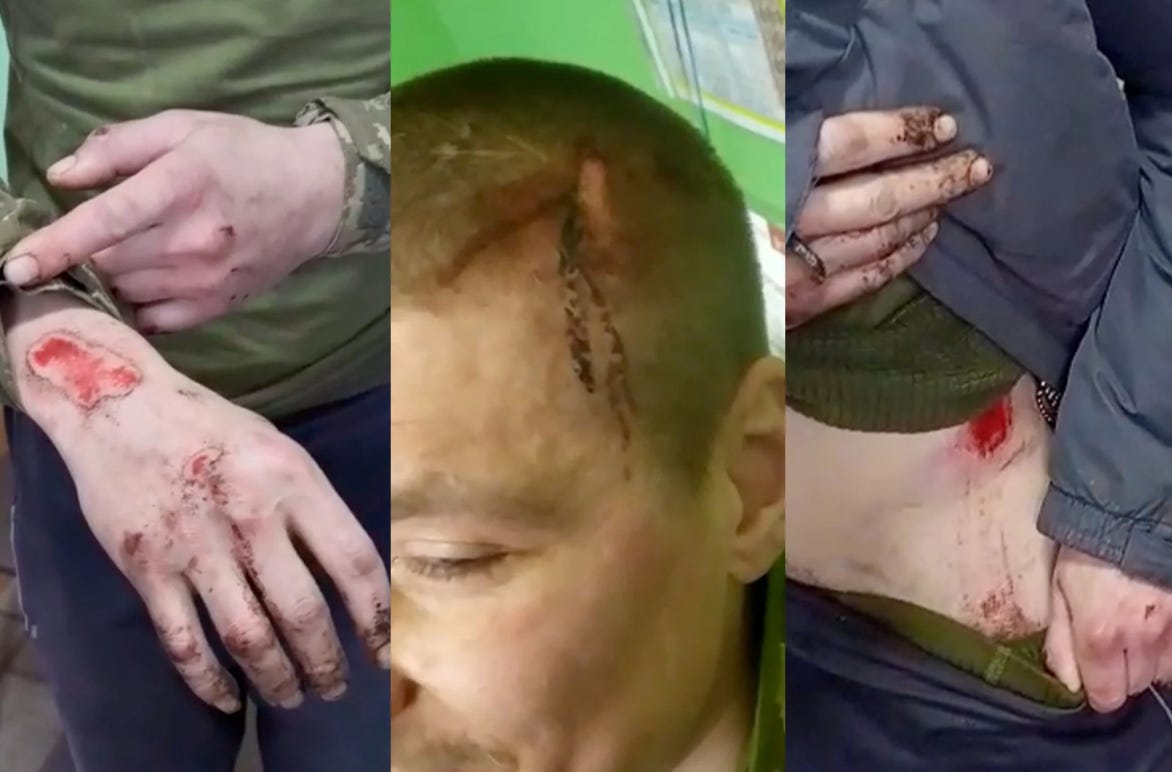
Semenov ended up dying on February 27 in hospital. The official cause of death was pneumonia. Perhaps his already weak system simply gave out after all the beatings. For whatever reason, the police did not conduct an investigation into what really happened.
When Babel questioned the 425th about these suicides Semenov remembered, they had an interesting answer. They confirmed that the suicides had taken place, but claimed that Semenov hadn’t witnessed them, that they’d all taken place at various units over a period of six months. They believed Semenov had simply gathered together rumours. Those who committed suicide were apparently largely instructors, guards, and experienced soldiers. Babel wondered how exactly a soldier kept in isolated conditions at the 425th for two weeks — recall how drug addicts experiencing withdrawal are quartered — would know so much about the unit’s glorious history.
Maksim Skipa, the 425th stated, was complaining about drug withdrawals before his suicide. A man mobilized into the 425th alongside Skipa gave Babel another story. He remembers Maksim being constantly beaten by officers of the 425th, even already in the Territorial Recruitment Centre (TRC), which is theoretically separate from the army.
“They beat his ribs. His face was blue, purple. They were laughing at him and saying, ‘Blue-eyed.’ ‘Oh, crawl, crawl, he can’t walk, Blue-eyed,’”
Skipa apparently received such a fate because hidden methadone was found on him during a nighttime search.
Interestingly, Rock servicemen apparently accompany the TRC and police to capture fresh meat on the streets. This is certainly not per mobilization protocol, but it does illustrate the political privileges the 425th enjoys, particularly when it comes to acquiring personnel.
When not grabbing men off the streets, Rock officers got drunk on cognac in the TRC building. Naturally, this energised them into beating new recruits. They also ordered the captured men to ‘spar’ with other men already beaten into a pulp. Babel’s interlocutor was forced to participate:
“I pretended to hit, but I couldn’t hit! I swung and at the end I lightly touched,”
He says that Maksim Skipa was relentlessly humiliated.
“He could barely walk. We helped him put on and take off his vest, because if he didn’t put it on, they would beat him.”
One morning, Maksim was found hanged in his cell.
There are many reasons to beat personnel in the 425th. A former instructor told Babel that he knew of cases when rear personnel had their ribs broken in front of everyone else at a meeting. Their crime was Starlink malfunctions and paperwork errors.
Another soldier saw dogs set on mobilized personnel. He recalls instructors and training ground guards also being subject to brutal forms of punishment.
“They [the recruits] are like zeks [Soviet/post-soviet slang for prisoners]. They leave at 6 in the morning — at 6 in the evening they go into the dugout. That’s it. The instructor comes in — and you sit there, then you get, excuse me, fucked”
Naturally, whenever government officials or journalists come to inspect the bases of the 425th, particularly unruly and often-beaten recruits are taken off base for several days. Then a good Potemkin village is put on for the visitors, survivors of the 425th told Babel.
All in all, Babel managed to confirm 26 deaths among Rock recruits between late fall 2025 and the spring of 2026. The dead were largely healthy young men without addictions or serious illnesses. In all cases, the official cause of death was pneumonia. Almost all relatives complained to the media that the dead were refused timely medical care. I wrote about some of these cases here.
Killing the fathers
One of the dead, the 34 year old Vitaliy Saltan, died less than a month after his January 26 mobilization. His medical documents show that he was taken to hospital with a critically low blood saturation level — 75. He died a week later.
Despite Saltan’s temperature of 40 degree Celsius, he was refused medical treatment in the 425th. He also told his parents he never even thought of trying to escape. This is what Saltan’s fiance Anastasia Poleva told Babel:
He told me that they [the escapees] were all flayed, beaten, and maimed. He says it was as if someone had simply tied them to a car and driven them away”
Poleva and Saltan were planning to get married in the summer.

Dmytro Koval, a 50 year old from the western oblast of Volyn, joined the 425th on March 6. He died on the 21st, officially of ‘unspecified cardiomyopathy’. His heart gave out, in other words.
His wife Lilya saw Dmytro in the morgue. She found it difficult to recognize him, only identifying him through the moles on his face:
His face was exhausted, I would say — tortured. His hands were bruised, his legs were bruised, there were bruises on his neck. Plus, on his face, almost the entire right side, there was a huge patch, as if his head had been slammed into something. On his back — an inexplicable dent, some sort of huge hole.
Dmytro was a Baptist. The first news of his death was shared on a corresponding religious forum. Three people serving alongside him at the Rock told his family more details about his death, which they shared with Babel. They, like Dmytro, were conscientious objectors.

They said that Dmytro was silent and frightened at the training base. He prayed for six to seven hours a day and refused to eat anything. Some believe he was on a hunger strike:
I told him: ‘Look, brother, you’re not going to prove anything to them here’
Dmytro made the mistake of trying to talk about human rights to his captors. This earned him beatings. Eyewitnesses recalled the following:
He was shouting ‘Guys, why are you beating me?’ I looked at his face — the man didn’t understand what was happening at all.
Exhausted and famished, Dmytro was constantly freezing. He tried to keep warm by sleeping alongside other mobilized men.
Meanwhile, the Rock was not going to entertain his hunger strikes. They forcibly hooked him up to an IV drip, supposedly filling him with vitamins. Other recruits held him down to prevent him from breaking free during the forcefeeding sessions.
But Dmytro kept on demanding he be released, and refused to read. This, eyewitnesses say, earned him daily beatings.
The worst beatings came when he promised the guards he would eat, but then refused upon entering the canteen. Another recruit remembers the following scenes:
They hit him on the head a lot. They grabbed him by the neck and threw him — lifted him up and threw him again. They kicked him, they punched him
Maybe repeatedly throwing this 50 year-old father onto the ground was what made half his head dark.
Other recruits say Dmytro Kovl was abused by two medics of the 425th. They had the call-signs ‘Satan’ and ‘Box’. Another head of the ‘Sich’ training ground also took part.
Representatives of the 425th deny the allegations. According to them, there’s no need to take seriously claims made by deserters — the source of almost all of Babel’s information on the unit. The situation is compounded by the fact that deserters cannot give testimony to the police.
Lilia Koval was unable to contact her husband while he was with the 425th. She only got one audio message, where Dmytro said:
Please pray hard, and get everyone involved. The police, if possible.
Dmytro was last seen by other recruits on March 14, then he was separated from the rest. A week later he died in the car of Rock servicemen, driving in an undetermined direction. The preliminary medical examination blamed heart problems, and claimed that the bruises on his chest, back, ribs, shoulders, armpits, legs and groin were ‘minorr injuries’ and not indicative of a violent death.
Dmytro had met his wife a few years ago at a church service. Their daughter Nelya was born in 2025.

Falling from trees
Volodymyr Tsukanov was 32 years old and from the Nikolaev region in southeastern Urkaine. Mobilized into the 425th on January 15, he died on February 11 in hospital. Heart failure was the official cause of death. Forensic medical examination also showed multiple rib fractures and blunt force trauma to the chest.
Tsukanov was in the 425th for just 5 days, January 15 to 20. On the 21st, he and 40 other recruits were sent to the 1st separate assault regiment, which is also commanded by psychotic neo-nazis. Police investigating his death believe he died from a severe beating he received on the morning of January 20, right before he was transferred.
A criminal case was even opened against a junior sergeant of the 425th, Anatoly Kucher. He admitted his guilt in the courtroom, and said that he beat Tsukanov because he saw him taking drugs. Kucher repented, claiming he’d misjudged his strength, and asked to continue his service.
The investigation found that Kucher kicked him Tsukanov three times in the chest. He then kicked him in the torso while lying on the ground, breaking nine ribs. This chest injury developed into bilateral purulent pneumonia. He was only taken to hospital from the intensive care unit of the 1st assault regiment.
Kucher told Babel a different story through his lawyer. He says he didn’t beaten the recruit, but simply neutralized him when Tsukanov grabbed his weapon.
Official representatives from the 425th first denied that Tsukanov was even from their regiment. Later, the 425th admitted to Babel that he’d served with them, and started telling them the story about how he’d been found with drugs. Babel notes the unlikeliness of this claim, given that recruits are stripped naked and searched upon entering the 425th.
Tsukanov was indeed a drug addict. This fact is regularly used by official representatives of the 425th on television to discredit all testimony — or simply justify the beatings.
Despite Tsukanov’s addiction, he had been caring for his paralyzed mother over the past few years. She died last year, as did his father. Tsukanov’s closest living relative, his sister Alyona, lives far away. She said that after his parents’ deaths, her brother tried to give up drugs again. She was even initially happy that he’d been mobilized, hoping it would help. Now, she wants her brother’s murderers punished.

Alyona talked with her deceased brother twice on video call while he was with the 425th. The first time, he told her he’d been beaten:
“He said that at first he ended up with fat bastards who beat him badly, like they treated a dog, ‘and now I’m with good guys, everything’s fine, don’t worry.’”
The second time, he said his ribs were broken. This was the last time Alyona was able to contact him.
The final story provided by Babel is that of Vitaly Karat, 38 years old. He came from the western oblast of Ivano-Frankivsk. Mobilized on February 25, dead in hospital on March 14. Orban failure.
After his case went viral on social media, the commanders of the 425th claimed Karat had fallen from a pine tree.
“Vitaliy Karat tried to commit a suicide while serving. During the search for him, he was found high on a pine tree. After talking, he decided to go down, but fell from it.”
The postmortem found that Karat had broken ribs and a chest injury. The 425th claims he was taken straight to hospital, and that they even asked the doctors to x-ray him in case he had pneumonia. A representative of the 425th denied that Karat had internal bleeding or blunt force trauma to the sternum when they dropped him off at the hospital. He says he doesn’t know why Karat ended up in the morgue with 10 broken ribs, bleeding in his internal organs, and blunt force trauma to the sternum. According to him, the 425th only identified a single broken rib. In another statement, the 425th claimed that Karat had two broken ribs.
The 425th was kind enough, however, to provide a photograph of the pine tree Karat had apparently fallen from:
Karat’s sister, Olesya Piskunova, told Babel that her brother had told her before his death he was being constantly beaten. He was only sent to the hospital once his condition was irreversible.
“They killed him. They abuse everyone very badly. The Rock is death.”
The final solution?
So, how widespread are the Rock’s practices in the Ukrainian army as a whole? Are these practics really reducing desertion rates? And how fair is the comparison between Ukraine’s assault units and Russia’s famous PMC Wagner?
