AI drones
Ukrainian mid-range drone war: effects, statistics, Russian counter-measures.

Ukraine is winning again. This time, through deploying against Russia a tactic Moscow has been using since about 2024. Instead of focusing their drones on morale-boosting killings of Russian soldiers at the frontlines, there is now a concerted campaign of ‘middle-strikes’ — attacks on key logistical routes 50-200 kilometers away from the frontline.
The western press is overjoyed, painting it as a catastrophe for Russia. Russian military bloggers, as they are always wont to do, are also quite gloomy.
But the fact is, as even the Institute for the Study of War admitted on May 25, that new effective military technologies always eventually become outdated due to counter-measures. They urge Ukraine to take advantage of the ‘unique and time-constrained window of opportunity’ while Russia is still vulnerable to these middle-strikes, which I suppose means throwing more high-casualty assault units into the meat grinder.
Today we’ll take a look at the American technologies behind Ukraine’s middle-strike campaign, its strategy, its effects on the Russian rear, available statistics, and possible Russian responses.
Strategy
Ukraine has massively stepped up its campaign on Russian logistics over the course of May, particularly after the May 9-11 ceasefire.
According to Forbes and the Russians we’ll look at today, two American technologies are behind this. First, the American Hornet drone, which uses AI and other technologies to avoid jamming by electronic warfare systems. Second, Starlink connectivity. Access to this was cut off to the Russians in February, precisely because they were using it to great effect against Ukrainian logistics.
As one Russian military bloggers noted with reference to a Molin map of middle-range strikes, the aim is to achieve what Ukraine’s 2023 counteroffensive failed to do: cut logistics between the mainland and Crimea, as well as between other Donbass and Zaporizhzhia oblast cities held by Russia (Berdyansk, Melitopol, Donetsk, Mariupol).
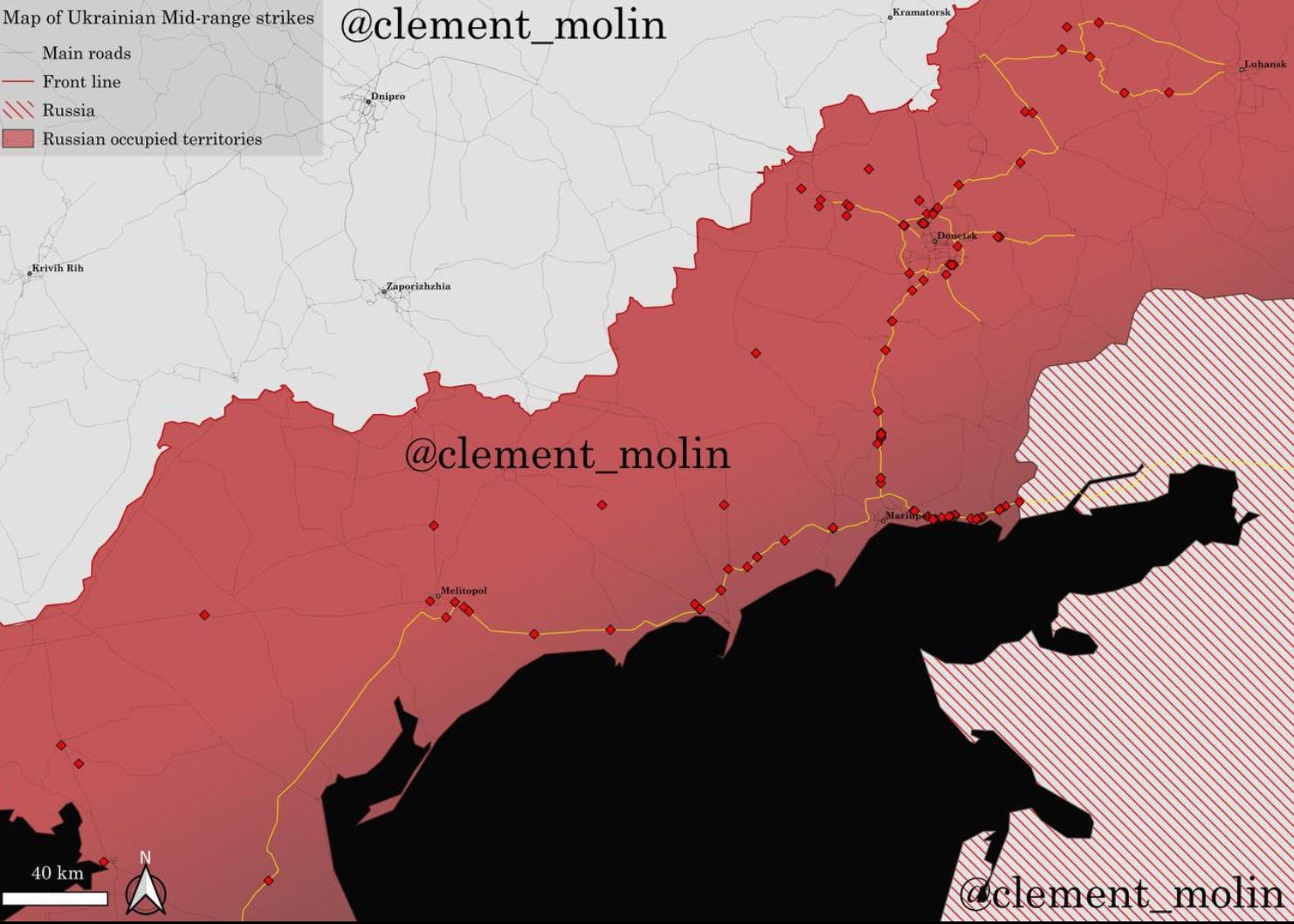
This is being done mainly through the use of the US-produced Hornet drone.
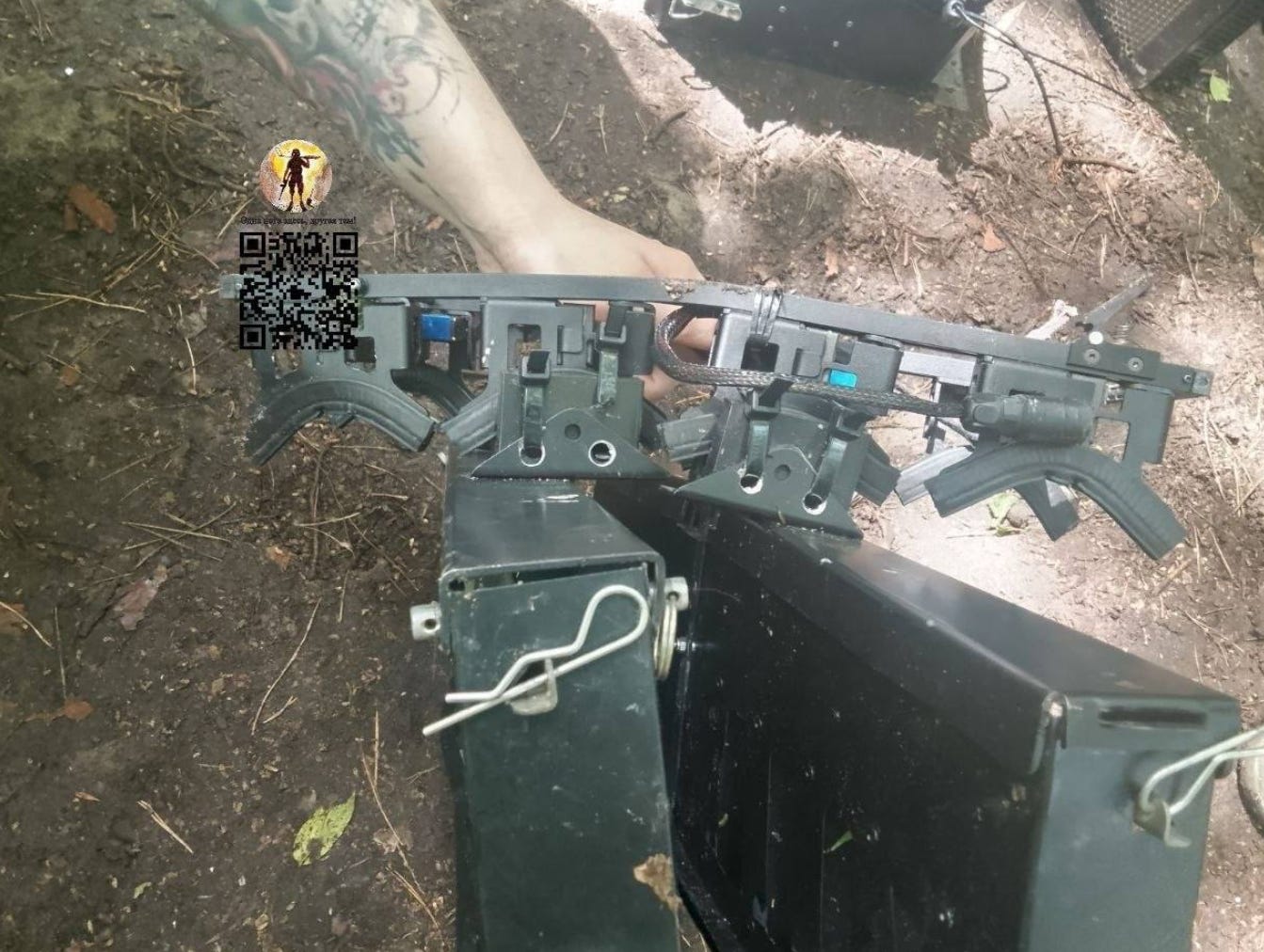
Some other approaches are also being used — on May 29, Ukraine’s military intelligence and special operations forces posted photos of their drones mining from the air the Mariupol-Melitopol highway. Russian bloggers posted photos of these ‘cluster mines for remote detonation’ on May 30. The large 48 mine collection in the first photo is apparently dropped by the massive FP-1 (Fire Point) drone, and the smaller 10-mine ones by heavy Vampire quadrocopters.
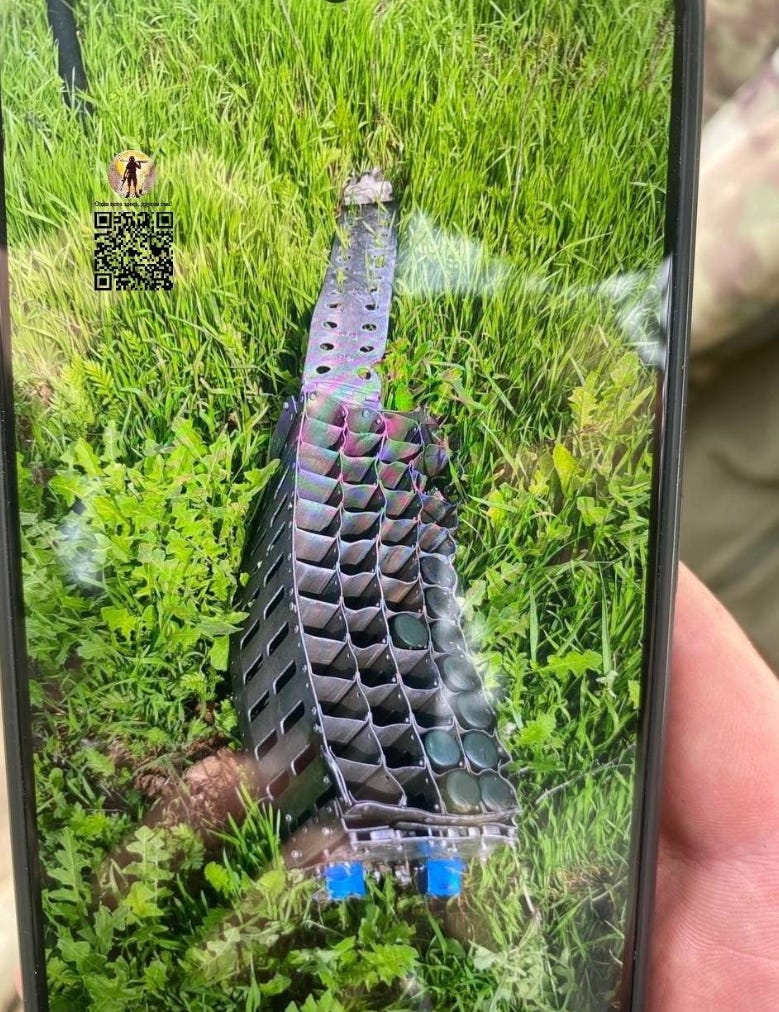
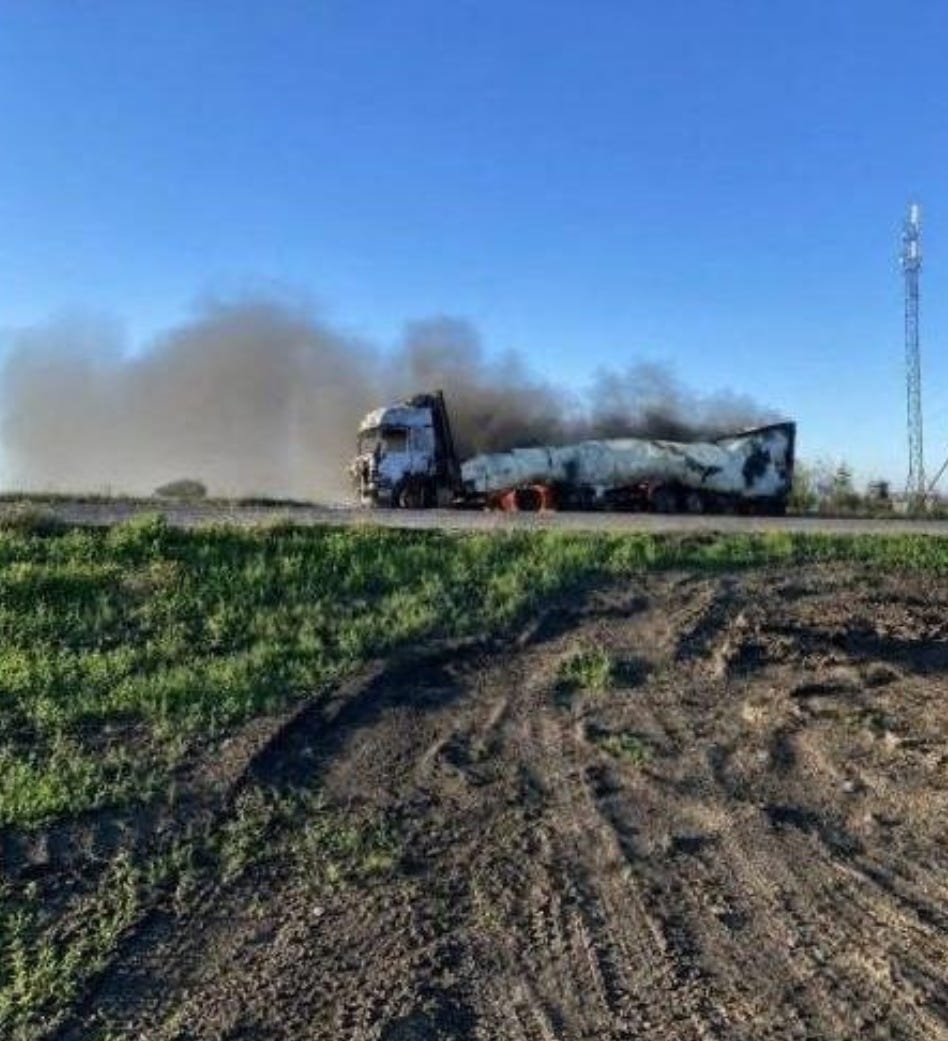
A photo of the aftermath of said mining posted by Russian telegrams is below. Russia’s governor of the Kherson oblast announced that one driver was killed and several others injured.
Azov, namely the 1st Corps of the National Guard, is the Ukrainian unit that has been speaking most lately about mid-range strikes on Russian logistics.
Azov’s main target in the video above is roads leading to and exiting Mariupol — logical, perhaps, given the fact that the 1st Corps (back then it was the 12th brigade) was famously surrounded and largely taken prisoner by Russia in that city in May 2022. In the years following that, Azov’s command was released. At least Russia got such a powerful asset as Viktor Medvedchuk in return. Smart trade…
Anyway, minister of defense Mikhailo Fedorov has also been coming out with impressive claims, as he is wont to do. He stated on May 27 that Ukraine will enforce a ‘Logistical Lockdown’ in the rear of the Russian army. Yes, it was capitalized in the original. This is apparently a ‘new program’. Fedorov loves such things.
He claims that Ukraine has quadrupled its strikes over the past few months on warehouses, equipment, command posts, and supply routes at depths of up to 200km from the frontline. Fedorov portrayed the main aim of the ‘program’ defensively, in terms of preventing the Russian army from launching assault operations.
Azov has been somewhat more realistic. They have told the media that they don’t expect to entirely destroy Russian logistics, but hope to eliminate up to 70% of cargo traffic on key routes in the Russian rear. The route from Mariupol to Crimea is being particularly targeted, with the hope of partially isolating the peninsula from land.
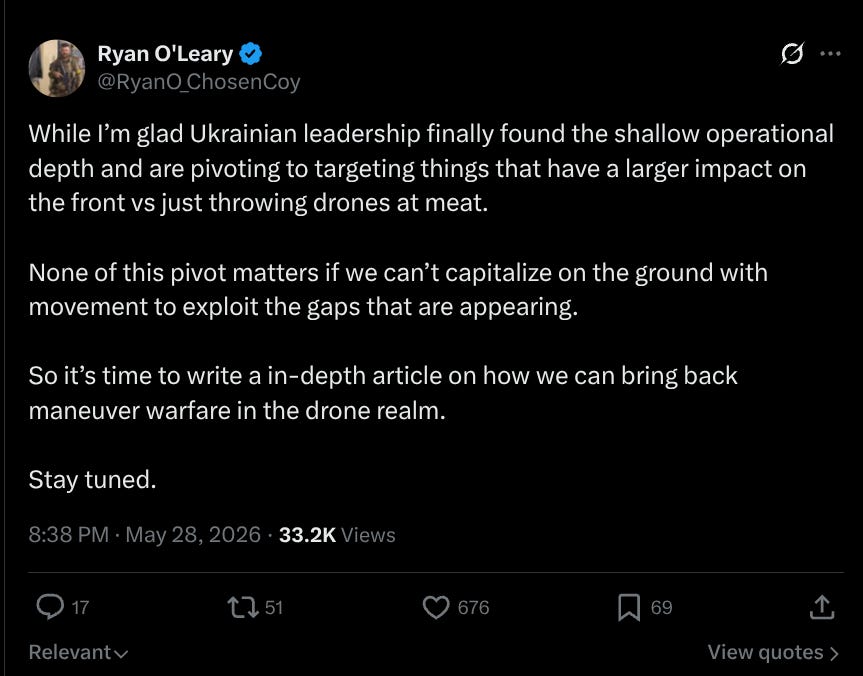
The American soldier Ryan O’Leary, who has been managing a Ukrainian drone unit for several years, has long urged the Ukrainian army to copy the Russian approach of targeting enemy logistics with middle-strikes. He previously criticized the Ukrainian focus on solely targeting Russian personnel at the frontline and flashy long-range drone operations, both of which have little effect on actually moving forward on the front.
But while O’Leary is pleased about the new approach, he worries that it will be meaningless unless Ukraine is able to push forward on the ground. This will require a hitherto lacking level of coordination between drones, infantry, and other branches of the army, against still-formidable Russian defenses.
Numbers
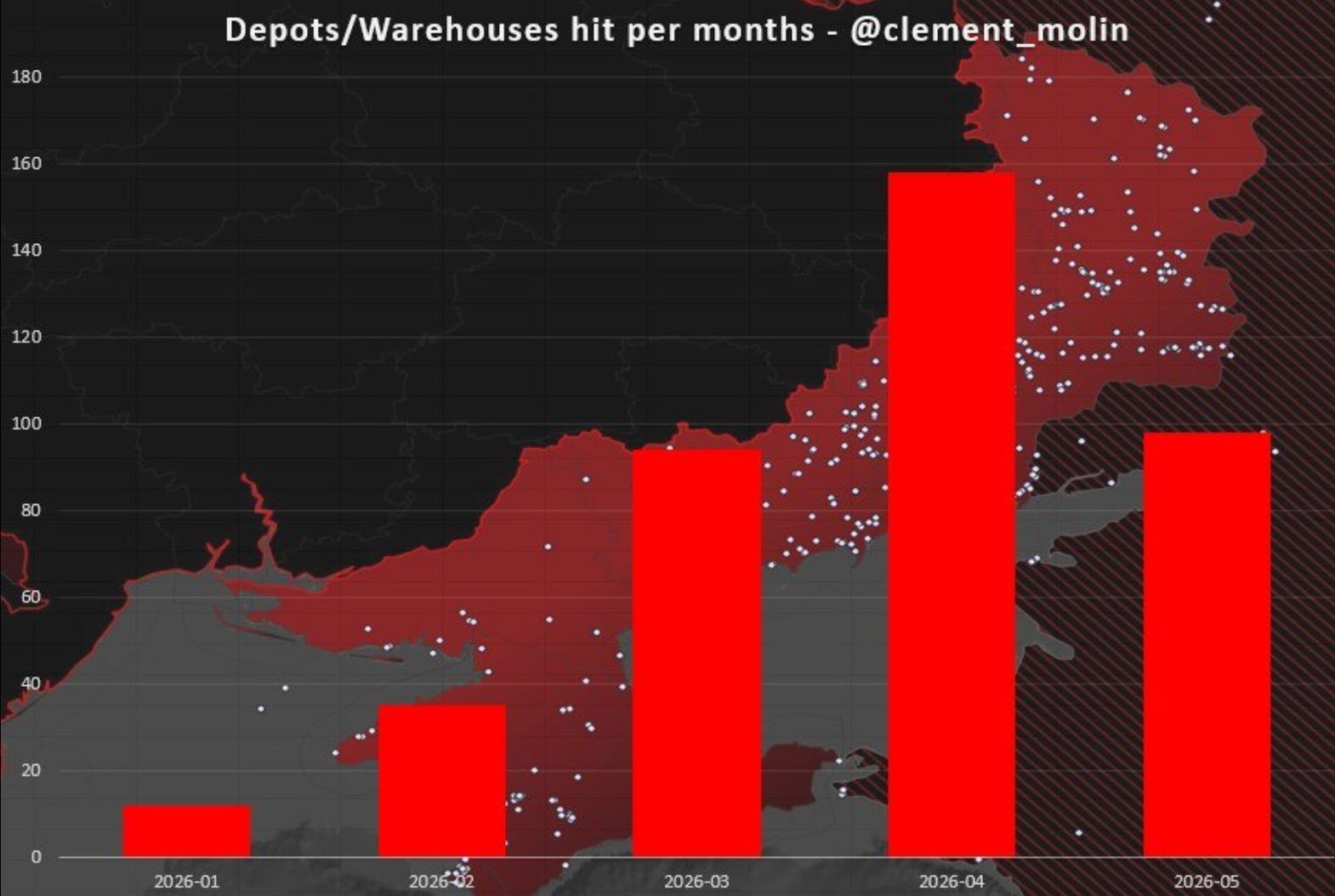
Probably the most extensive documentation of Ukrainian mid-range strikes lately came from the young Frenchman Clement Molin. He has geo-located more than 1,000 mid-range strikes since the start of 2026, which have destroyed 159 vehicles, 28 trains and 400 warehouses. Much of this took place in May.
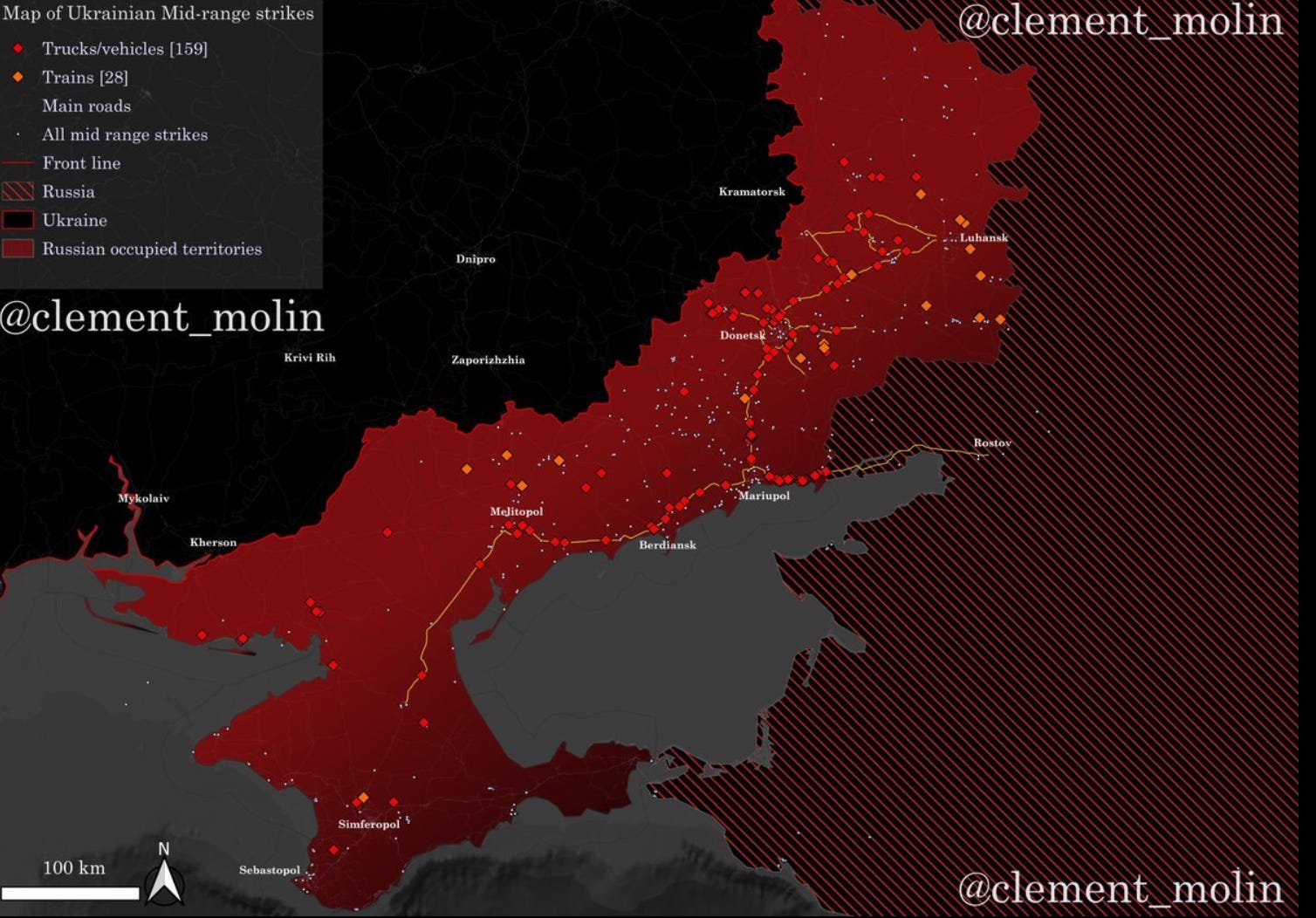
Molin has documented a significant increase in middle-strikes on Russian vehicles.
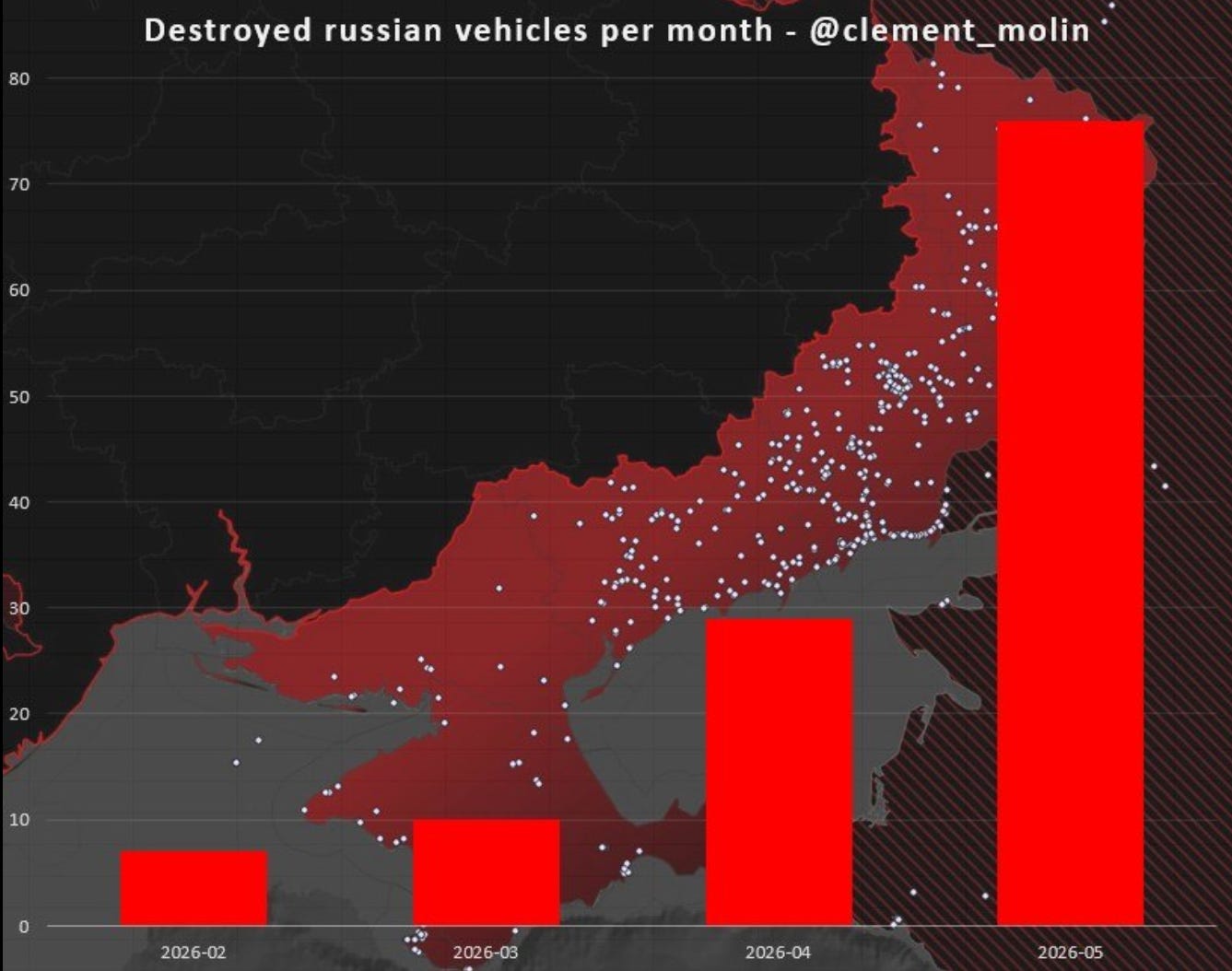
Molin believes this will have a significant effect on the front — but not yet, only in the unspecified future. In another post, this quite pro-Ukrainian analyst estimated that the maximum proportion of vehicles hit on key roads of 1-5% of the total. The Ukrainian publication strana believes that the number of mid-range strikes by Russia or Ukraine would have to increase by tens or hundreds of times to make a big difference for the frontlines.
Interestingly, Molin found that the number of strikes on depots has actually decreased. This is most likely due to Russian command decentralizing supply points.
Hornets
Let’s now take a look at the American technology mainly responsible for Ukraine’s success in the middle-strike field. AI-powered strike drones whose owner is probably working with Palantir. The story of the Hornet also illustrates an interesting new direction taken by the US military industrial complex.