KGB-CIA?
The nature of power in Russia. Convergence and parapolitics.

‘Dogovornyak’. More playfully, ‘dogovornyachok’. Somewhat like an agreement (dogovor), but more conniving, slier. It takes place in secret, in smoke-filled rooms. Treacherous politicians or businessmen arrange a dogovornyachok, stabbing frontline warriors in the back.
A peace deal, in simpler terms. Or a conspiracy to carve up the world.
It’s one of the most popular terms in the Russo-Ukrainian war. Turbo-patriots on both side are always hysterically paranoid about the possibility of a dogovornyachok, and solemnly warn their followers against believing in such illusions. Or accepting them.
Of course, what does anyone’s opinion about the inevitable dogovornyachok matter? Everyone knows that when it happens, particularly inconvenient and loudmouthed warfighters will be discarded to the dust of history, just like what happened in 2015-17, following the signature of the first dogovornyak, the Minsk agreements.
Yesterday, for instance, there was another grand dogovornyak panic. Vladimir Putin announced his belief that the war would end soon. Shares in western military companies plummeted. Some people have been discussing the likelihood of imminent peace with varying degrees of interest.
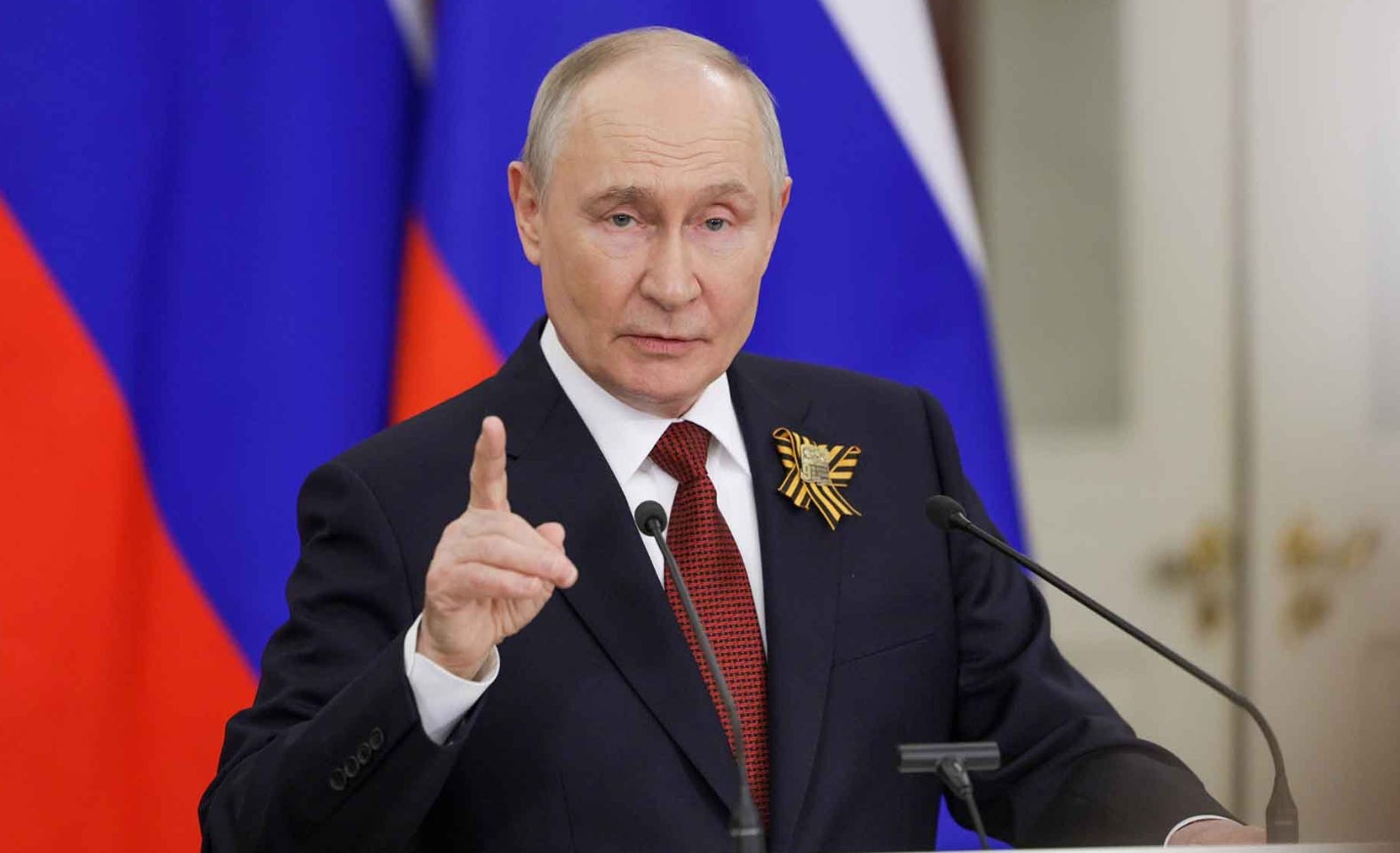
Personally, I advise against getting particularly emotionally invested in it all. There are some, for the past year or so, that have been eagerly predicting an imminent ceasefire in the ‘decisive negotiations’ that are apparently set to take place every weekend. While I salute them for their optimism, there’s no need to set oneself up for disappointment.
Europe has sent its 90 billion to Ukraine, and effected a titanic increase of military budgets EU-wide. They won’t let this war come to an end — otherwise how could they explain spending all those trillions more on arms over the coming decade? And that’s just the most obvious reason why there’s no need to hope or fear a dogovornyachok — soon, at least. In the end, of course, there’s no escaping it. But the future lasts a long time.
On the other side of the spectrum, there are some who seem gripped with anxiety about Putin’s loyalty to the cause of anti-western planetary struggle. In Russia, mega-patriots like Pavel Gubarev seesaw between effusive enthusiasm for the new era of unstoppable military conquest, and depressed despondency that all along, Putin never really intended to win the war. The latter sentiment was expressed in Gubarev’s quite popular 5 hour interview in last month, for instance. This whole conflict is just a grand dogovornyachok, he intoned.
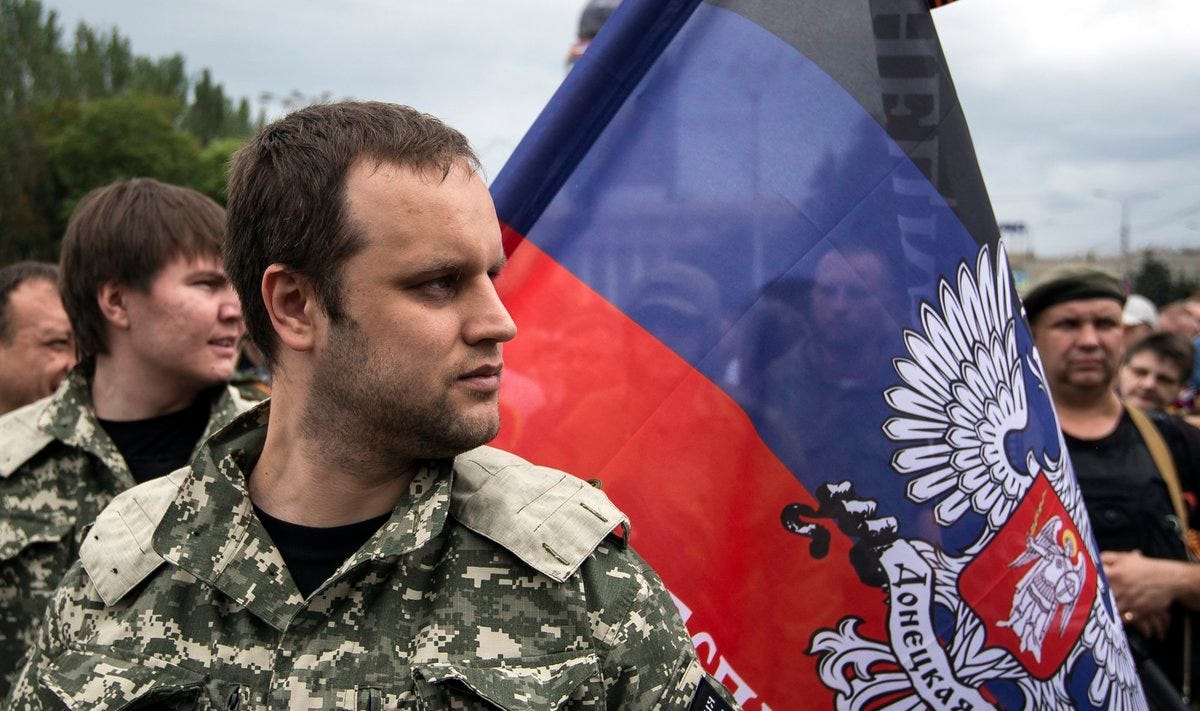
The only true aim of the war, Gubarev worries, is to empty the territory of Slavs, to make way for a ‘second Israel’. It, he says, is considered necessary due to the threats currently faced by the Jewish state from its neighbours. The ‘New Khazaria’ project, he calls it.
Besides the New Khazaria question, I don’t see why such dogovornyachok anxiety is so necessary. The answer is that Putin’s commitment, like anyone’s to anything, is somewhat real and somewhat fake. Better to just sit back and watch the show.
In any case, today we’ll be taking a look at Russia’s preeminent expert on the dogovornyachok, in relation both to Putin and intelligence agencies, east and west. Alexander Prokhanov, the novelist who has spent more than 50 years with the KGB and its FSB successors, literally in the trenches of conflicts and covert operations around the world. From Damansky island in 1969, to Afghanistan, Nicaragua, Angola, Cambodia, Mozambique, and Nagorno-Karabakh in the 80s.
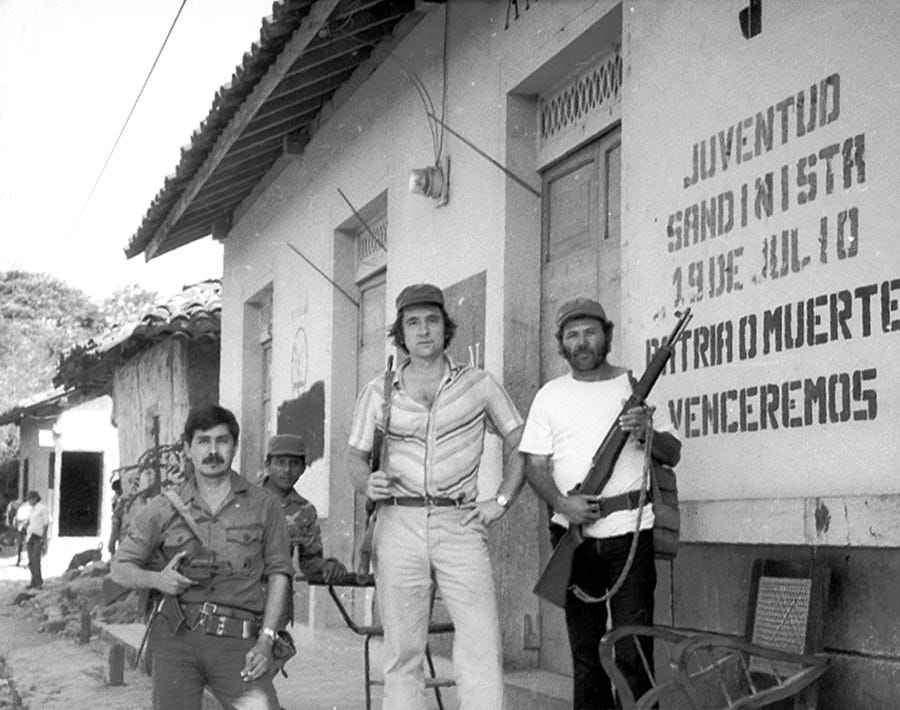
Then, he played a significant role along with KGB director Vladimir Kryuchkov in the failed August 1991 coup against Gorbachev, as well as personally flying to conflicts in Chechnya, Yugoslavia, and, a bit over a decade later, Donbass. In the 90s, Prokhanov was his magazine ‘Den’ (‘Zavtra’ after 1993) was the spiritual leader of the anti-Yeltsin, nationalist-communist opposition. He took prominent part in the failed 1993 October Putsch, as well as apparently playing a key role in the planned coup by general Lev Rokhlin (the latter was assassinated before anything happened).
But Prokhanov grew rather frustrated with the KGB. His disappointing experience working with ex-KGB officers in the 90s in the fight against the liberal Yeltsin regime led him to re-evaluate his view of the institution. He came to the conclusion that even in the failed 1991 coup, Kryuchkov was playing a double game — the aim wasn’t to save the Soviet Union, but to destroy it, which is exactly what happened.
In this reading, what happened in August 1991 was a transfer of power from the Party the Spooks. The immediate consequence of the failed ‘91 coup was the destruction of the Communist Party. The KGB could finally take the reins of power in full, without political oversight. By ‘99, a seasoned KGB officer became president of the Russian Federation — Vladimir Putin.
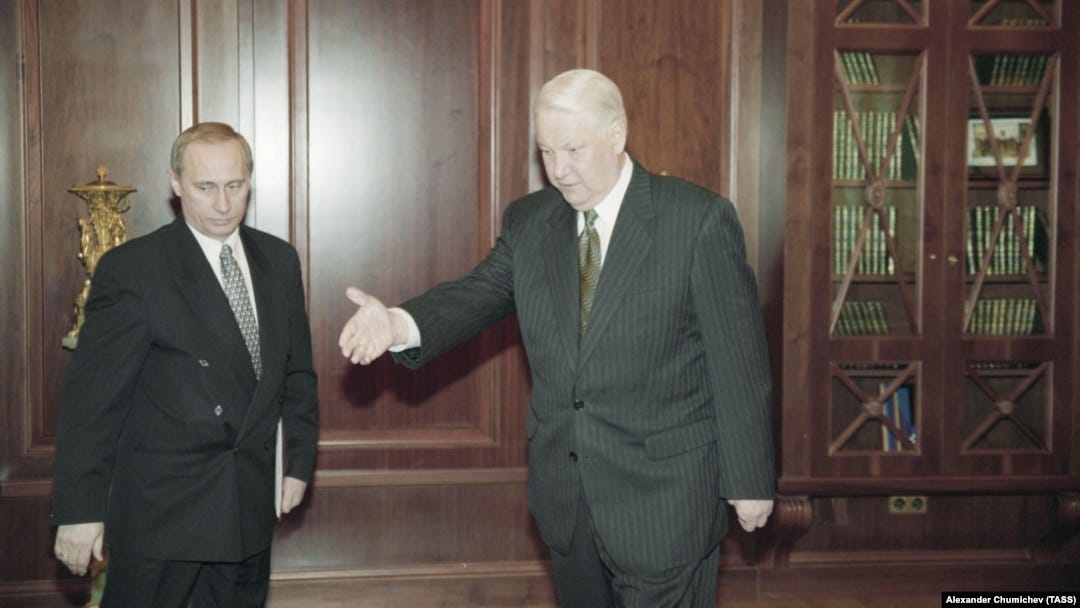
A number of Russian authors have pursued this line of thinking about the KGB and its successor, the FSB. The most comprehensive book is the historian Alexander Ostrovsky’s Who Put Gorbachev in Power? The second half is dedicated to the shadow intrigues of the KGB in the 1970s and 1980s, and in particular, its deeply ambiguous, longest-serving director, Yuri Andropov. The man who made Putin, so to speak. A figure that the current Russian president has effusive praise for.
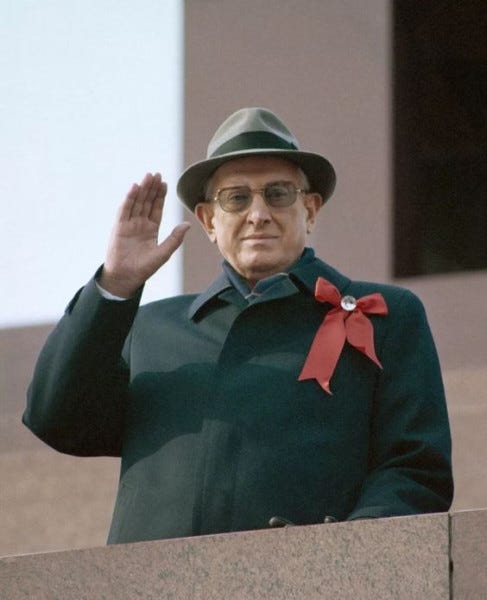
Ostrovsky’s argument is that under Andropov, a process of ‘convergence’ took place. This was quite a popular notion back in the 80s, including in the works of leftwing authors like the world-systems theorist Immanuel Wallerstein. The idea is that the Soviet and western systems were converging towards a shared ideal of bureaucratic capitalism (if it could be called capitalism). Ideology was over, time for business.
Ostrovsky focuses in particular on signs of convergence between western and eastern intelligence agencies. ‘Convergence’ is somewhat of a sacred word for Prokhanov, who tends to hide reverent mentions to it in the innards of his novels. In short, the leadership of the KGB and CIA came to some sort of agreement on how to integrate the USSR, or just Russia, into the capitalist world economy.
Both, obviously, wanted to get rid of the communist party. The real ambiguity is what exactly the deal was, and whether it was kept.
Everyone knows Putin’s classic line, repeated since the early 2000s, that ‘the west tricked us’. He said it again 2 days ago. They didn’t let us into NATO when I asked in 2000, and they kept expanding NATO despite promising otherwise in the 90s. Many enjoy ridiculing Putin’s long-standing, seemingly naive trust in the west, but what’s more interesting is understanding the nature of this belief.
As we’ll see in the following 2002 interview, Prokhanov has his own ideas regarding the KGB/FSB’s slighted position vis à vis the west. In his eyes, this only takes the form of a pathetic demand to be let into the club.
Before we get into the interview, a few words about its context. Prokhanov gave this interview in 2002, the year his novel Gospodin Geksogen (Mister Hexogen) was published. I wrote about it in more detail here. Essentially, it’s about a patriotic and disillusioned retired KGB officer, Viktor Beloseltsev, who gets recruited into a seemingly patriotic plot from his old superiors to overthrow the Yeltsin regime and place ‘the Chosen One’ in power — Putin.
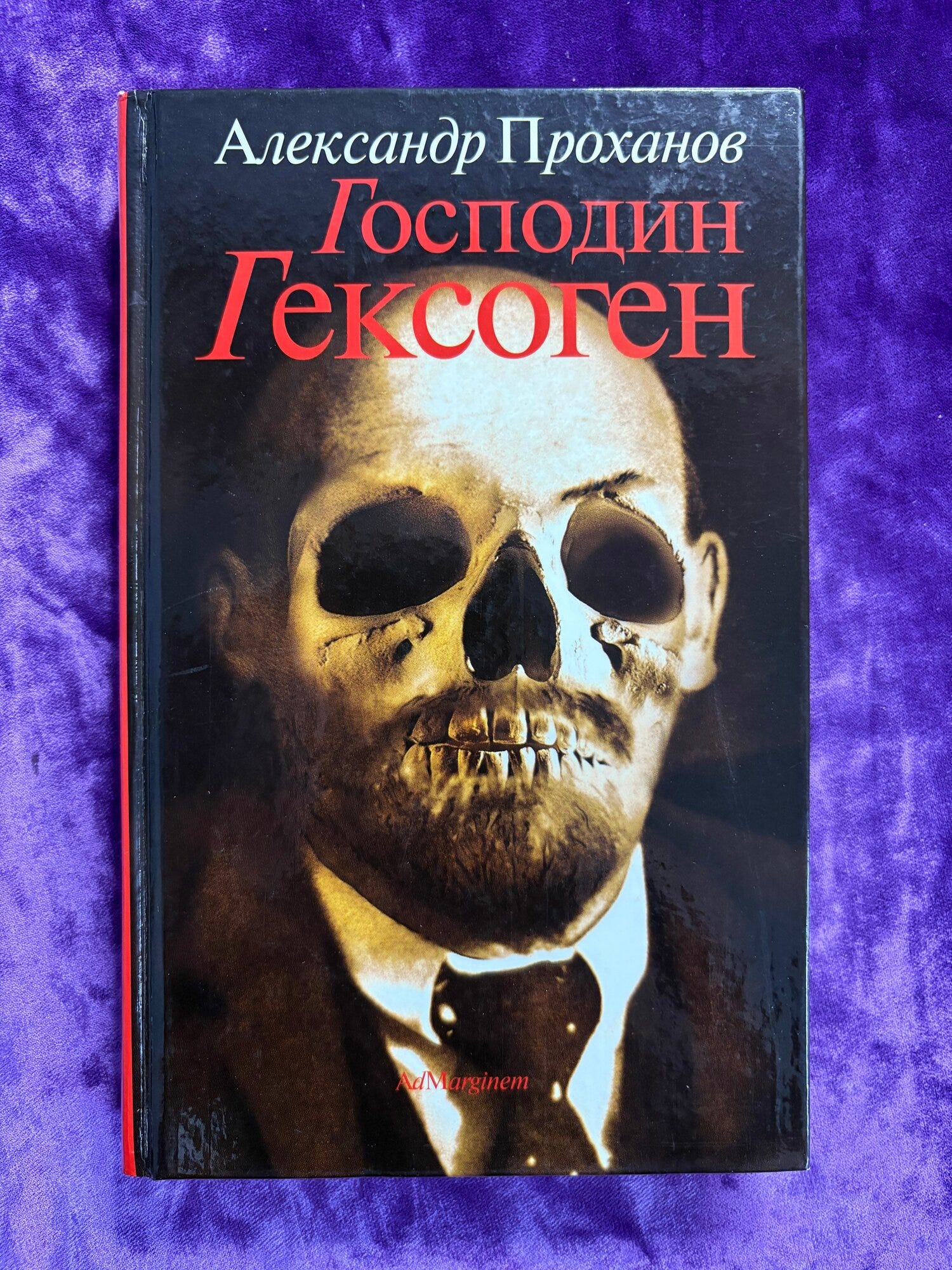
However, as the story progresses, Beloseltsev realizes that the KGB/FSB isn’t trying to actually destroy the oligarchy and create a new ‘Red Empire’. Instead, they are merely getting rid of the liberal oligarchs and replacing them with the FSB and their proxies, as well as integrating Russia into the capitalist world economy under western supervision. Convergence.
Putin is presented as a deeply ambiguous figure, a dolphin that sometimes disappears in a puff of smoke. The book ends with a secret Order of Beria-inspired patriotic GRU (military intelligence) officers defeating the treacherous rival Order of KGB officers.
However, this isn’t quite a happy ending. After all, Prokhanov’s book argued that the intelligence clique behind Putin was responsible for the 1999 apartment bombings. These bombings killed more than 600 Russian civilians — hence the title ‘Heksogen’, an explosive compound. The theory went that this terrorist act, along with the border conflict in Dagestan, were false flag operations to justify the second Chechen War, thereby propelling Putin to power. There are arguments for and against the theory, and Prokhanov is rather ambiguous about the nature of the clique’s responsibility. In this 2007 interview, for instance, he indicates that the liberal oligarch Boris Berezovsky, part of the Yeltsin ‘Family’ that originally brought Putin to power, was more ‘responsible’, is that word is even applicable:
— So you believe it was Putin’s inner circle that blew up the buildings?
— I don’t know; the conspiracy theory in the novel squeezed out my own genuine feelings about the event, becoming more real to me than the facts. I wasn’t dealing with facts—I was creating this textual reality myself, and as it’s written in the novel, that’s how it is. Logically, the war in Dagestan and the building bombings fit the pattern of a power change in Russia. I explained that in the novel.
— That’s clear in the novel. But in real life?
— That’s exactly how it was in real life. Berezovsky asked me, “Who do you think blew up those buildings?” I told him, “You did. It seems to me you did it.” And he said, “No, there was another headquarters.” “If you, Berezovsky, were head of the headquarters for bringing Putin to power and this headquarters carried out such large-scale PR operations, then that headquarters should have blown up the buildings.” He said there was a second headquarters for all of this. Indeed, that’s all there was. As for the fact that all the liberals, Novodvorskaya, the ‘Ryazan trail,’ Patrushev [elements of the theory that the FSB blew up the apartments — EIU] —this is all just kabbalistic nonsense. Later, people say: Chechens, Chechen terrorists, London emissaries, Russian secret services—it’s all a muddle now. They’re so closely connected that the executioner has long become the victim, and the victim tortures the executioner during interrogations. The model became the artist—painting the artist herself. My editor Kotomin has been writing my novels for a while now, and I’ve been shortening them.
In any case, Mister Heksogen was certainly explosive in the Russian literary world. It won all the awards to win, and was even praised by many in the liberal press. Meanwhile, there were those in Prokhanov’s nationalist-communist milieu that hated it for being anti-communist or even anti-Russian. And as a result of the novel, many argue, Russian culture and politics forcefully threw off the liberal postmodernism of the 90s, diving headlong into an assertive (and just as postmodern) nationalism.
What’s interesting, also, is that Prokhanov’s novel was praised by the liberal press. It also seemingly reiterated Putin’s supposed responsibility for the 99 bombings. And this was precisely the narrative being pushed in 2002, the year Heksogen was published (by a liberal publishing house, incidentally) by oligarch Boris Berezovsky and his media groups, who was now fanatically anti-Putin.
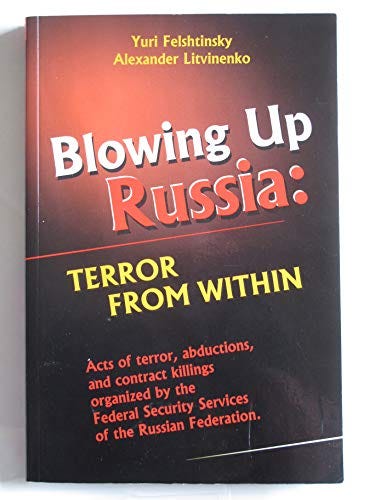
And in 2002, Prokhanov shocked everyone, particularly his fans, by flying to London to interview Boris Berezovsky, supposedly his worst enemy. By 2006, Prokhanov did the same with the liberal oligarch Mikhail Khodorkovsky. In the early 2000s, Khodorkovsky had announced a ‘left turn’, aiming to ally with the communist and other patriotic forces against Putin’s ‘chekist’ (spook) government.
And so the following interview with Prokhanov was released by agentura.ru, a liberal publication dedicated to analyzing Russian intelligence agencies from a critical perspective. Quite the paradox, no? Prokhanov, the militantly anti-semitic red imperialist (as his detractors would say), genially working what would seem to be his liberal archenemies.
But anyway, the interview is quite interesting. Particularly for those wondering about the true nature of Putin, KGB-CIA convergence, the KGB and the bourgeois, dogovornyachoks, Beria, Andropov, and Gorbachev. However one might feel about Prokhanov and his fiction, there are few people as personally experienced with the KGB-FSB. Before getting into the interview proper, here is a particularly interesting extract, which some might believe still has contemporary relevance.
Russia itself is one enormous special service. On one side there are gangsters and mafioso politicians, on the other the special services. And these special services in fact want nothing. In my view, they have lost the idea of a grand project; they are largely corrupt. They still carry the idea of revenge against the riffraff that came to power in the early 1990s. The maximum they want is to realize that emasculated and degraded project of lifting the Iron Curtain, a project that has lost its global philosophy. It has now degenerated into a tiresome and vulgar integration of Russia into the global — read “American” — context. Those great ideas have drowned in a continual surrender of positions.
