How the war will end
Iran-Iraq, Poland-Muscovy. 1667 and 1988. History, negotiations, war.

Today we have three topics. First, history. Then, the latest events from negotiations and war.
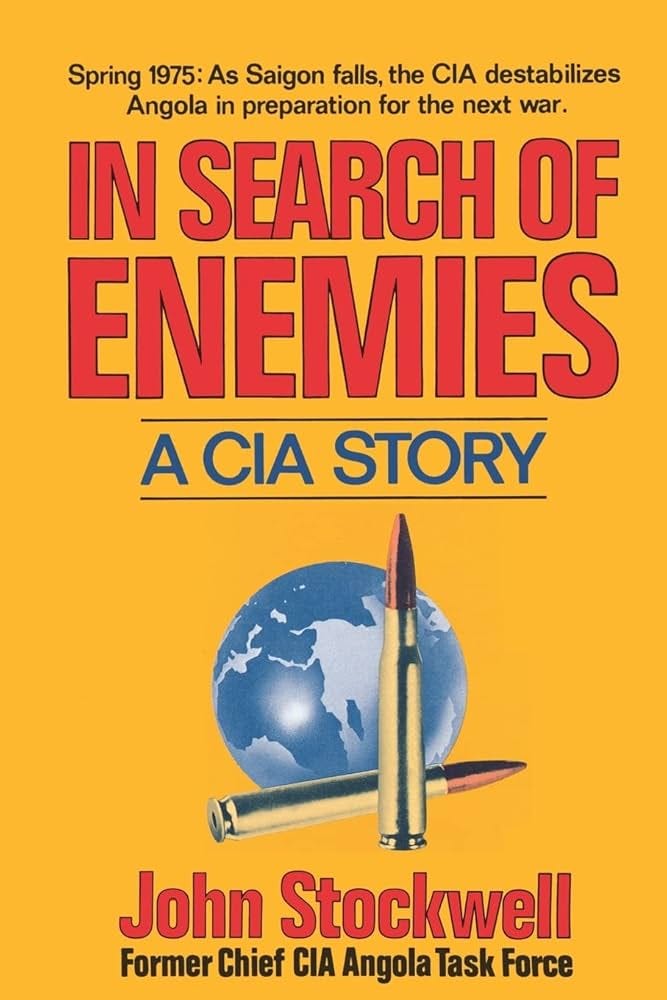
I’ll begin with a relevant excerpt from a book I’ve been reading, the memoirs of CIA operator John Stockwell:
“What are we expected to do with the fourteen million?” I asked.
“The best we can. The 40 Committee paper reads that we are to prevent an easy victory by Soviet-backed forces in Angola.”
“No win?” I enunciated-each-word:
“Kissinger would like to win. No doubt he would like to stop the Soviets cold. But he knows that we can’t get that kind of program through Congress. I guess it would take a special appropriation, probably approval of both houses. So instead we are being asked to harass the Soviets, to . . . ‘prevent an easy victory by communist-backed forces in Angola’! ”’
I couldn’t think of anything to say. Another no-win policy, harassing the Soviets as they made a major move on the world chessboard, trampling a few thousand Africans in the process. But I needed more facts and I wanted to think it over before I asked management to let me out. You don’t turn down many good jobs and still get offers.
Analogies
Not long ago, the length of the Russo-Ukrainian war exceeded that of the Soviet-German war. Much ado was made of this. There was more of the usual denigration of Russia’s ability to reach a decisive victory.
Indeed, Russia is not the Soviet Union. Observing international events with such an assumption will lead to inevitable disappointment. A more clear-eyed view is beneficial for both objectivity and one’s mental health.
Yes, both 1941-45 and 2022-26 feature artillery battles, trenches, and significant casualties. But there are many more differences.
Drones make it extremely difficult, if not impossible to concentrate force undetected and unharmed. The tens of millions killed in the 1940s hardly compare with the present war, in which at most a few hundred thousand have been killed on either side. Horrific numbers, no doubt, but there’s no need to get carried away with the analogies.
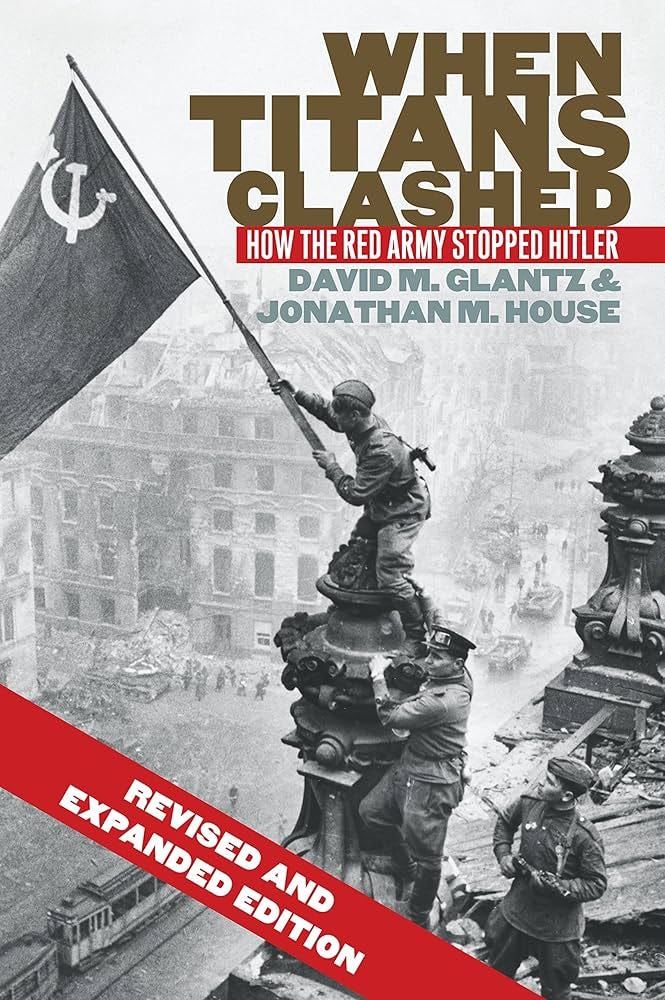
Of course, there is also the fact that the Soviet Union fought Germany with the aid of the USA, especially after mid-1943. But in the current war it is the USA and Europe that aid Ukraine against Russia. The Soviet Union would have won the war against Germany without that aid, but it certainly would have taken longer.
Most importantly, this is not a total war for the main contenders in the war — Russia and NATO. In Ukraine it is rather more total, though mobilization has still left those under 25 untouched, and its government has been rather complacent (or rather, self-serving) when it comes to building a military industrial complex.
More importantly, Ukraine gets its weapons from the west, and those countries certainly have not made military industry their absolute economic priority. Russia, meanwhile, still spends under 10% of GDP on the military, a far cry from the 50-60% boasted by the USSR in the 1940s, or the ~40% the US reached at that time. Ukraine’s military spending is currently at close to 30% of GDP.
What that means is that it is probably unwise to wait for a repetition of 1945. Plenty of observers and politicians on both sides of this war believe that such a scenario is possible, with tanks triumphantly rolling into the centres of Kiev or Moscow. But so far, it does not look like the military leadership of either side is prepared or able to mobilize the resources needed for a crushing victory.
The first world war, though it was much more of a total war than the present, is probably more comparable. First, because it lasted a long time but did not result in any particularly decisive military victories.
Second, the manner in which conflict on the European continent was beneficial to the Americans. Intervening late in the war, America was unscathed by the war, whereas Europe was in ruins. In the 1920s, Europe became unhealthily dependent on American credit. Of course, this is also true of the second world war, insofar as it left the USA the absolute economic power of the world.
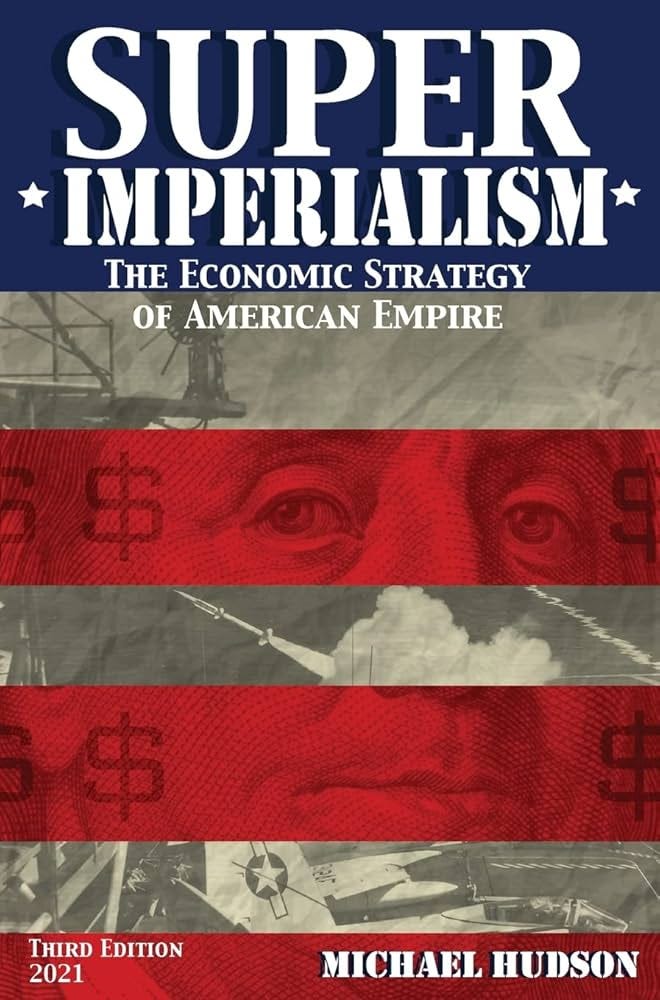
And today, the war in Ukraine has pushed the EU to buy more expensive American energy instead of Russian. Purchases of American weapons have also dramatically increased, set to continue for many years in the future.
This is one of the most obvious reasons why Trump has never been really all that enthusiastic to end the war on Ukraine. He has a wealth of instruments at his disposal with which to dramatically pressure the Ukrainian government to accept Russian demands. Ukraine is entirely dependent on American intelligence and the Starlink platform for communications. Its air defense systems depend on American missiles, and many of its other weapons are also sourced from the US through Europe.
If Trump really wanted to end the war, he could at least slow down any of these flows. But he hasn’t. At the Munich Security Conference yesterday, Secretary of State Marco Rubio confirmed that the US has not been pressuring Ukraine to reach a peace deal:
For the first time in several years, military representatives from both sides met at a technical level in the Middle East last week, and we will resume these talks in Geneva later this week. At the same time, we are simply trying to play a role, if possible, in reaching an agreement. We are not trying to force anyone to agree to a deal they don't want. We simply want to help them,
It is still unclear just how much or for how long the US cut off intelligence sharing with Ukraine back in the spring of 2025. All indications point to the conclusion that very little was cut off, for very little time. That’s judging from recent NYT articles, and the fact that the Ukrainian army did not suffer particularly serious setbacks at that time, despite their total dependence on US communications systems such as Starlink.
Instead, the NYT recently reported that Trump’s CIA massively increased intelligence sharing with Ukraine for drone strikes on energy infrastructure inside Russia over the course of 2025. This included actions like the destruction of many of Russia’s nuclear bombers.
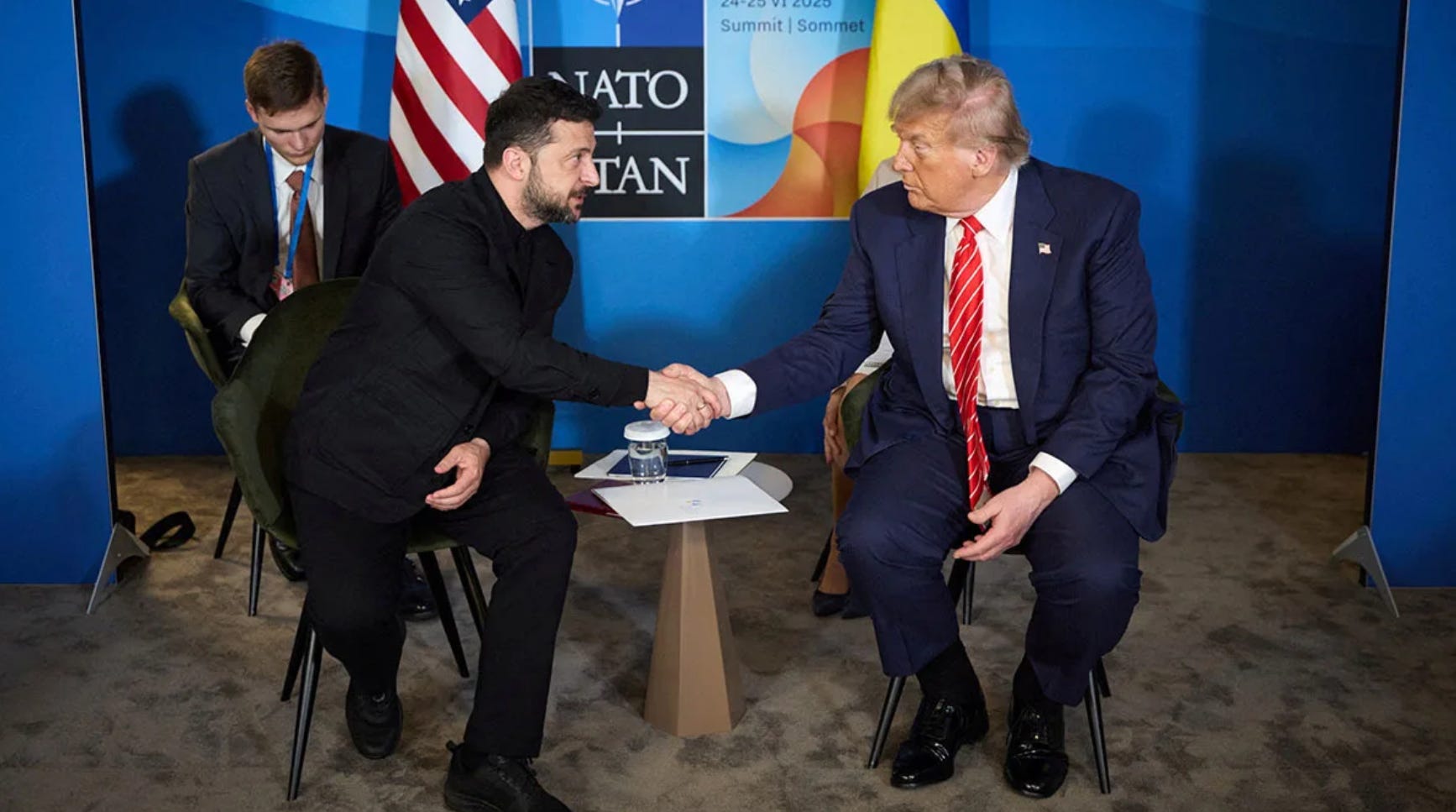
All this is hardly the moves of someone eager to push Ukraine into accepting Russian demands. Instead, this, along with Rubio’s recent speech extolling Trump’s more aggressively anti-Russia strategy, is simply what one might do to try pressure Russia into accepting minimum Ukrainian demands (a ceasefire on the current frontlines).
And there’s no need to exculpate Trump by talking about the supposedly all-powerful CIA. The CIA began this new intelligence-sharing dimension under Trump, because he ordered them to do so — as leverage on the Russians.
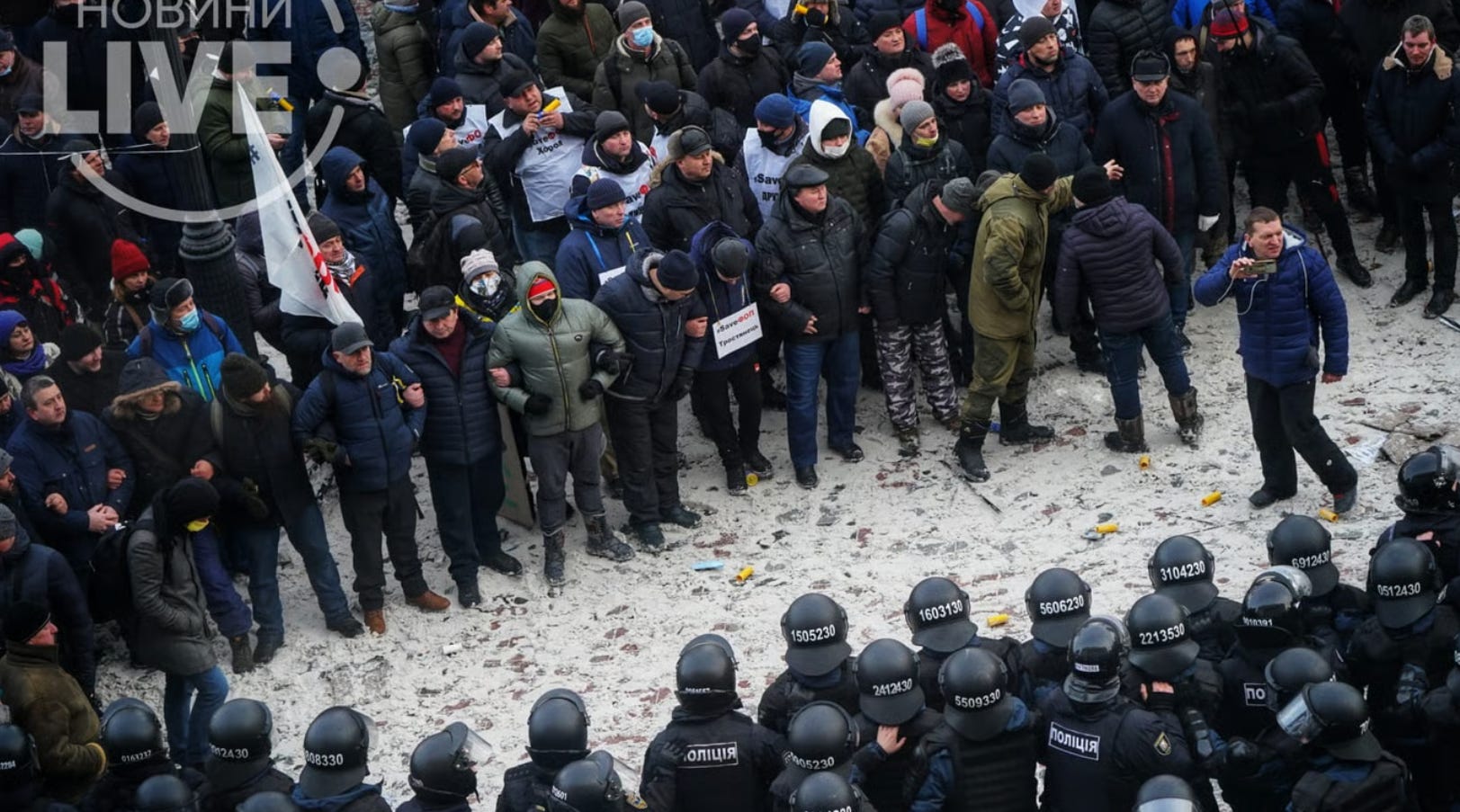
Another sign of continued American support for Ukraine came yesterday. After many months of demanding that Ukraine increase taxes on its population, the IMF stopped asking. Three days ago, prime minister Yuliya Sviridenko stated that IMF funds will flow to Kyiv without this onerous, highly politically destabilizing condition. Back in 2020-1, similar IMF-forced tax cuts resulted in quite significant protests against Zelensky, backed by nationalist paramilitaries and pro-western parties opposed to Zelensky.
As always since 2014, the IMF continues to break all its rules in order to keep Ukraine afloat.
But there are two other conflicts that I’ve always found to be much fruitful analogies than the aforementioned. The Iran-Iraq war of 1980 to 1988, and the Russo-Polish wars of the 14th to 18th centuries.
To begin with, both of these wars are relevant in that they lasted a very long time. Despite the devastation they wrought on the civilian populations and heavy frontline losses, there were no popular revolutions (at least successful ones), no states involved definitively collapsed (at least permanently). Although, as we will see, Poland did end up collapsing.
I’ll begin with an overview of the Iran-Iraq war, though I plan to write a much more detailed take on it in future. Essentially, I see Iran in the position of Ukraine, and Iraq that of Russia.
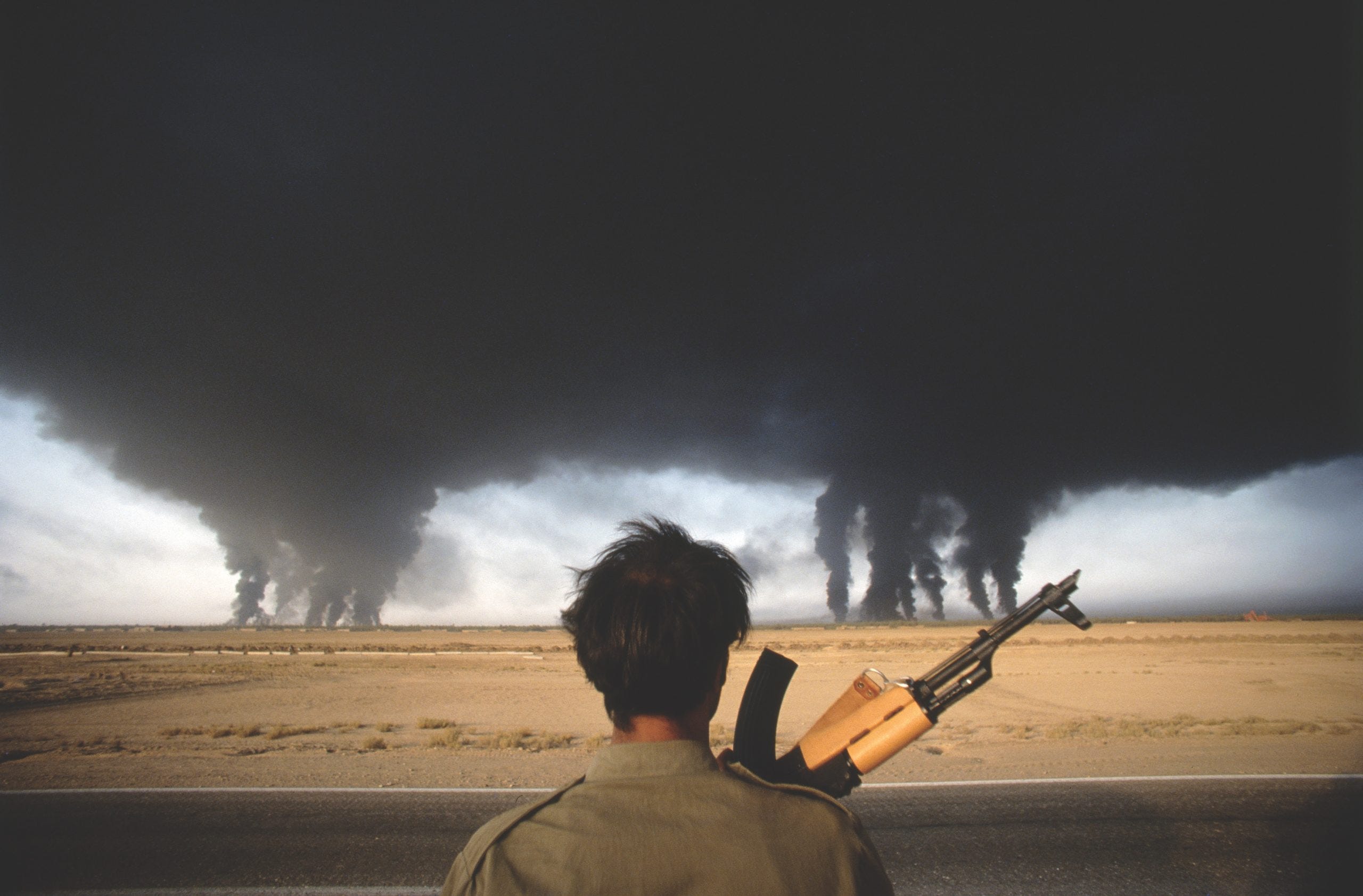
With the Islamic revolution of 1979, the new authorities of Iran declared their disdain for the 1975 Algiers accords with Iraq that had regulated previous territorial conflicts. They also loudly proclaimed their desire for an Islamic, Shia-based revolution in Iraq itself, against the secular authority of the Baathist party, decried as both atheist and excessively Sunni (the first accusation was correct, the second less so).
Faced with what he viewed as insulting provocations, Saddam Hussein took the decision to teach the Iranians a lesson. A special military operation to protect the Sunni Arabs of Khuzestan. He also had the seemingly reasonable assumption that revolutionary strife would make Iran an easy target.
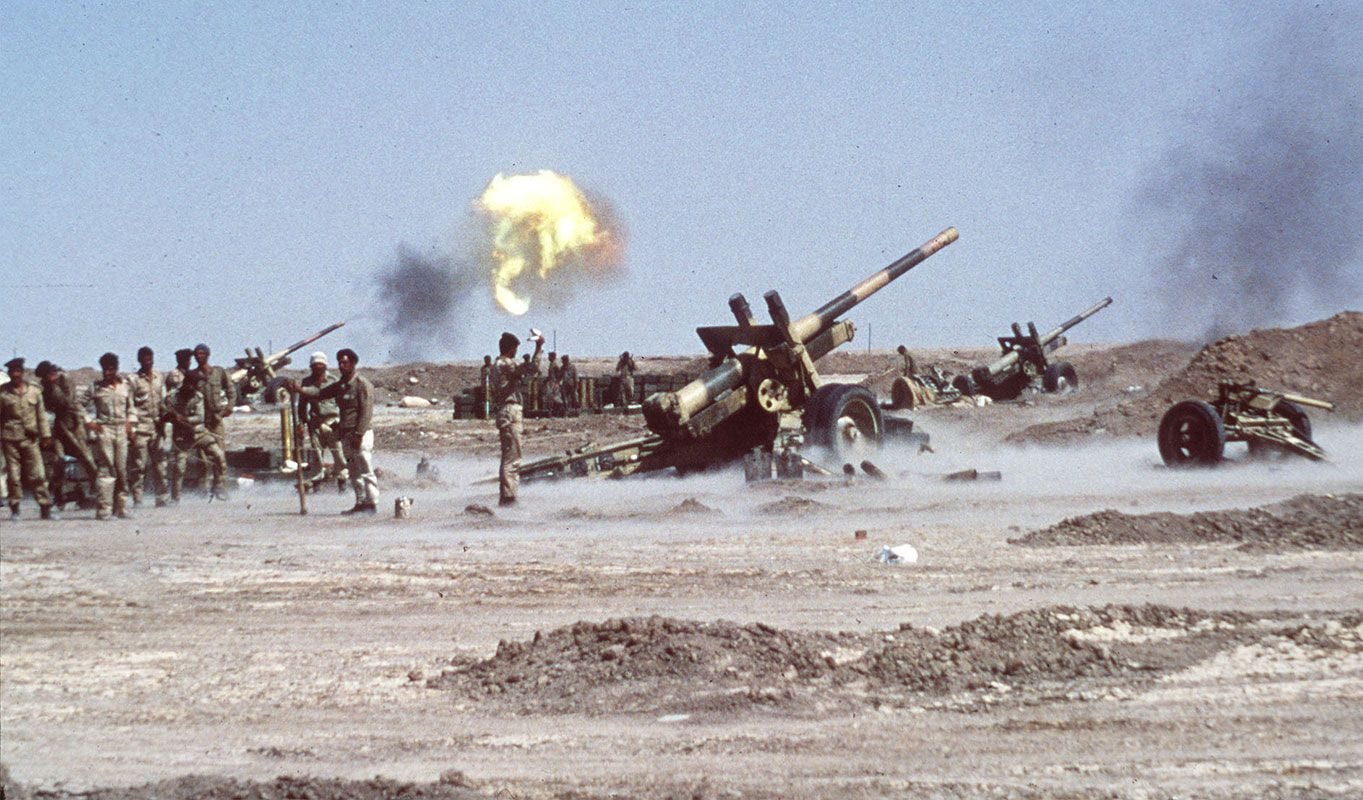
Of course, things didn’t go as planned. The conflict dragged on. But the Iraqi army modernized, transforming its organizational structure to meet the demands of modern warfare. By the late 80s, it was waging sophisticated combined arms warfare. Iran, though receiving a number of Israeli and western weapons through the shady dealings of the Iran-Contra network, depended more on feeding its massive, ideologically inflamed population into the meat grinder.
By 1988, amidst Iraqi advances, a collapsing economy, and increasing protests in the army and hitherto loyal paramilitaries, Khomeini reluctantly accepted a ceasefire. He famously declared it was more painful than ‘drinking from a chalice of poison’. He died the next year. Iraq’s massive army was set to dominate the entire region, not a prospect relished by the United States or the Gulf monarchies. Luckily for them, the Iraqi army was effectively destroyed by the Gulf War of 1991, along with more than 100,000 Iraqis.
But the war wasn’t all bad for Iran. The Islamic revolution in 1979-80 was very far from consolidated. Islamist forces were beset by leftwing organizations, liberals, and a range of ethnic rebellions. The existential threat of foreign invasion was an excellent way to consolidate power and eliminate rivals.
In just the same way, Zelensky’s popularity was plummeting over the course of 2020 and 2021. He had failed to achieve his election promise to end the war in the east, was beset by corruption scandals, and was as despised as ever by his nationalist competitors. Nationalist ideology itself had been growing less and less popular since 2014, in the fact of economic immiseration, endless war, and actual entry to the EU and NATO increasingly obvious as both mirage and scam.
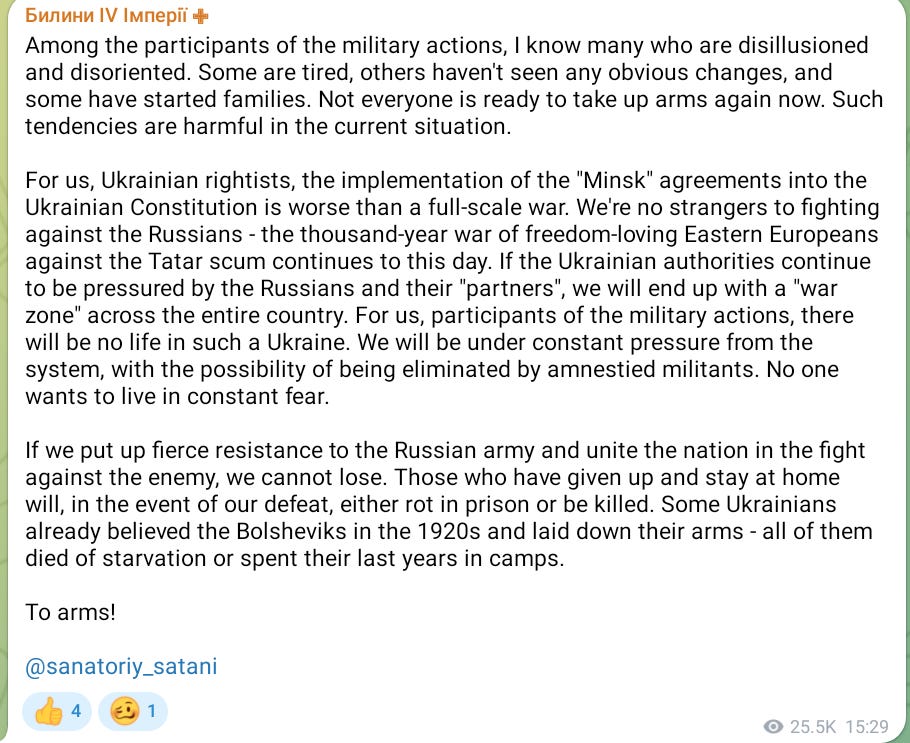
Hence, the Russian invasion in February 2022, following Zelensky’s increasingly evident disdain for the 2015 Minsk peace agreements, was a godsend. Both for Zelensky’s grip on power, and for the nationalists. The latter greeted February 24 2022 with open delight, as it pushed much of Ukraine into embracing ultranationalist fighters and ideology. The ‘humiliating’ Minsk agreements were dead.
Take a look, for instance, at this February 20, 2022 post by ‘Tales of the IV Reich’, a Ukrainian nationalist telegram run by a military veteran:
A few days ago, Zelensky stated that apparently 90% of Ukrainians don’t want elections. Whether this is true or not, the continuation of war means that Zelensky can postpone this question indefinitely.
And like Iraq, though the Russian army faced a number of major miscalculations and organizational chaos at the start of the war, it has continually adapted since. Its mastery of drone warfare in combination with other branches of its army has earned the constant jealousy of Ukrainian drone operators. Its ability to recruit soldiers into the army on a voluntary, paid basis is superior to Ukraine’s forced mobilization and massive desertion rates. And its economy is incomparably more untouched by war than Ukraine’s — just as Iraq’s was compared to Iran.
Now, for the Polish-Russian wars.
